Skip to content
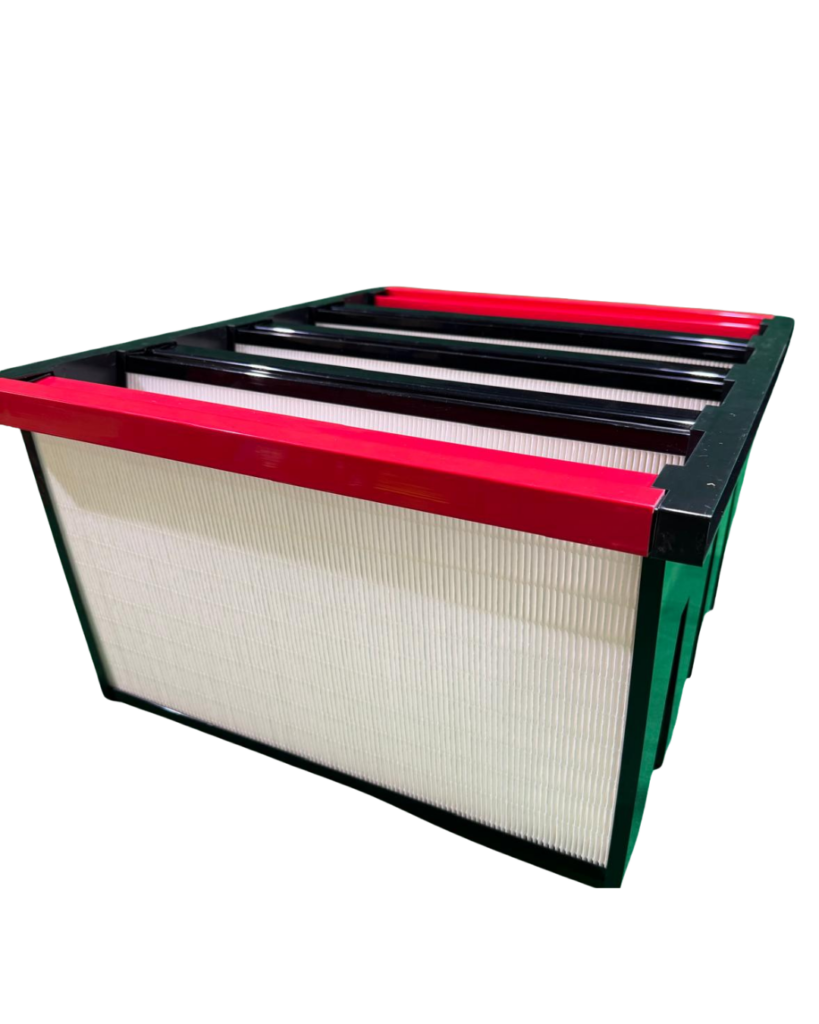
The typical collapse pressure ratings for HVAC V Cell filter or HVAC V Bank filter indicate the maximum pressure differential (ΔP) that the filter’s frame and media are designed to endure without experiencing structural failure. It is crucial to select filters that meet or exceed these ratings to ensure optimal performance and reliability in HVAC applications. Proper assessment and adherence to these ratings are essential in maintaining system efficiency and longevity. Understanding the collapse pressure of HVAC V Cell filters aids in preventing premature filter replacement and operational disruptions.
Because these filters are often used in high-airflow systems like gas turbines or industrial HVAC, knowing these limits is crucial for safety and system integrity.
Maximum Allowable Working Pressure (MAWP) & Structural Integrity of HVAC V Cell Filter
One of the most common questions regarding the Brain Series V-Cell is its structural limit. Because these filters often operate in turbulent airflows, understanding their “Collapse Pressure” is vital.
Typical Collapse Pressure Ratings of HVAC V Cell filter
Collapse pressure varies significantly based on the filter’s construction (plastic vs. metal frame) and the specific application.
| Filter Type | Typical Collapse Pressure (Inches W.G) | Typical Collapse Pressure (Pascals) |
| Brain V back Series HVAC V Cell Filter (Standard) | 10” – 15” w. g | 2,500 – 3,750 Pa |
| High-Strength / Gas Turbine (Turbo Fine V series) | 25” – 30” + w.g. | 6,250 – 7500+Pa |
| HEPA V Bank | 15” – 20” w. g | 3,750 – 5000Pa |
Typical collapse pressure ratings of HVAC V Cell filters are critical for determining their performance in demanding environments. The structural integrity of these filters is influenced by factors such as the choice of frame material and the specific design parameters tailored to the application. Understanding the maximum allowable working pressure (MAWP) is essential for ensuring reliable operation, particularly in high-airflow systems. Ensuring that the filters are operated within their collapse pressure limits is paramount for maintaining system efficiency and longevity.
Frame Material: ABS plastic frames are common, but high-performance versions use glass-filled polymers or galvanized steel to prevent the “V” shapes from pinching shut under high load.
- Potting Compound: The sealant that bonds the media to the frame must be strong enough to ensure the entire “pack” doesn’t blow out of the frame.
“Burst” vs. “Collapse”
In the industry, we often distinguish between two types of failure:
- Media Burst: The paper or synthetic material itself tears.
- Frame Collapse: The actual V-structure buckles, often folding inward, which can cause the filter to be sucked into the fan or turbine.
Why ABS Frames Have Lower MAWP than Metal
While ABS is popular because it is lightweight, corrosion-proof, and incinerable, it has specific physical limitations compared to galvanized steel:
- Flexing: Under high pressure, ABS can “creep” or flex. If the pressure exceeds 5.0″ w.g., the V-banks can slightly distort, which may break the polyurethane seal (potting) between the media and the frame, causing a HEPA leak.
- Temperature Sensitivity: The structural integrity of ABS drops significantly as temperature rises. Most ABS V-cells are rated for a maximum of 70°C (158°F). Above this, the MAWP decreases because the plastic softens
Vibration: In high-velocity systems, plastic frames are more prone to harmonic vibration than metal, which can lower the effective burst pressure over time
Comparison Table: ABS vs. Metal Frame
| Filter Type | ABS Plastic Frame | Galvanized / Stainless Steel |
| Max Working ΔP | ~4.0″ w.g. (1,000 Pa) | ~6.0″+ w.g. (1,500+ Pa) |
| Collapse Pressure | ~10″ – 12″ w.g. | ~20″ – 30″ w.g. |
| Max Temperature | 70°C (158°F) | 120°C – 250°C (depending on sealant) |
| Best Use Case | HVAC, Bio -pharm, Humid Air, Petrochemicals | Gas Turbine, high Temp industrial |
If you are designing a system or replacing a filter, ensure your fan’s static pressure capability does not exceed the filter’s collapse rating. If your fan can pull 10″ w.g. and the filter gets fully blinded (clogged), an ABS frame is at high risk of collapsing into the ductwork.