 Skip to content
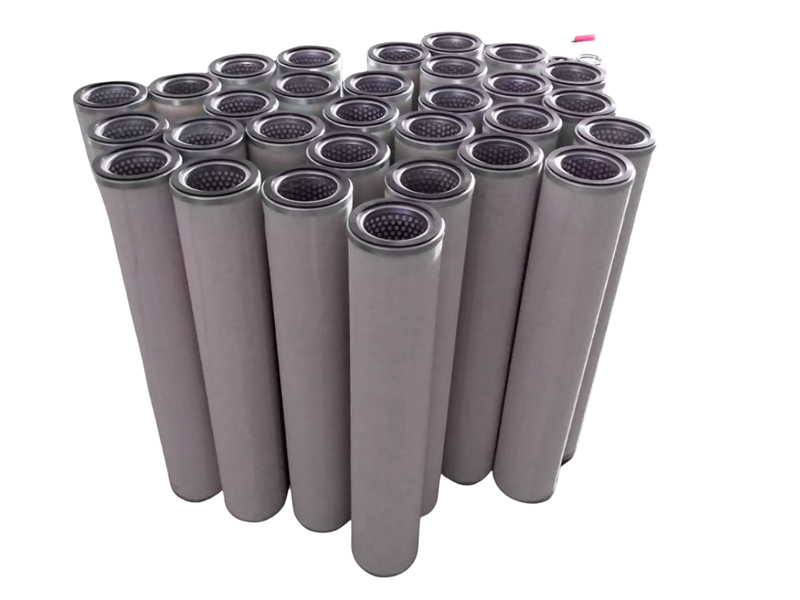
Hy-SepraX Liquid-Liquid Coalescer
Coalescer for high-efficiency phase separation and maximum hydrocarbon purity.
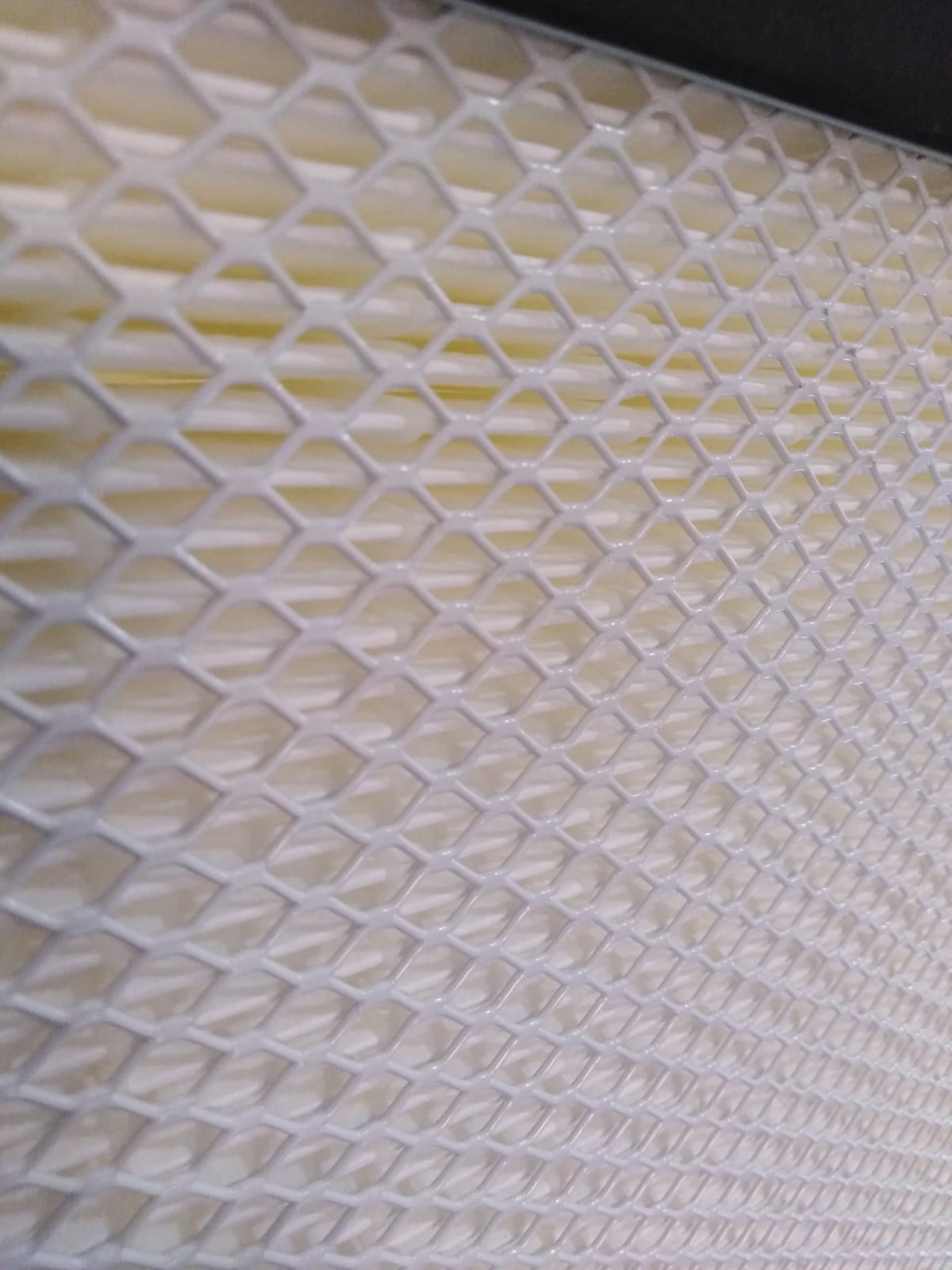
If you are dealing with stubborn liquid-liquid emulsions, you know that keeping your final product clear and your downstream equipment protected can be a constant battle. Standard glass fiber coalescers often fall short when the chemical makeup gets complex. The Hy-SepraX liquid-liquid coalescer is built differently. It uses a high-efficiency polymeric medium designed specifically to handle tough separations where conventional cartridges give up.
To help you map out your replacement or upgrade strategy, here is a practical, honest cross- reference of how Hy-SepraX matches up against the most prominent legacy and current technologies on the market from PECO, Pall, Parker, and Jonell.
Why the Medium Matters
Most traditional cartridge coalescers rely on glass fiber. While that works fine for simple applications, it causes a lot of headaches when surfactants enter the mix. Surfactants coat the glass fibers, causing them to “disarm” and lose their ability to separate the liquids.
Hy-SepraX features a non-disarming polymeric medium. It maintains its surface properties even in the presence of natural or added surfactants. This means you can effectively separate emulsions with very low interfacial tensions, all the way down below 20 dynes/cm, without losing efficiency or constantly changing out prematurely blinded elements. Liquid Coalescer Separator for effective separation of two immiscible liquids such as water from a hydrocarbon. Applications include removing small amounts of water from oil, condensates, kerosene, gasoline, diesel and other liquid products in the refining, petrochemical, and oil and gas industries
Do More with Less Space
One of the most practical layout advantages of this design is flow capacity. Each Hy-SepraX element can process up to 60% more flow compared to conventional cartridge options.
Because each element works harder, you do not need a massive vessel to get the job done. This keeps your capital expenses down, shrinks the overall system footprint, and significantly reduces the weight of the equipment on your floor.
Where It Fits Best
This system is highly adaptable across refinery, petrochemical, and fuel processing streams. It is routinely used for:
- Removing water from refined products like gasoline, diesel, jet fuel, and LPG, even when additive packages are present.
- Separating water from hydrocarbon condensates, refinery intermediates, naphtha, propane, and propylene
- Drying aromatics.
- Removing oil fractions from wastewater streams
Technical Specification:
- Maximum Operating Temperature: 60°C (140°F)
- Maximum Differential Pressure: 3.4 bard (50 psid) at 21°C (70°F)
- Recommended Change-out Pressure: 1.0 bard (15 psid) at 21°C (70°F)
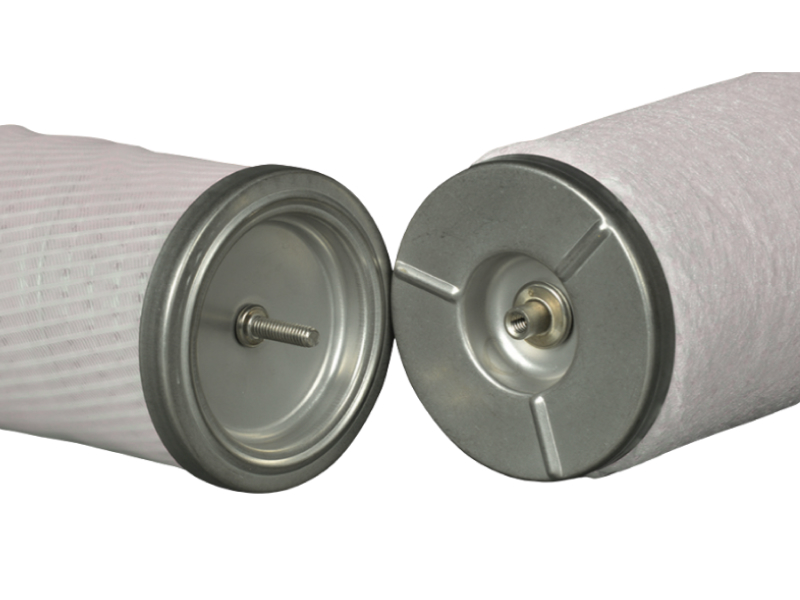
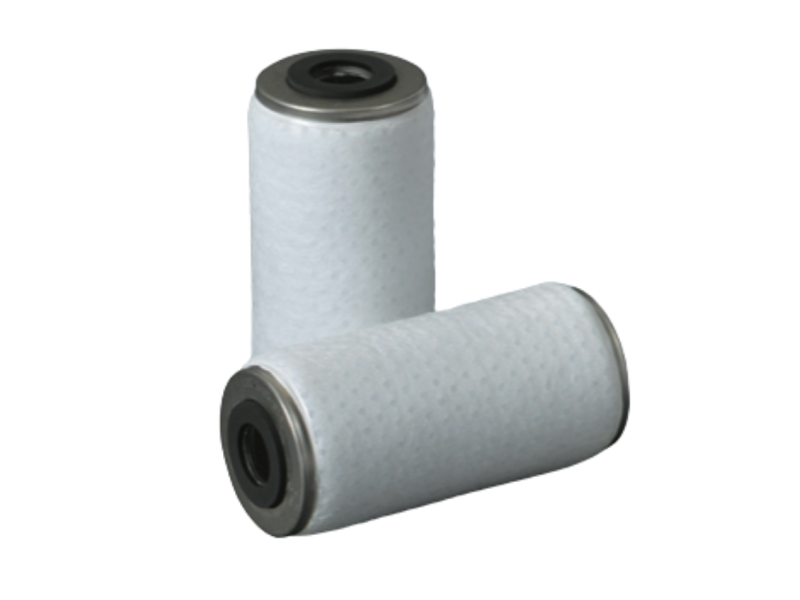
- Element Length Options: Available in standard 6-inch OD,
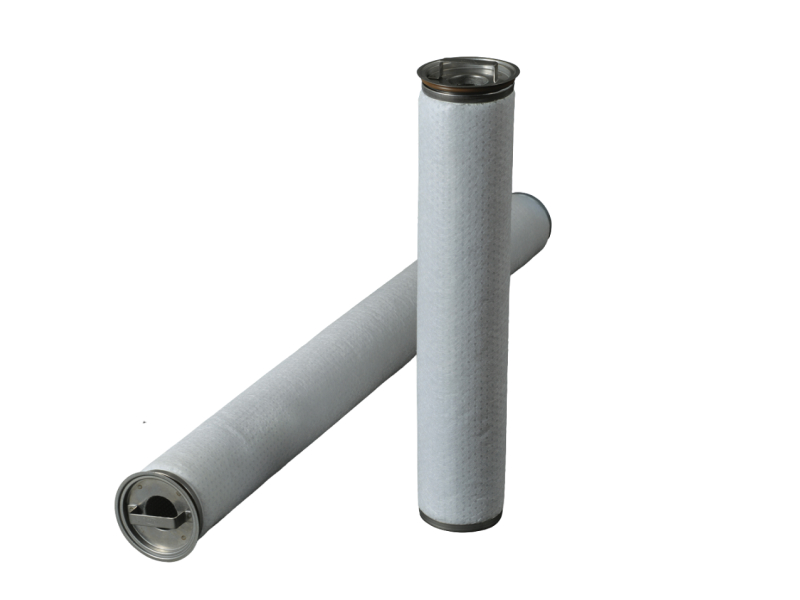
- Length: 11”,12 -1/4”22”, 28 ¾”,33 ¼”,36”,44” and 56″configurations to scale with your flow rate.
Configurations Built for Your Flow
The Hy-SepraX system operates as a multi-stage process, starting with a prefiltration step to clear out solid particulates so the coalescer can focus entirely on the liquids. From there, we match the housing configuration to your specific process needs:
- Horizontal Housing: Ideal when you need to remove water from a hydrocarbon stream and have the floor space for a horizontal footprint. The mixture flows inside-to-outside through the element, forcing microscopic droplets to come together into larger drops that easily settle out via gravity
- Vertical Coalescer and Separator Stack: When floor space is at a premium or you are separating oil out of an aqueous stream, a vertical configuration is the answer. This setup stacks the coalescer elements directly over hydrophobic separator elements. The design ensures an even flow distribution across the system, preventing the fluids from re-atomizing and bypassing the separation zone
| If You Are Currently Using: | Your Process Pain Point Might Be: | The Hy-SepraX Solution: |
|---|---|---|
| PECO DynaSep / XtreamPhase | Element compression under heavy liquid slugs or rapid drop in separation efficiency. | Hy-SepraX provides a rigid, high- flow polymeric structure that won’t compress or bypass during heavy process upsets. |
| Pall AquaSep XS / PhaseSep | Looking for an alternative supply chain partner without sacrificing high-end polymer performance. | Hy-SepraX offers a direct functional equivalent utilizing a non-disarming polymeric medium for ultra-low interfacial tensions (<20 dynes/cm). |
| Parker IC / V-Series | Frequent change-outs or water carryover due to surfactant disarming. | Hy-SepraX eliminates surfactant disarming entirely, maintaining water removal down to 15 ppmv without premature element blinding. |
| Jonell JLL / JLS | Short element life or water bypass when processing streams with heavy chemical additives. | Hy-SepraX drops right into equivalent multi-stage configurations but handles up to 60% more flow per element, extending runtime. |
The Hy-SepraX Difference: While PECO’s PEACH technology uses polyester or polypropylene fibers for excellent depth filtration and solid loading, their standard liquid-liquid elements often utilize glass fiber. If you are dealing with hydrocarbon streams containing natural surfactants, rust inhibitors, or fuel additives, those glass fibers can lose their coalescing properties. Upgrading to Hy-SepraX introduces a rugged polymeric medium that handles up to 60% higher flow capacity per element than legacy fiberglass structures, allowing you to downsize future vessel footprints or dramatically increase runtime in existing housings.
Hy-SepraX Match: Hy-SepraX is built on the same engineering principles as Pall’s AquaSep XS and PhaseSep. It acts as a direct performance cross-reference. Like AquaSep XS, Hy- SepraX rejects the old “glass fiber” philosophy in favor of a specialized polymeric matrix. It achieves the exact same goals: effluent water levels down to 15 ppmv, immunity to surfactant disarming, and compatibility with heavy additive packages in fuels, LPG, and aromatics.
Hy-SepraX Upgrade: The primary vulnerability of standard Parker IC series elements is their reliance on fiberglass. In clean, additive-free hydrocarbon streams, they work perfectly. But if your process stream shifts—or if you introduce a corrosion inhibitor—the glass fibers can blind or “wet” out, causing water to pass right through. Hy-SepraX serves as a performance upgrade here. It offers identical inside-to-outside flow geometry and similar physical scaling (20-inch and 40-inch lengths), but its polymeric makeup ensures that process upsets or chemical shifts won’t cause your downstream separation to collapse.
The Hy-SepraX Match: Think of the Jonell JLL/JLS system as a traditional two-stage setup. Hy-SepraX maps perfectly onto this workflow. When paired with its hydrophobic separator companion elements, a vertical Hy-SepraX stack replicates the exact process footprint of a JLL/JLS system. However, where Jonell relies on fine glass fibers to catch the initial micro-droplets, Hy-SepraX replaces that delicate glass barrier with an ultra-durable polymer. You get the same physical layout and reliable dual-stage mechanics, but with significantly better resistance to surfactant-induced fouling.
The Hy-SepraX liquid-liquid coalescer against traditional separation options
- What makes the Hy-SepraX medium different from traditional fiberglass elements?
Traditional coalescers use glass fibers, which rely on surface chemistry to attract water droplets. However, surfactants (like rust inhibitors, fuel additives, or natural organic acids) coat these glass fibers, neutralising their surface charge. This is called “disarming,” and it causes water to pass right through the element. Hy-SepraX uses a specialized polymeric medium that is completely immune to surfactant disarming. It maintains its physical separation properties even when processing highly complex chemical streams.
- Can this system handle streams with very low interfacial tension?
Yes. Standard glass fiber elements usually fail when the interfacial tension drops below 20–25 dynes/cm. Because of its advanced polymeric matrix, Hy-SepraX can effectively separate tight emulsions with interfacial tensions well below 20 dynes/cm, keeping downstream product water levels down to 15 ppmv or less - How does Hy-SepraX achieve a 60% higher flow capacity?
The structural layout of the polymeric medium allows for a more uniform, high-void pore space without sacrificing structural integrity. Because the fluid can pass through the medium with less localized resistance, each cartridge can process significantly more volume. This means you can either reduce the size and cost of a new vessel design, or get much higher throughput out of your existing footprint. - Do I still need a pre-filter if I switch to Hy-SepraX?
Yes, a particulate pre-filter is highly recommended. While the polymeric medium is incredibly rugged, it is designed specifically for liquid-liquid coalescence, not dirt holding. Protecting the system with a solid particulate pre-filter upstream prevents the coalescer pores from plugging with rust, scale, or pipe debris, ensuring a long element lifespan. - Is Hy-SepraX a direct drop-in replacement for Pall AquaSep® XS or Parker/Jonell elements?
Yes. Hy-SepraX is engineered to cross-reference seamlessly with premium industrial coalescer configurations. It matches the standard physical lengths (like 20-inch and 40-inch dimensions) and flow geometries (inside-to-outside flow path) of legacy systems, allowing you to upgrade your media performance without modifying your existing steel vessels. - When should I choose a horizontal vessel layout versus a vertical stack?
Horizontal Housing: This is your go-to configuration for removing bulk or trace water from a hydrocarbon stream (like drying diesel, jet fuel, or aromatics) when you have adequate floor space. Gravity allows the large, coalesced water droplets to settle easily into a bottom collection sump.
Vertical Stack: Choose this when floor space is limited, or when you are separating oil fractions out of an aqueous stream. Vertical systems utilize a dual-stage setup, stacking the coalescer elements directly over hydrophobic separator elements to prevent fluid re- emulsification. - What are the operational limits of the elements?
Max Temperature: 60°C (140°F)
Max Differential Pressure: 3.4 bard (50 psid) at ambient temperature
Recommended Change-out: We recommend swapping elements when the differential pressure reaches 1.0 bard (15 psid) to ensure maximum energy efficiency and prevent particulate bleed-through.
