 Skip to content
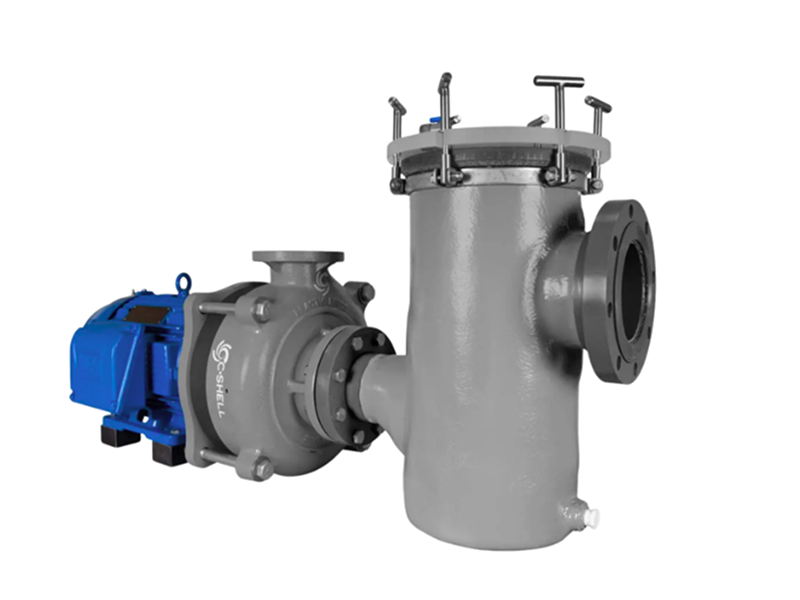
AquaShield FRP Basket Strainer
Defeat Corrosion
Corrosive fluids can ruin standard metal strainers quickly. Whether you are managing brackish water, chemical processing lines, or seawater desalination plants, rust and chemical degradation lead to frequent replacements and unexpected downtime.
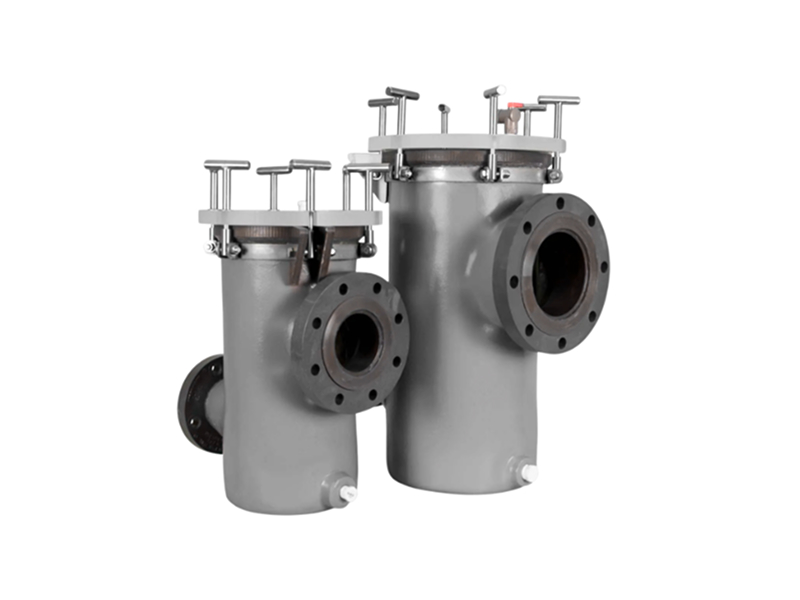
The AquaShield FRP Basket Strainer offers a permanent solution to corrosion. Constructed from high-grade Fiberglass Reinforced Plastic (FRP), this strainer provides the structural strength of metal without any of the vulnerability to rust, pitting, or chemical attack. It is engineered to keep your piping systems safe and your processes flowing smoothly in the harshest environments.
__________________________________________________________________________________________________________________________________________
Why FRP Beats Metal in Harsh Environments
Selecting the right material is the most critical decision for corrosive piping systems. While specialized metal alloys like duplex stainless steel or titanium can handle aggressive fluids, they come with high costs and long lead times.
The AquaShield FRP basket strainer delivers exceptional performance and offers several distinct advantages:
- Total Corrosion Resistance: Unlike lined or coated metal strainers that fail if the interior layer scratches, FRP is inherently corrosion-resistant throughout the entire wall thickness.
- Lightweight Design: FRP weighs a fraction of cast iron or steel. This makes installation faster, reduces the need for heavy structural piping supports, and lowers shipping costs.
- Excellent Strength-to-Weight Ratio: Our fiberglass reinforcement patterns are engineered to handle high internal pressures and mechanical piping loads with ease.
- Smooth Internal Surfaces: The glass-smooth interior resin minimizes friction loss, resulting in lower pressure drops and improved energy efficiency for your pumps.
Precision Engineering for Specialized Industries
The AquaShield FRP Basket Strainer series is built to meet the strict demands of industries where traditional metallurgy falls short. It is an ideal filtration solution for:
- Desalination & Marine Systems: Handling high-salinity seawater without the risk of galvanic corrosion or pitting.
- Chemical Processing: Straining acids, alkalis, and aggressive chemical solutions that would quickly degrade carbon or stainless steel.
- Water & Wastewater Treatment: Managing chlorination loops, backwash water, and corrosive chemical dosing streams.
- Aquariums & Aquaculture: Providing reliable filtration that is completely safe for sensitive marine life, with zero metal leaching.
- Industrial Cooling Towers: Resisting the corrosive water treatment chemicals and biocide loops used in modern cooling systems.
Tailored to Your Specific Process Needs
We understand that industrial piping layouts are rarely standard. Because we control the manufacturing process from start to finish, the AquaShield FRP basket strainer can be customized to match your exact configuration.
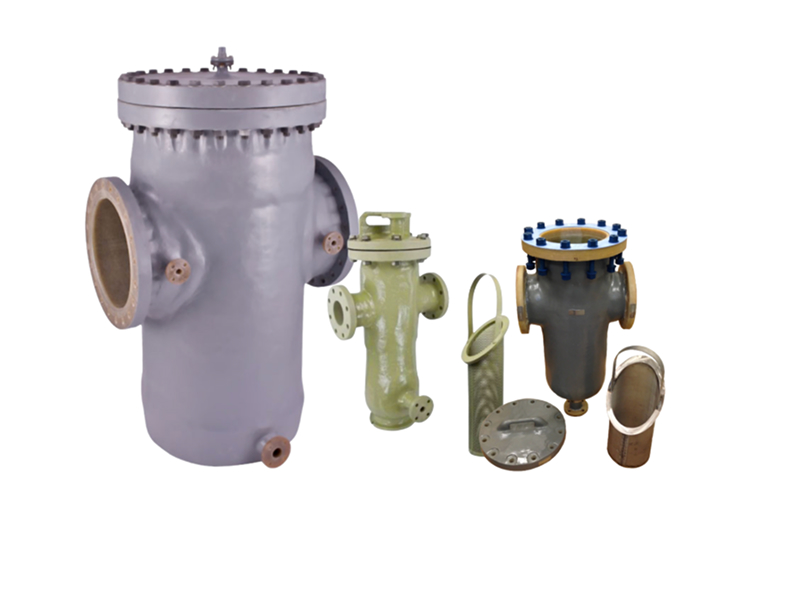
We offer customizable flange connections, variable face-to-face dimensions, and a wide array of basket materials including thermoplastic and exotic alloys to ensure perfect compatibility with your fluid. You get a strainer that drops right into your system without forcing you to modify your existing pipework.
Frequently Asked Questions
1.What exactly is FRP and why is it used for strainers?
FRP stands for Fiberglass Reinforced Plastic. It is a composite material made of a high- strength polymer matrix reinforced with glass fibers. We use it because it combines the mechanical strength of structural metals with the chemical inertness of plastics. This makes it impervious to rust, rot, and chemical corrosion.
2.Can an FRP strainer handle high temperatures and pressures?
Yes, within its engineered limits. While metals handle extreme boiler-feed temperatures better, our AquaShield FRP basket strainers are specifically engineered for ambient and moderate- temperature corrosive processes, typically up to 180°F or 82°C depending on the resin used. We design the composite wall thickness to safely handle standard industrial pressure ratings.
3.How do I know if AquaShield is compatible with my specific chemical line?
We use different resin formulations (such as vinyl ester or epoxy resins) based on what is flowing through your pipes. When you provide your chemical concentration and operating temperature, our engineering team selects the exact resin liner that guarantees long-term chemical compatibility.
4.Does ultraviolet (UV) light damage these strainers if installed outdoors?
No. Outdoor industrial environments are demanding, so we incorporate UV inhibitors directly into the exterior resin layer of the AquaShield strainer. This protective barrier prevents solar degradation, chalking, and brittleness, making the units perfectly suited for uncovered outdoor installations or rooftop cooling towers.
5.Are the internal strainer baskets also made of FRP?
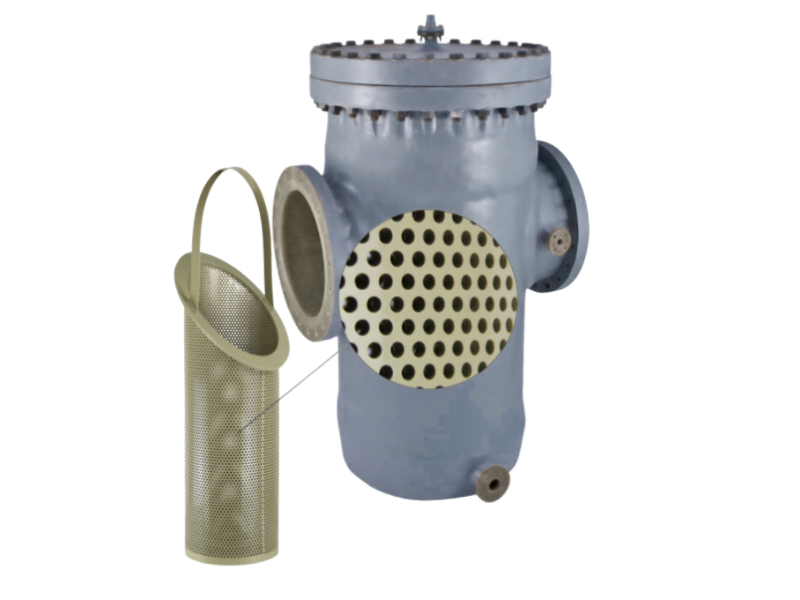
We offer a few options depending on your micron rating and fluid. For maximum chemical resistance, we provide heavy-duty thermoplastic baskets like PVC or PP. For specific high- strength needs, we can also equip the strainer with exotic metal baskets like titanium or Hastelloy.
6.Is installation different from a standard metal strainer?
The process is very similar, but much easier on your installation crew. Because AquaShield strainers weigh significantly less than cast iron or steel, you often do not need heavy cranes or rigging equipment to put them in place. They bolt directly to standard ANSI flanges, though we do recommend using proper torque limits and flat washers to protect the composite flanges.
7.Need specific chemical compatibility charts?
If you are running a specific acid, caustic solution, or chemical blend and need to verify compatibility, contact our technical team. We can provide data sheets, pressure drop curves, and resin resistance guides for your exact fluid.
