 Skip to content
Aroma Cell Series Carbon Filter
Aroma Cell Series
High-Performance Gas Phase & Odor Control
In modern HVAC environments—from the bustling commercial hubs of Qatar, Dubai and Riyadh to the strictly regulated industrial zones of Germany and the UK—maintaining Indoor Air Quality (IAQ) goes beyond simple dust filtration.
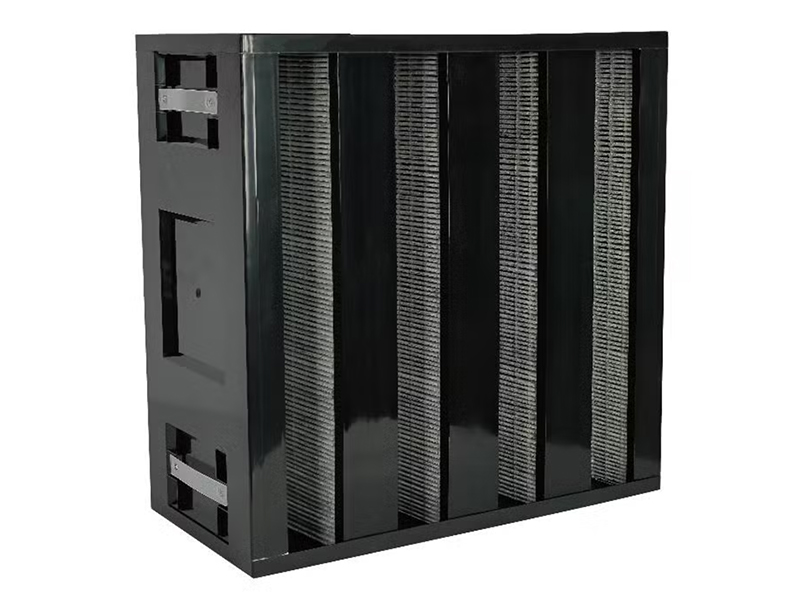
The Aroma Cell Series Carbon Filter (V-Type) is a premium gas phase filtration solution designed to neutralize complex molecular contaminants that standard filters miss. By utilizing a high-surface-area “V” formation, these filters provide maximum dwell time for air purification without sacrificing system airflow.
These Aroma Cell Series Carbon Filter combine activated carbon with impregnated alumina(potassium permanganate), delivering a dual-action performance: adsorption and oxidation. This advanced blend allows for the effective removal of a broad spectrum of volatile organic compounds (VOCs), odors, smoke, formaldehyde, paint and furniture fumes, carpet chemicals, and other harmful gases and vapors.
This unique formulation transforms a standard carbon replacement filter into a high-performance VOC filter, making it particularly suitable for environments with chemically sensitive requirements.
Construction and Performance
Robust Design: The carbon panels are sealed within a galvanized steel casing, or PVC offering durability and resistance to high air volumes and prolonged dwell times.
Air Integrity: A polyurethane base seal ensures complete sealing, eliminating air bypass and maintaining filtration efficiency.
Enhanced Capacity: The ‘V’ configuration increases surface area, allowing for extended contact time and improved contaminant removal. In certain applications, impregnated carbon may be recommended for even more effective filtration. Please contact our technical team for guidance on specific requirements.
Typical Applications
- Kitchen extract odor control
- Commercial food manufacturing ventilation
- Laboratory supply and exhaust systems
- Office air supply
- Air quality control in healthcare and research facilities
- These filters are suitable for airflows ranging from 0.1 m³/s to 10 m³/s, offering a scalable solution for a wide range of industrial and commercial settings.
Dual-Action Technology: Adsorption & Oxidation
Unlike standard carbon filters that only “trap” odors, the Aroma Cell Series Carbon Filter utilizes a sophisticated Hybrid Media Blend:
- Activated Carbon: High-grade porosity for the adsorption of Volatile Organic Compounds (VOCs) and common urban pollutants.
- Impregnated Alumina (KMnO4): Enhanced with Potassium Permanganate to facilitate chemical oxidation, effectively destroying polar gases that carbon alone cannot hold.
Target Applications
- Middle East: Ideal for neutralizing heavy outdoor pollutants, petrochemical odors, and “damp” smells in high-humidity coastal regions.
- Europe: Perfect for meeting stringent Eurovent standards and protecting “chemically sensitive” occupants in green-certified office buildings (BREEAM/LEED).
Key Benefits & Technical Advantages
| Feature | Performance Impact |
| V-Type Geometry | Lower pressure drop and higher media loading capacity for extended filter life. |
| Broad-Spectrum Removal | Targets VOCs, formaldehyde, paint fumes, sulfur dioxide, and nitrogen oxides (NOx). |
| Industrial Grade | Engineered for heavy-duty HVAC systems in airports, hospitals, and laboratories. |
| Non-Desorbing | Oxidation chemically alters pollutants, preventing them from being released back into the air. |
______________________________________________________________________________________________________________________________________________
Frequently Asked Questions (FAQ)
1. What makes the Aroma Cell Series Carbon Filter different from standard carbon filters?
Standard filters usually rely solely on activated carbon. The Aroma Cell Series uses a dual-action blend of carbon and impregnated alumina. While carbon adsorbs odors, the alumina oxidizes harmful gases like formaldehyde and ethylene, making it a “High-Performance VOC Filter” rather than just a simple odor sponge.
2. Is this filter suitable for hot and humid climates like the GCC region?
Yes. The solid carbon pellet panels are designed to maintain structural integrity and chemical efficacy even in high-ambient-temperature environments common in the Middle East. The V-bank design ensures that the HVAC system can handle the high airflow volumes required for large-scale cooling.
3. How often should the Aroma Cell Series Carbon Filter V-type filters be replaced?
Replacement cycles depend on the pollutant concentration and airflow. However, due to the high density of the solid pallet panels, the Aroma Cell Series typically offers a significantly longer service life than pleated carbon-loaded media. We recommend annual testing of the media life to optimize replacement schedules.
4. Does this filter help with “Sick Building Syndrome”?
Absolutely. By removing carpet chemicals, furniture fumes (off-gassing), and cleaning agent vapors, the Aroma Cell Series Carbon Filter is specifically engineered for environments with chemically sensitive requirements, helping buildings meet international IAQ standards.
5. What gases does the KMnO4 (Potassium Permanganate) specifically target?
Potassium Permanganate is excellent for oxidizing contaminants that activated carbon struggles with, such as:
- Hydrogen Sulfide (H2 S)
- Sulfur Dioxide (SO2 )
- Formaldehyde
- Nitric Oxide (NO)
Frame and Housing Compatibility
The Aroma Cell Series is typically designed to fit standard header-style frames (often 24×24 inches or 592×592 mm).
Direct Fit: If your current system uses standard “V-bank” or “Box” type filters (like a Minipleat or a Bag filter), the Aroma Cell will usually slide directly into the existing holding frames.
The Depth Factor: These filters generally have a depth of 292 mm (12 inches). You must ensure your filter plenum has enough clearance to accommodate this depth.
Static Pressure and Fan Capacity
Because the Aroma Cell Series uses solid carbon pellets rather than thin carbon-loaded paper, they are heavier and can offer different resistance to airflow.
Airflow Resistance: Check your fan’s capability. While the “V” shape is designed to maximize surface area and keep pressure drop low, a solid pellet filter may have a higher initial static pressure than a basic pleated dust filter.
System Balance: Your HVAC technician should verify that the fan can maintain the required m3/h (airflow volume) with the new media installed.
Pre-Filtration is Mandatory
To protect your investment in an Aroma Cell filter, you must have a particulate pre-filter (minimum ISO ePM1 50% / F7) installed upstream.
Why? Carbon pellets are designed to “soak up” gases and odors. If they get coated in common dust or sand (especially in the Middle East), the microscopic pores will clog, and the filter will stop working long before the chemical media is actually exhausted.
