Skip to content
Activated carbon filtration is the gold standard for removing dissolved impurities across the industrial spectrum from chemical manufacturing and pharmaceuticals to wastewater treatment and biogas purification. By leveraging an incredibly porous structure and massive surface area, activated carbon relies on the physics of adsorption to pull volatile organic compounds (VOCs), free chlorine, and liquid hydrocarbons out of process streams.
But as process engineers know all too well, an activated carbon filter is only as good as the fluid entering it.
As explored in modern industrial filtration frameworks—such as K Filter Process Consultants’ analysis on Activated Carbon Filter in Industrial Filtration—carbon beds possess a critical vulnerability: solid particulate fouling. When suspended solids enter a carbon bed, they physically plug the voids between granules. This leads to channeling, severe pressure drops, and premature replacement of expensive carbon media long before its chemical adsorption capacity is actually exhausted.
To protect this vital investment, plants are turning to advanced mechanical separation. Here is how the K Filter acts as the definitive pre-filtration and optimization system for industrial activated carbon applications.
The Blinded Bed: Why Liquid and Gas Carbon Filters Fail Early
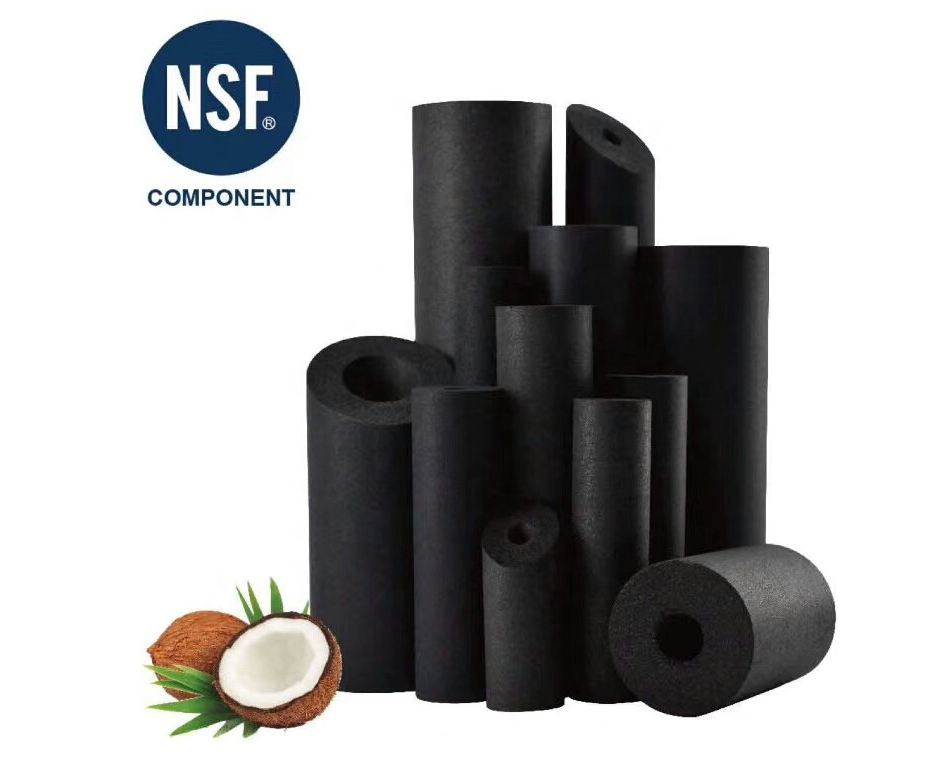
Whether you are using Granular Activated carbon filter (GAC) or Powdered Activated Carbon (PAC) derived from coconut shells, coal, or wood, the mechanism is the same: molecular impurities are trapped within a microscopic porous network by surface energy forces.
However, raw industrial process streams rarely contain only dissolved molecules. They carry:
- Piping scale and iron sulfides
- Catalyst fines and polymer debris
- Suspended organic solids
If these particulates reach the activated carbon filter, they form a physical mask over the carbon pores. Instead of the carbon life being determined by chemical saturation, it gets cut short by mechanical clogging. Operators are then forced to perform frequent backwashing—which degrades brittle carbon granules into useless fines—or undergo high-cost, unscheduled carbon changeouts.
The K Filter Solution: Engineering the Ultimate Protection Layer
The K Filter is specifically engineered to handle high solid loadings and fine particulates, making it the perfect companion to maximize the lifecycle of your activated carbon purification loop.
1. High-Efficiency Particulate Defense
The K Filter utilizes advanced depth-filtration technology to arrest sub-micron and micron-sized particles with absolute precision. By removing the physical solids before the fluid stream hits the activated carbon bed, the K Filter ensures the carbon is used strictly for what it does best: chemical adsorption of dissolved organics, colors, and odors.
2. Minimizing Differential Pressure Drops
When carbon beds get packed with solids, the system differential pressure (ΔP) spikes, forcing pumps to work harder and restricting overall plant throughput. Implementing the K Filter as a dedicated pre-treatment step maintains an open, free-flowing carbon bed matrix. This drastically lowers energy expenditure and prevents the process bottlenecks associated with fouled carbon systems.
3. Preventing Carbon “Channeling”
When solids clog parts of a carbon vessel, the fluid finds the path of least resistance, creating high-velocity “channels.” This localized flow bypasses the rest of the carbon media, resulting in poor contact time and allowing contaminated, off-spec product to slip through. The K Filter guarantees a uniform, particulate-free feed, ensuring even distribution and maximum contact time across the entire carbon bed.
Multi-Industry Applications: Where the K Filter + Carbon Duo Excels
Combining the mechanical precision of the K Filter with the chemical power of activated carbon creates an unbeatable purification train across several demanding sectors:
- Refining & Petrochemicals: Removing suspended solids and iron scales ahead of carbon beds to prevent hydrocarbon foaming in amine and glycol loops.
- Industrial Wastewater Reclamation: Capturing micro-sediments to allow carbon beds to cleanly strip out pesticides, PFAS, and industrial solvents.
- Biogas & Renewable Energy: Catching moisture droplets and particulate debris prior to carbon canisters designed for siloxane and H2S polishing.
- Pharmaceutical Processing: Guaranteeing ultra-clear fluid feeds to carbon filters to prevent the contamination of high-value active pharmaceutical ingredients (APIs).
The Bottom Line: Drastically Lower OpEx
Investing in the K Filter as a defensive shield for your activated carbon system delivers a rapid return on investment (ROI) by targeting operational expenditures:
- Extended Carbon Lifespan: Increase the time between carbon changeouts by up to 200–300%.
- Reduced Material Waste: Fewer carbon replacements mean lower disposal costs for spent, contaminated media.
- Optimized Uptime: Spend less time backwashing, steaming, or manually digging out blinded carbon vessels.
Conclusion: Don’t Let Particulates Waste Your Carbon Investment
Activated carbon is an incredibly effective tool for molecular purification, but it shouldn’t be used as a trash can for mechanical solids. For an industrial filtration system to run at peak efficiency, mechanical separation and chemical adsorption must work hand-in-hand.
The K Filter provides the heavy-duty, reliable particulate capture required to let your activated carbon operate at its highest thermodynamic potential.
Contact our process engineering specialists today to evaluate your stream chemistry and discover how a custom-configured K Filter can protect your carbon beds and lower your operating costs.