Skip to content

A separator that performs well on free oil can fail quickly when the same water arrives as a stable emulsion. Knowing how to separate water and hydrocarbons begins with identifying the hydrocarbon form, the water chemistry, and the actual outlet requirement. For industrial plants, the objective is not simply to remove visible oil. It is to protect downstream equipment, maintain process consistency, recover valuable product where possible, and meet the required discharge or reuse standard.
Oil and hydrocarbon contamination occurs in produced water, refinery drainage, tank farm runoff, bilge water, compressor condensate, wash water, cooling-water systems, and petrochemical process streams. A reliable treatment train commonly combines bulk separation, coalescing, flotation, and final polishing. The correct sequence depends on droplet size, concentration, flow variability, solids loading, surfactants, temperature, and the required residual oil level.
Start With the Hydrocarbon-Water Separation Problem
Hydrocarbons do not behave as one contaminant. Free oil forms droplets that rise or separate readily under gravity. Dispersed oil exists as smaller droplets suspended in water and often requires coalescing media or flotation. Emulsified oil has droplets stabilized by surfactants, shear, fine solids, or chemical additives. Dissolved hydrocarbons, including some aromatic compounds, cannot be removed effectively by conventional gravity separation alone.
This distinction determines the technology selection. Installing a fine cartridge filter ahead of a separator, for example, may remove solids but will not break a chemical emulsion. Similarly, a large gravity tank may provide excellent bulk oil removal while still allowing small dispersed droplets to pass into downstream equipment.
A representative water analysis should establish total oil and grease, free versus emulsified oil, suspended solids, pH, conductivity, temperature, chemical oxygen demand, surfactant content, and flow range. Microscopic droplet-size analysis is especially useful when selecting a coalescer or dissolved air flotation system. The design basis must also define whether the treated water is intended for discharge, reinjection, reuse, boiler feed pretreatment, or further membrane treatment.
How to Separate Water and Hydrocarbons by Stage
Remove free hydrocarbons with gravity separation
Gravity separation is normally the first stage when free hydrocarbons are present in meaningful quantities. Because most petroleum hydrocarbons have a lower density than water, sufficiently large droplets rise to the surface when flow velocity is reduced and residence time is available. Settling and separation tanks, API-style separators, corrugated plate interceptors, and inclined plate separators are commonly applied for this duty.
The operating principle is straightforward, but field performance depends on hydraulic control. Short-circuiting, turbulence at the inlet, poor level control, and high flow surges reduce the effective residence time. Inlet diffusers, baffles, skimmers, and properly designed overflow arrangements are not minor accessories. They determine whether the separator provides calm conditions for droplets to rise.
Gravity equipment is best treated as a bulk-removal step. It can reduce the load on downstream equipment and recover separated hydrocarbon for recycling or controlled disposal. It is not usually the final answer where low oil-in-water limits apply.
Capture smaller droplets through coalescing
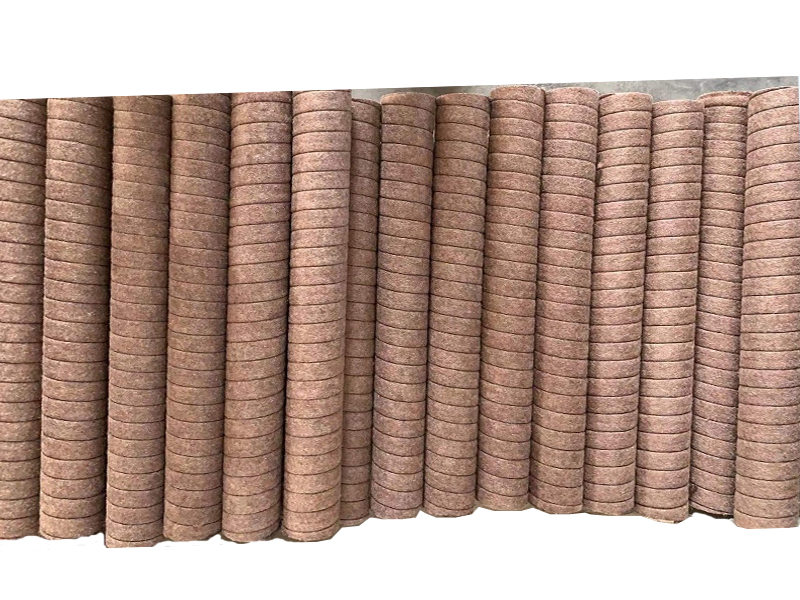
Coalescing separation is used after bulk oil removal or where dispersed droplets are too small for efficient gravity separation. Water passes through engineered media that intercepts hydrocarbon droplets. The droplets collect on the media, merge into larger droplets, and then separate by buoyancy in a low-velocity zone.
Coalescer selection must account for fluid compatibility, viscosity, temperature, interfacial tension, solids concentration, and flow rate. Oleophilic media may improve capture of hydrocarbon droplets, but the material must remain compatible with the process chemistry. For aggressive chemicals, high temperatures, or demanding service, housing materials, seals, and media construction need to be specified accordingly.
A coalescer is not a substitute for solids control. Fine solids can blind the media, while sticky contaminants can alter wetting characteristics and limit droplet release. Upstream strainers, bag filters, or cartridge filtration may be necessary to protect the coalescing stage. The filter rating should be chosen carefully: overly fine prefiltration can create excessive differential pressure and operating cost without improving oil separation.
Use flotation when gravity is not enough
Dissolved air flotation, or DAF, is often applied when the stream contains fine dispersed oil, suspended solids, or flocculated emulsions. In a DAF system, water saturated with air under pressure is released into the treatment zone. The resulting microbubbles attach to oil droplets and suspended particles, carrying them to the surface for skimming.
Flotation becomes particularly valuable where available footprint is limited or where process water quality changes rapidly. Chemical conditioning may be used ahead of DAF to destabilize emulsions and form removable flocs. The trade-off is greater operational complexity. Coagulant and polymer dosage, recycle ratio, bubble generation, sludge handling, and surface skimmer performance all require active control.
For stable emulsions, a chemical program may be the decisive factor. Demulsifiers, pH adjustment, coagulation, and flocculation can weaken the forces keeping droplets suspended. Bench-scale jar testing is the practical way to determine whether chemistry will produce a separable phase and what dosage range is required. It is risky to specify a full-scale flotation package based only on an oil-and-grease number.
Polish the effluent for the final duty
After free and dispersed hydrocarbons are removed, a polishing stage may be required to meet discharge limits or protect sensitive downstream treatment. Depth media filters, liquid filter bags, and cartridge filters are effective for remaining suspended solids and hydrocarbon-bearing particulate. They are commonly used after flotation, coalescing, or clarification.
Where dissolved hydrocarbons remain, activated carbon adsorption may be appropriate. Carbon can reduce residual organic contaminants that are not present as removable droplets. Its capacity, however, is finite. High oil loading, suspended solids, or biological growth can consume carbon capacity quickly, so pretreatment is essential.
Membrane systems can provide high-quality water for reuse, but they demand disciplined pretreatment. Free oil, emulsions, and fine particulates can foul ultrafiltration, nanofiltration, and reverse osmosis membranes. A membrane should be protected by a stable separation train, not used as the first response to an oily wastewater problem.
Design Around Real Operating Conditions
The best separation system is designed around the worst credible operating condition rather than the average laboratory sample. Tank draining, washdown events, stormwater intrusion, chemical cleaning, and upset conditions can produce short-duration hydrocarbon loads far above normal flow. Equalization capacity may be required to prevent these surges from overwhelming separators and filters.
Temperature deserves close attention. Higher temperature generally lowers oil viscosity and can improve droplet movement, but it can also change emulsion behavior and material compatibility. Cold conditions can increase viscosity, slow separation, and require larger equipment or heating provisions. High-salinity produced water introduces a different set of considerations, including corrosion resistance, scaling, and altered chemical treatment response.
Instrumentation should support operation, not merely compliance reporting. Monitor flow, differential pressure across filters and coalescers, interface level in separators, pH, turbidity, and oil-in-water where continuous analyzers are justified. Sampling points before and after each major stage help maintenance teams determine whether a performance issue originates with inlet conditions, chemical treatment, separation hydraulics, or final filtration.
Avoid Common Separation Failures
Many hydrocarbon-water separation problems are caused by a mismatch between equipment and contaminant form. A few failures recur across industrial sites:
- Excessive pumping shear breaks oil into smaller droplets and creates harder-to-separate dispersions.
- Detergents, corrosion inhibitors, and process additives stabilize emulsions that a conventional oil-water separator cannot remove.
- Poor skimming allows recovered hydrocarbons to re-enter the water phase during flow changes.
- Inadequate solids prefiltration blinds coalescers and increases differential pressure.
- Filter changes based only on a calendar interval can lead to bypassing, collapsed media, or unnecessary consumable cost.
Correcting these issues often produces greater improvement than simply adding another filter stage. Use low-shear pumping where possible, isolate wash-water streams that contain surfactants, maintain skimmer and sludge-removal equipment, and establish differential-pressure limits for filter replacement. For systems with variable water quality, specify housings and consumables that can be serviced without prolonged downtime.
Selecting an Industrial Separation Train
A practical treatment train for free oil and solids might include inlet straining, gravity separation, coalescing, and cartridge or bag filtration. A more difficult emulsion may require equalization, chemical treatment, DAF, solids filtration, and activated carbon polishing. Produced water intended for reuse may add ultrafiltration or reverse osmosis after stable oil removal.
The decision should be based on treatability data, required throughput, allowable pressure drop, materials of construction, maintenance access, disposal arrangements, and the cost of failure. An undersized coalescer or an incorrectly rated filter may appear economical at purchase but can increase downtime, wastewater handling cost, and equipment exposure over its service life.
K Filter Global supports industrial filtration requirements with liquid filter bags, cartridges, strainers, housings, and application-focused separation components that can be specified around process fluid, contaminant load, and operating conditions. The strongest result comes from treating filtration as part of a complete separation system, with each stage assigned a clear contaminant-control duty.
When water quality begins to vary, do not wait for an outlet limit exceedance or a downstream fouling event to investigate. Re-sample the stream, verify the hydrocarbon form, and confirm that the current separation stages still match the process conditions. That disciplined approach keeps the system protectable, maintainable, and ready for the next operating upset.