Skip to content
Start With the Contaminant and the Process Risk
A liquid filter bag that fits the housing can still be the wrong filter for the job. Knowing how to select liquid filter bags starts with defining what must be removed, what the liquid can tolerate, and what failure would mean for the process. In a cooling-water loop, the priority may be keeping debris away from pumps and heat exchangers. In chemical processing, the decision may center on product purity, solvent compatibility, and batch consistency. For a high-value coating, resin, or food product, a small amount of bypass or fiber shedding can create unacceptable downstream rejects.
The filter bag is part of a complete liquid filtration system. Its performance depends on the contaminant, fluid properties, operating temperature, pressure, flow rate, housing design, and maintenance practice. Selecting on micron rating alone often produces short service life, high differential pressure, or incomplete contamination control.
Define What the Filter Must Remove
Begin with a practical contamination profile. Identify whether the stream contains hard particles, soft gels, fibers, scale, rust, carbon fines, biological matter, or deformable solids. Particle shape and loading matter as much as particle size. A fibrous contaminant can bridge quickly across a fine surface filter, while a high concentration of irregular solids may require a depth media that retains contamination throughout the material.
The required cleanliness level should be tied to the equipment or process being protected. Pumps, spray nozzles, heat exchangers, membranes, meters, valves, and finished-product specifications may each have different particle tolerance limits. Upstream coarse filtration can protect the final filter stage from premature plugging when the incoming liquid has variable or heavy solids loading.
Do not assume that a stated micron value means identical capture performance across all bag types. Nominal-rated bags are designed to retain a percentage of particles around their rated size, while absolute-rated bags provide more consistent and defined retention. The right choice depends on risk. Nominal filtration is often suitable for general equipment protection and bulk solids removal. Applications requiring tighter particulate control, repeatable quality, or protection of sensitive downstream components generally justify an absolute-rated construction.
Select a Micron Rating That Balances Protection and Capacity
A lower micron rating is not automatically better. Fine filtration improves particle removal but reduces open area and can increase differential pressure sooner, particularly where solids loading is high. If a 1-micron bag blinds in hours, the process may be better served by staged filtration rather than simply using a more expensive fine bag.
A practical approach is to select the coarsest rating that still protects the downstream process. For example, a prefilter may remove larger debris at 100 or 200 microns before a second-stage bag captures finer material at 25, 10, or 5 microns. This arrangement can reduce labor, bag consumption, downtime, and disposal volume.
The particle-size target should also account for the sensitivity of the asset. A bag protecting a transfer pump can be considerably coarser than one installed immediately before precision spray equipment. Where a process specification sets a required cleanliness standard, confirm whether it is expressed as a nominal particle size, an absolute retention requirement, or a particle-count limit. Those are not interchangeable specifications.
Match Filter Media to the Liquid Chemistry
Media compatibility is a primary selection criterion. A filter bag must withstand continuous contact with the fluid, including any cleaning chemicals, process additives, solvents, and temperature excursions. A bag that swells, degrades, extracts material, or loses tensile strength can compromise filtration and create unplanned maintenance.
Polypropylene felt is widely used for water-based fluids, many acids and alkalis, and general industrial service. It offers good chemical resistance and cost-effective depth filtration. Polyester felt provides stronger resistance to many oils and higher operating temperatures, making it a common choice for lubricants, fuels, and certain chemical streams. Nylon monofilament mesh is useful where precise openings, cleanability, and lower extractables are needed, although its chemical resistance must be checked carefully for acidic service.
For aggressive chemicals, elevated temperatures, or critical purity requirements, fluoropolymer media such as PTFE may be appropriate. The higher material cost can be justified where conventional media would fail, contaminate the product, or require frequent replacement. Material selection should never rely on a general compatibility chart alone. Evaluate the actual concentration, temperature, exposure time, and pressure conditions, especially when solvents or mixed chemical streams are involved.
Choose the Right Construction: Felt, Mesh, or High-Efficiency Media
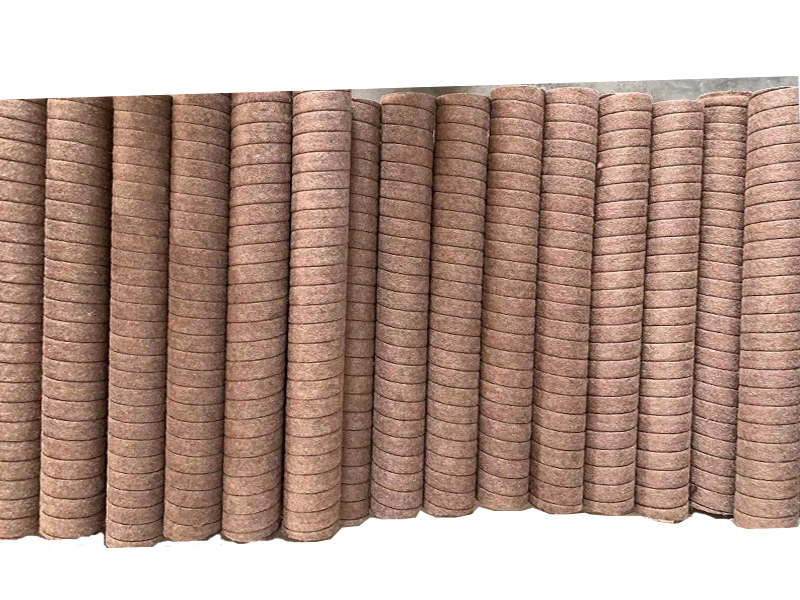
Needle felt bags are depth filters. Their thicker, three-dimensional structure holds solids within the media, providing useful dirt-holding capacity in applications with moderate to high contaminant loading. They are a dependable choice for many industrial water, chemical, oil, and process-liquid duties.
Monofilament mesh bags are surface filters. Their uniform openings provide more defined particle separation and are often selected when captured material has value, when bag cleaning is feasible, or when the process requires controlled particle cutoff. Because most solids accumulate on the surface, mesh bags can experience a faster pressure rise in dirty service unless the contaminant load is low or a prefiltration stage is installed.
Melt-blown or multilayer high-efficiency bags combine fine particle retention with greater depth capacity than conventional single-layer felt. They can be effective where a standard felt bag does not provide enough removal efficiency but a cartridge system is unnecessary or impractical. The trade-off is usually a higher unit cost, so lifecycle performance should be evaluated rather than comparing purchase price alone.
Confirm Flow Rate, Viscosity, and Pressure Drop
Bag size and surface area determine how much flow the filter can manage before pressure drop becomes excessive. Standard Size 1 and Size 2 bags are common, with Size 2 providing more filtration area and often longer service life. In high-flow applications, larger housings, multi-bag systems, or parallel filtration trains may be necessary to maintain flow without forcing liquid through the media at excessive velocity.
Viscous liquids require particular attention. Oils, syrups, resins, adhesives, and temperature-sensitive fluids create higher resistance through the filter media. A micron rating that performs well in water may generate unacceptable pressure loss in a viscous product. Larger surface area, a coarser prefilter, a higher operating temperature where process conditions permit, or a different filtration configuration may be required.
Establish a clean differential-pressure baseline and a defined changeout pressure. Waiting until flow collapses can stress pumps, disrupt production, and make it difficult to diagnose whether the issue is the bag, the liquid, or the upstream process. The allowable pressure limit must remain within both the bag and housing ratings.
Verify Bag-to-Housing Sealing and Bypass Control
A well-chosen media cannot compensate for poor sealing. The bag collar, ring, or flange must match the housing basket and restraint design so liquid is directed through the media rather than around it. Bypass is especially damaging in critical applications because it may be invisible while contamination reaches sensitive downstream equipment.
Common sealing arrangements include metal rings, plastic rings, molded collars, and flange-top designs. The selection depends on the housing configuration, temperature, chemical compatibility, and required seal integrity. A handle, lifting loop, or reinforced top may also improve safe removal when bags are loaded with solids or installed in difficult access locations.
Specify the exact bag dimensions, collar style, material, and micron rating rather than ordering by a general description. A nominally similar replacement can have a different seal geometry, fiber finish, or filtration behavior.
Consider Compliance, Cleanliness, and Disposal Requirements
For food, beverage, pharmaceutical, potable-water, and high-purity duties, material traceability and cleanliness can be as relevant as filtration efficiency. Verify whether the process requires FDA-compliant materials, food-contact suitability, silicone-free construction, low extractables, or controlled manufacturing documentation. For hazardous chemical or oil service, plan disposal based on the retained contaminant and local site requirements, not the bag media alone.
Maintenance teams should also consider changeout frequency, operator exposure, and inventory standardization. A bag that costs less but requires frequent shutdowns may be more expensive over a year than a higher-capacity option. Standardizing a limited range of proven bags across compatible housings can simplify purchasing while preserving application-specific performance.
Turn the Specification Into a Repeatable Selection
A complete liquid filter bag specification should identify the liquid, operating and maximum temperature, normal and peak flow, viscosity, inlet solids condition, target particle retention, media, bag size, seal style, housing compatibility, and allowable differential pressure. If contamination varies by batch, season, or source, state that as well. These details allow a supplier to recommend a configuration based on operating reality rather than a generic cross-reference.
K Filter supports industrial buyers with liquid filter bags and engineered filtration options suited to water treatment, chemical processing, oil and gas, marine, food processing, and other demanding services. Where operating conditions are uncertain, a controlled field trial using differential-pressure and changeout data is often the fastest way to validate the final selection.
The best filter bag choice is the one that maintains required liquid quality without becoming the process bottleneck. Treat the bag as an engineered operating component, measure its performance in service, and adjust the filtration train when contaminant loading or process risk changes.