Skip to content
A cartridge that plugs prematurely can turn a low-cost consumable into a production problem. In water treatment, chemical processing, desalination pretreatment, food processing, and general industrial services, melt blown polypropylene filter cartridges are commonly specified as depth filters because they can retain particulate contamination through the media structure rather than only at the outer surface.
Their value is straightforward: cleaner process liquid, lower downstream fouling, and better protection for membranes, pumps, valves, nozzles, and final filtration stages. Achieving those outcomes, however, depends on selecting the correct micron rating, dimensions, construction, and operating envelope for the actual contaminant load.
How Melt Blown Polypropylene Filter Cartridges Work
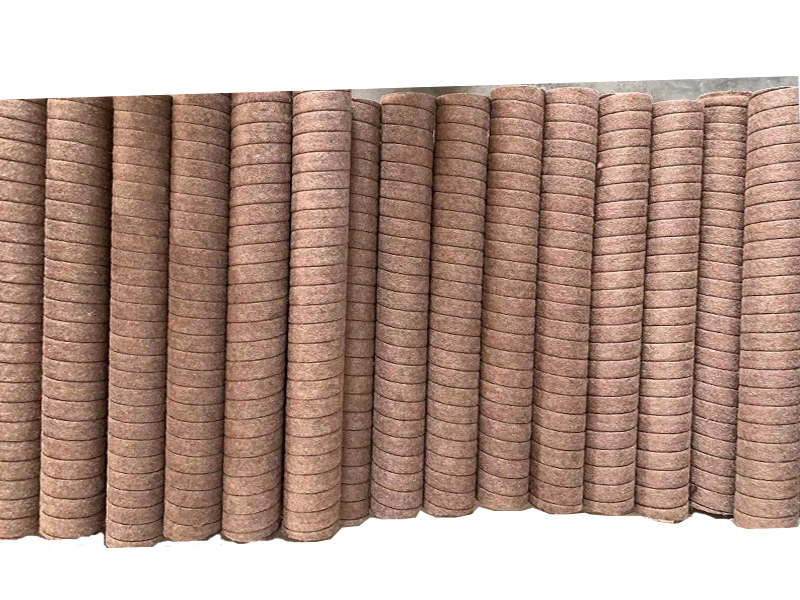
Melt blown cartridges are made by extruding fine polypropylene fibers and collecting them in a layered matrix around a central core. The process creates a depth structure with larger pore paths toward the outside and progressively finer retention zones toward the center. Liquid enters at the cartridge exterior, passes through the media thickness, and exits through the core.
This graded-density construction spreads solids loading across the cartridge rather than concentrating all contamination on one face. Compared with a purely surface-retention element, a properly selected melt blown cartridge can provide useful dirt-holding capacity and a slower differential-pressure rise where the feed contains a range of particle sizes.
The fibers are thermally bonded during manufacture. No binders, adhesives, or lubricants are required to hold the media together. For many industrial liquid applications, that all-polypropylene construction is a practical advantage because it reduces the risk of extractables associated with dissimilar media components.
A melt blown cartridge is still a disposable depth filter, not a self-cleaning device. As retained solids accumulate, pressure drop increases and flow declines. Cartridge replacement should be based on a defined differential-pressure limit, flow requirement, or validated maintenance interval – not simply on visual appearance.
Where Melt Blown Polypropylene Filter Cartridges Fit Best
These cartridges are widely used as prefilters ahead of reverse osmosis systems, ultrafiltration, activated carbon, membrane housings, and sensitive process equipment. They are also used for particulate reduction in cooling water, process water, plating solutions, inks, paints, chemicals, and utility water.
They perform especially well when contamination is predominantly particulate and the liquid is compatible with polypropylene. Fine sediment, rust, pipe scale, silt, carbon fines, and process debris are typical targets. In many installations, the cartridge’s primary job is not to produce final-purity liquid. It is to remove the contaminant load that would otherwise shorten the service life of a more expensive downstream component.
For desalination and water-treatment systems, cartridge filtration is often positioned after upstream clarification or media filtration and before membrane equipment. The correct arrangement depends on feed-water variability, membrane manufacturer requirements, and the available operating pressure. A cartridge rated too fine can create excessive pressure loss; a cartridge rated too open can allow enough particulate through to accelerate membrane fouling.
Micron Rating Is Not the Entire Specification
Purchasing teams often begin with a micron rating, such as 1, 5, 10, 20, or 50 micron. That is necessary, but it is not sufficient. The stated rating must be interpreted alongside the manufacturer’s retention terminology, test method, media density, and flow conditions.
Many depth cartridges are described by nominal retention ratings. A nominal rating indicates a practical level of particle reduction under defined test conditions, rather than a guarantee that every particle at that size will be retained. When a process requires highly controlled particulate removal, engineers should confirm the required efficiency and whether an absolute-rated filter, membrane filter, or finer final stage is more appropriate.
The trade-off is direct. Finer media generally captures smaller particles but may have lower initial flow at a given pressure drop and may load more quickly in dirty service. A 1-micron cartridge is not automatically better than a 10-micron cartridge. If the upstream liquid carries heavy solids, staged filtration can be the more economical design: use a coarser cartridge or pretreatment stage first, then a finer cartridge where needed.
Selection Factors That Protect System Performance
Correct cartridge selection starts with the liquid and the operating duty. Fluid chemistry, solids type, temperature, expected flow, pressure, contaminant concentration, and required outlet quality should all be reviewed together.
Cartridge dimensions and housing fit
Length, outside diameter, inside diameter, end treatment, and core configuration must match the housing. Standard nominal lengths such as 10, 20, 30, and 40 inches are common, but actual dimensions and end configurations vary. A cartridge that appears similar can still bypass internally, seal poorly, or fail to seat correctly if its end treatment is not compatible with the housing.
For high-flow duties, multiple-round housings, large-diameter cartridge formats, or a parallel housing arrangement may be required. Selecting a longer or larger cartridge can reduce flux through the media and extend service intervals, provided the housing and seals are designed for that configuration.
Flow rate and differential pressure
Published flow data should be treated as a starting point, not a final design value. Actual pressure drop changes with liquid viscosity, temperature, contamination profile, and cartridge loading. Water at ambient temperature behaves very differently from a viscous chemical solution or chilled process fluid.
Establish an initial clean pressure-drop target and a replacement differential-pressure limit for each duty. Trend those values during operation. A rapid increase in differential pressure may indicate unusually high solids loading, a change in upstream process conditions, incorrect micron selection, or a cartridge with insufficient area for the required flow.
Chemical and temperature compatibility
Polypropylene offers broad compatibility with many aqueous solutions, acids, and alkalis, making it a frequent choice for industrial water and chemical filtration. Compatibility cannot be assumed for every fluid, concentration, temperature, or exposure duration. Strong oxidizers, certain organic solvents, elevated temperatures, and demanding hydrocarbon service may require another media, seal material, or cartridge construction.
The cartridge media is only one part of the wetted system. Confirm compatibility for the core, gaskets or O-rings, housing, and any adapters as well. A chemically suitable filter medium does not solve a problem caused by an incompatible seal.
Installation and Changeout Practices Matter
Even a well-specified cartridge can underperform if it is installed into a contaminated or poorly maintained housing. Before installation, inspect the vessel, basket, seal surfaces, and internal components. Remove loose debris and confirm that the cartridge seats correctly. Where the process allows, flush the system after changeout to remove manufacturing dust, displaced fines, or residual contamination before directing flow to sensitive equipment.
Record installation date, cartridge grade, upstream and downstream pressure, and reason for replacement. This small amount of operating data creates a useful maintenance history. Over time, it helps plant teams distinguish normal cartridge loading from upstream failures, seasonal feed-water changes, or process conditions that warrant a different filtration arrangement.
Do not extend a cartridge indefinitely to reduce consumable use. Operating at excessive differential pressure can reduce flow, increase energy demand, strain pumps, and risk media deformation or bypass. The least expensive cartridge is not always the lowest-cost choice when it leads to frequent shutdowns or exposes critical equipment to contamination.
Engineering the Right Filtration Stage
Melt blown polypropylene cartridges are highly effective when they are assigned the right role: economical depth filtration for particulate control in compatible liquid service. They are not a substitute for coalescing when free water must be separated from fuel or oil, activated carbon when dissolved organics must be reduced, or membrane filtration when validated fine-particle or microbiological control is required.
For demanding projects, K Filter Global can align cartridge material, micron rating, dimensions, and housing compatibility with the operating conditions of the system. The most reliable selection starts with a sample of the real duty – fluid, solids, flow, temperature, pressure, and required downstream protection – then builds the filtration stage around that evidence.