Skip to content
A filter that fits the housing but fails the process is not a successful replacement. In industrial filtration, the real specification starts with what must be removed, what the system can tolerate, and what happens when differential pressure rises or contamination passes downstream. A nominal micron rating alone cannot answer those questions.
For plant engineers, maintenance teams, and procurement buyers, filtration selection is a balance of contaminant control, flow capacity, pressure loss, material compatibility, service interval, and available replacement support. The correct assembly protects critical equipment and product quality without introducing unnecessary restriction, frequent changeouts, or avoidable operating cost.
Start Industrial Filtration With the Contaminant
The first selection question is not “Which filter do we usually buy?” It is “What is in the stream, and how does it behave?” Solid particles, liquid aerosols, dissolved contaminants, fibers, sticky oil mist, biological matter, corrosive gases, and high-viscosity liquids require different mechanisms of capture.
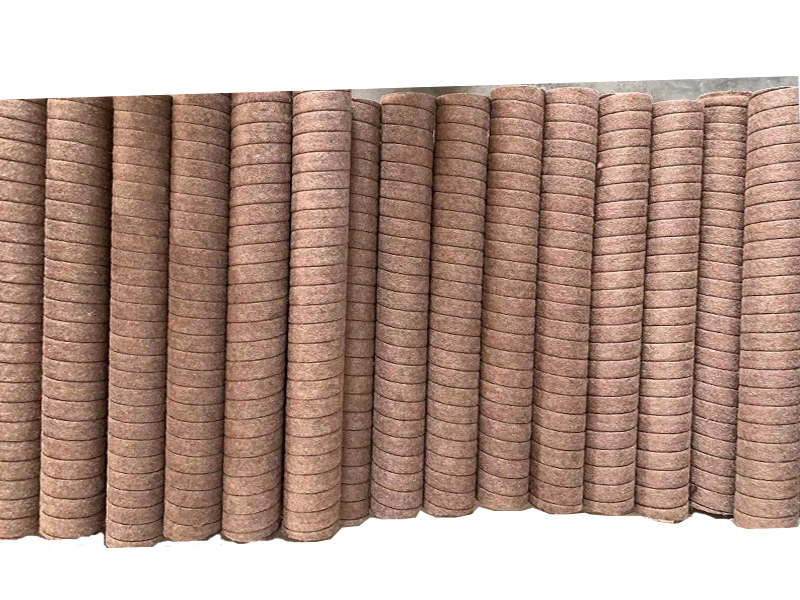
Particle filtration commonly relies on surface loading, depth loading, or a combination of both. Pleated media can provide high surface area and low initial pressure drop for fine particulate duty. Depth media, including wound or melt-blown structures, can retain contaminants throughout the media matrix and may be better suited to variable particle loading. Filter bags and basket strainers are often practical upstream choices where coarse solids must be removed at higher flow rates.
Liquid aerosol removal is different from dry particle capture. Compressed-air coalescing elements use fine media to intercept submicron droplets, combine them into larger droplets, and drain them from the element. They are often paired with particulate prefiltration and activated-carbon stages when the downstream requirement includes low oil vapor, odor, or taste transfer. A coalescing element installed without effective drainage, or operated above its rated flow, will not deliver its intended performance.
Gas-phase contamination requires another approach. Activated carbon, impregnated carbon, potassium permanganate media, and specialty chemisorption media address odors, volatile organic compounds, and targeted gaseous pollutants. Media selection depends on contaminant concentration, humidity, temperature, contact time, and breakthrough requirements. A particulate prefilter is typically necessary to keep dust from prematurely blocking the gas-phase media.
Specify From the Duty Point Backward
A complete filtration specification should begin with the operating duty point rather than the catalog part number. Confirm normal and maximum flow, operating and design pressure, temperature, fluid viscosity, contaminant load, and expected upset conditions. A housing or element that works during normal production may become a restriction during startup, cold weather, or peak demand.
Differential pressure deserves particular attention. Initial pressure drop affects energy consumption and available process pressure. Final allowable pressure drop determines the usable dirt-holding capacity and the changeout interval. In a hydraulic or lubrication circuit, excessive restriction can contribute to pump starvation or bypass operation. In an HVAC system, it can reduce airflow and place added demand on fans. In a compressed-air system, every unnecessary pressure drop increases compressor energy requirements.
Materials must match the process stream and cleaning method. Stainless steel housings, PVDF components, PTFE media, polypropylene, nylon, cellulose, fiberglass, and elastomeric seals each have useful operating ranges and limitations. Chemical compatibility includes more than the primary fluid. Consider cleaning agents, steam exposure, temperature cycling, water content, and any solvents or additives introduced during maintenance.
The required level of capture must also be defined clearly. Nominal ratings describe a general level of retention and can vary by manufacturer and test method. Absolute-rated elements are associated with more controlled retention performance, but the appropriate rating still depends on the particle size distribution and the consequence of downstream contamination. For clean environments, specify the relevant test standard and classification, such as ISO 16890 ePM1 or ePM2.5 for general ventilation filters and EN 1822 HEPA H13 where high-efficiency particulate control is required.
Choose Media and Configuration Together
Filter media cannot be selected in isolation from the element geometry and housing configuration. A high-efficiency media may meet the target micron requirement but create excessive pressure loss if the available surface area is too low. Increasing pleat count, element length, or the number of cartridges can reduce face velocity and extend service life, provided the housing and seals are properly designed for the operating pressure.
For liquid processes, cartridge filters are commonly used when controlled micron retention and cleanable or disposable elements are needed. Filter bags offer simple changeout and economical solids removal at high flow. Duplex strainers and basket strainers support continuous service where one chamber must remain online while the other is cleaned. Multi-stage assemblies can place coarse filtration upstream of fine cartridges, reducing the cost and frequency of final-stage changeouts.
In high-pressure hydraulic, turbine lube, and fuel systems, collapse strength, beta ratio, bypass settings, and element fitment are as important as micron rating. A fine element that lacks adequate structural support may deform during a cold start or high differential-pressure event. In oil and gas separation service, the configuration may need to manage bulk liquid, entrained droplets, fine aerosol, and solids in sequence. A single component rarely solves every contamination mode.
Match the Filtration Train to the Application
Facility Air and Critical Clean Air
Commercial and industrial HVAC systems often benefit from staged filtration. A lower-efficiency prefilter captures larger debris, while a final filter addresses finer particulate. This approach can protect more expensive ePM1 or ePM2.5 final filters from premature loading. Where HEPA H13 filtration is required, system leakage, gasket integrity, frame design, and fan capacity matter as much as the media rating.
For gas turbine intake, concrete production, manufacturing dust, and other high-loading environments, pulse-cleaned or high-capacity configurations may be necessary. The goal is not simply high efficiency. It is stable airflow, controlled pressure drop, weather resistance, and predictable maintenance in the actual installation environment.
Compressed Air, Process Gas, and Steam
Compressed-air treatment should follow the quality requirement at the point of use. General plant air, instrumentation air, food-contact air, breathing-air systems, and sensitive pneumatic controls do not share the same contamination limits. Water separators, particulate filters, coalescing filters, vapor-removal media, and sterile filtration may each have a place in the treatment train.
For process gas and steam, confirm temperature, condensate conditions, pressure rating, and cleanability. Steam filters may require stainless construction and elements suited to thermal cycling. Gas filtration can require low-pressure-drop elements with reliable sealing, particularly where leakage or particle shedding creates downstream process risk.
Process Liquids, Water, Fuels, and Lubricants
Food and beverage water filtration may involve sediment reduction, carbon treatment, membrane prefiltration, and final cartridges selected for hygiene requirements. The system must be designed for sanitation procedures, flow demand, and replacement intervals, not only water clarity.
Fuel and lubricant filtration often requires water separation along with fine particulate removal. In these services, monitor filter differential pressure and inspect for evidence of water ingress, unusual wear debris, or rapid loading. Frequent clogging may indicate a reservoir, seal, breather, or upstream process problem that a replacement element alone will not correct.
Verify Replacement Filter Fitment Before Ordering
Aftermarket-compatible elements can reduce cost and improve sourcing flexibility, but interchangeability must be verified at the equipment level. Confirm overall length, outside and inside diameter, end-cap design, seal material, collapse rating, flow direction, micron or beta rating, and bypass compatibility. A part number cross-reference is a starting point, not a complete engineering review.
This is especially relevant for replacement elements compatible with established PECO, Boll & Kirch, Hilco, Hilliard, PALL, and HYDAC systems. Similar dimensions do not guarantee the same media performance or structural capability. When a filter protects servo valves, turbine bearings, critical process nozzles, or regulated product streams, request the performance data necessary to compare the replacement against the operating requirement.
Maintain a documented filter record for critical assets. Record installed element type, date, initial differential pressure, final differential pressure, observed contaminant condition, and operating hours. That information turns changeouts from reactive purchasing events into usable reliability data.
Plan for Service, Not Just Startup
The best filtration system is serviceable under plant conditions. Consider housing access, lifting clearance, drain location, isolation valves, spare inventory, contamination containment during changeout, and the ability to keep production online. Duplex designs, multi-round housings, and staged assemblies may cost more initially but can reduce downtime and maintenance exposure over the life of the system.
K Filter supports this selection process with application-specific media, housings, filter bags, replacement elements, and multi-stage contamination-control assemblies. Provide the fluid or air stream, flow rate, pressure, temperature, target contaminant, current element details, and any required compatibility reference when requesting a quote.
A useful next step is to review the filters changed most often in your facility. If their service life is inconsistent, their differential pressure rises too quickly, or downstream components show contamination, the issue may be the specification, not the supplier. Call us anytime with the operating data, and the filtration train can be evaluated against the conditions it actually faces.