Skip to content
A bag that looks correct on the shelf can still be wrong for the process. Filter bags must match more than nominal micron rating: fluid chemistry, temperature, solids loading, vessel configuration, flow profile, and required cleanliness all determine whether a bag provides stable filtration or becomes a frequent source of pressure loss, bypass, and unplanned changeouts.
For industrial liquid systems, the right selection protects downstream pumps, nozzles, heat exchangers, membranes, meters, and finished product quality. The wrong selection can shed fibers, swell in chemical service, collapse under differential pressure, or pass contaminants through the media structure even when the stated micron rating appears suitable.
Start With the Contaminant and Required Cleanliness
The first question is not simply, “What micron rating do we need?” It is, “What particle or contaminant must be controlled, and what happens if it passes downstream?” A cooling-water strainer protecting a large pump may tolerate coarser capture than a polishing stage ahead of spray nozzles, coating equipment, membrane filtration, or product contact equipment.
Micron ratings should also be interpreted correctly. A nominal-rated bag is generally intended to reduce a broad range of particles around its stated rating, but it does not provide a fixed retention threshold. An absolute-rated bag is built for more controlled particle retention and is normally the better choice where repeatable cleanliness, critical equipment protection, or quality control is required.
For example, a nominal 100-micron felt bag may be appropriate for bulk debris in recirculating water. A 10-micron absolute bag may be more appropriate when protecting sensitive process components. The finer selection is not automatically better. Fine media creates higher initial pressure drop and can blind quickly when solids loading is high. In many systems, staged filtration is the more practical design: a coarse prefilter removes large debris, followed by a finer bag for final protection.
Filter Bags Media Selection by Fluid Compatibility
Media chemistry is a primary specification point. The material must resist the process fluid at operating temperature for the full changeout interval. A bag that survives brief laboratory exposure may still lose strength after prolonged contact with hot oil, solvents, oxidizers, acids, alkalis, or cleaning chemicals.
Polypropylene felt is widely used for water, many aqueous chemicals, and general-purpose process filtration. It offers good chemical resistance in many applications and is often a cost-effective choice for noncritical liquid service. Polyester felt is commonly selected for oils, hydrocarbons, solvents, and elevated-temperature duties where polypropylene may not be suitable.
Nylon monofilament mesh provides a defined pore structure and is useful where reusable screening, lower pressure drop, or consistent coarse particle removal is required. Mesh bags are common in applications involving larger particles, viscous fluids, and batch processes where operators may clean and reuse the element when contamination and cleaning procedures allow.
For aggressive chemicals or high-purity requirements, PTFE and PVDF media can provide needed chemical resistance. These materials typically carry a higher procurement cost, but that cost may be justified when failure would contaminate product, interrupt production, or create a safety concern. A lower-cost bag is not economical if it must be changed prematurely or cannot tolerate the cleaning and sterilization conditions used in the system.
When evaluating compatibility, include the entire assembly. The bag media, sewing thread, weld points, sealing ring, handle, and support basket must all withstand the process. A chemically resistant filter felt paired with an incompatible ring or damaged basket can still create a failure point.
Felt, Mesh, and High-Efficiency Construction
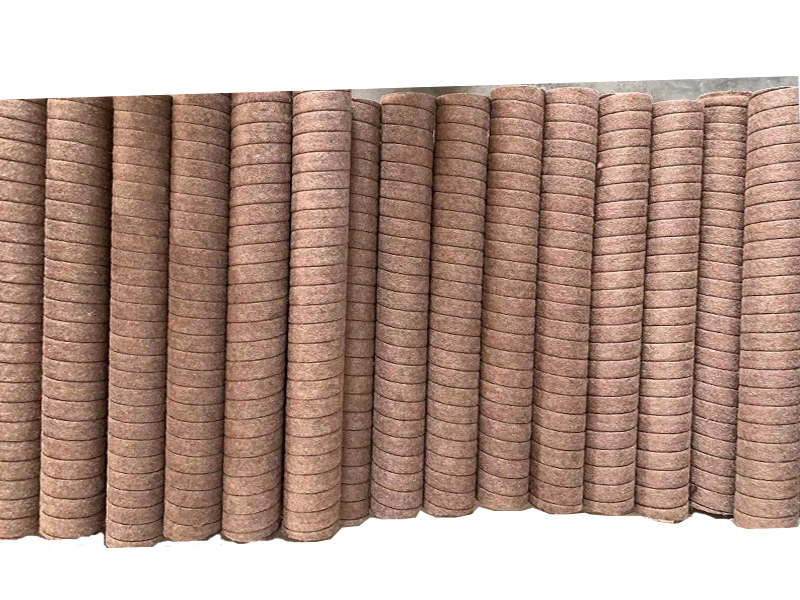
Needle felt bags are depth-loading media. Their fiber matrix captures contaminants throughout the material thickness, giving them useful dirt-holding capacity in applications with moderate to heavy solids loading. Glazed finishes can reduce fiber migration, while singed finishes help control loose surface fibers.
Monofilament mesh is a surface-filtration media. Particles larger than the opening are retained near the media surface, which can support cleaning and visual inspection. The trade-off is lower holding capacity for fine or deformable contamination. A mesh bag can plug rapidly if the process contains gels, soft solids, or a wide particle-size distribution.
High-efficiency multilayer bags combine graded media layers to capture larger particles before smaller particles reach the inner layer. This construction can extend service life and improve retention compared with a single-layer nominal felt bag. It is often a strong fit for applications where particle control matters but the operating team also needs reasonable changeout intervals.
Match Ring Style and Size to the Housing
A bag must seal correctly in its housing. Common configurations include steel rings, molded plastic rings, and sewn cuffs. Ring style affects bypass resistance, chemical compatibility, temperature capability, and how reliably the bag seats against the vessel’s restrainer basket.
Steel-ring bags are widely used in industrial housings and provide a durable sealing interface. Plastic rings may be appropriate where corrosion resistance or material compatibility is required. A sewn cuff can be used in certain housing styles, but it requires correct installation and a compatible hold-down arrangement to prevent fluid from bypassing the media.
Size is equally important. Standard Size 1 and Size 2 bags are common in commercial and industrial bag housings, with Size 2 providing greater media area and higher dirt-holding capacity. Choosing the larger bag is often beneficial when housing footprint allows it, but flow velocity and pump conditions still need review. Excessive velocity through any bag can drive high differential pressure, force contaminants into the media, and shorten service life.
Verify basket condition during every bag change. A dented, corroded, or perforated restrainer basket can tear the bag or allow it to deform under pressure. The housing cover gasket, O-ring, clamp, and internal hold-down hardware also need inspection. Filtration performance depends on the complete assembly, not only the disposable element.
Use Differential Pressure to Set Changeout Intervals
Changing bags on a fixed calendar schedule is simple, but it can waste usable media or leave a loaded bag in service too long. Differential pressure is the more useful operating indicator. Record clean pressure drop after installation, then establish a maximum allowable differential pressure based on pump capacity, process flow requirements, media limits, and housing design.
As a bag loads, differential pressure rises. A gradual increase usually indicates normal solids accumulation. A rapid increase can point to an upset condition, such as incoming debris, biological growth, gel formation, chemical precipitation, or a process change that altered contamination loading.
Do not wait until flow is severely restricted. High differential pressure can collapse unsupported media, force contaminants through the bag, increase energy demand, and place unnecessary stress on pumps and seals. For critical service, installing pressure gauges or differential pressure indicators upstream and downstream of the housing gives operators a direct basis for maintenance decisions.
Consider Temperature, Viscosity, and Flow Together
Published flow ratings are useful reference points, not universal operating limits. Actual flow depends on fluid viscosity, bag micron rating, media area, contamination level, temperature, and acceptable pressure drop. A bag handling a stated water flow may perform very differently with cold fuel oil, syrup, polymer solution, paint, or high-viscosity lubricant.
Higher viscosity increases pressure loss across the media. Cold starts can be particularly demanding because fluid viscosity may be substantially higher than at normal operating temperature. In these conditions, a larger housing, greater bag area, coarser prefiltration, or parallel housing arrangement may be required.
Temperature also changes material behavior. Confirm both continuous and peak temperature exposure, including steam cleaning, hot-water sanitization, thermal cycling, and upset conditions. Food and beverage, pharmaceutical, chemical, and high-temperature industrial processes often require more than a standard felt bag specification.
Document the Specification Before Ordering
A repeatable purchasing specification reduces incorrect substitutions and makes it easier to qualify compatible replacement elements. At minimum, document the housing make and model, bag size, ring or cuff style, micron rating and rating type, media material, fluid, normal and peak temperature, flow rate, expected solids loading, and required changeout trigger.
For regulated or hygiene-sensitive operations, also define fiber-shedding limits, food-contact requirements, cleaning method, traceability needs, and any validation or batch documentation. For oil and gas, refinery, power generation, and chemical systems, include pressure class, hazardous-area considerations where applicable, and fluid compatibility with upset chemicals.
K Filter Global can support application-specific bag selection across liquid process, water treatment, fuel, lubricant, and specialty industrial duties. Providing operating details at the quotation stage helps identify the correct media and housing configuration before a bag reaches the field.
A well-specified bag filter should become a predictable maintenance point, not a recurring troubleshooting problem. When the media, seal, housing, and operating conditions are aligned, operators gain cleaner fluid, steadier flow, and a clearer signal when the process itself begins to change.