Skip to content
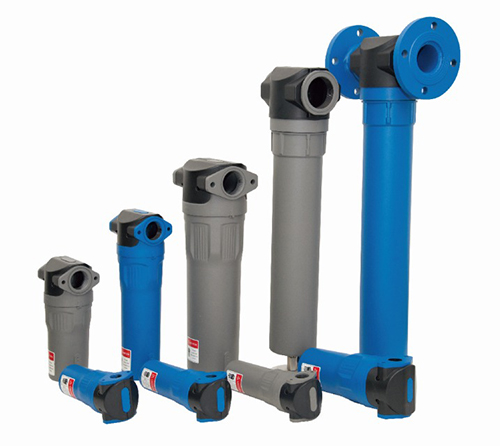
Natural Gas Filter – K Filter liquified natural gas (LNG) filter is a coalescing filter element used in gas processing to remove contaminants (particles, liquids, oil, moisture) from natural gas streams before they reach sensitive equipment like compressors, meters, regulators, turbines, or LNG/CNG systems
“Filter” → removes solid particles
“Coalescer” → removes liquid droplets (water, condensates, oil)
“Separator” → sometimes refers to the complete system housing these elements
K Filter designation for these coalescing filter elements
Why They’re Critical
Natural gas from wells or pipelines isn’t perfectly clean — it carries:
✔ Dust, rust, sand and particulates
✔ Water and hydrocarbon liquid droplets
✔ Oil mist and condensation
These contaminants cause damage, wear, corrosion, freezing, or malfunction in control instruments and production equipment if not removed. Filtration protects your system and improves safety and uptime.
How a K Filter Natural Gas Filter Works
Coalescing filters use multiple mechanisms together:
1. Physical Filtration (Solid Particles)
Gas flows through fiber or microfiber media that trap larger particles by direct interception, inertial impaction, and diffusion.
2. Coalescence (Liquid Droplets)
Tiny liquid droplets in the gas stream hit the fibers and merge (coalesce) into larger droplets. The larger droplets then fall out of the gas stream under gravity and can be drained away.
3. Deep Filtering
Multi-layer media gradually captures increasingly smaller particles and droplets, allowing high clean-gas quality even at micron-level accuracy (e.g., 0.1 μm – 10 μm ratings).
Precision Filtration
Final layers ensure the gas leaving the filter meets the required cleanliness specifications
Typical Composition & Materials
K Filter filters are usually built from:
Fiberglass depth media or advanced synthetic fibers
Stainless steel or corrosion-resistant cores
Outer protective layers and seals for durability
They’re designed for high pressures (up to 10 MPa or higher), wide temperature ranges, and heavy-duty industrial environments.
Performance & Ratings
K Filter filters often list:
Filtration ratings (e.g., 0.1 μm, 1 μm, 5 μm)
High efficiency (often ~99.98 % or better)
Long service life (months–years, depending on conditions)
Flow range suitable for small to large plants (50–10,000 Nm³/h or more)
Where They’re Used
These filters are found in natural gas industry applications like:
✔ Transmission and distribution stations
✔ Compressor suction lines
✔ CNG/LNG fueling stations
✔ Industrial gas usage systems
✔ Power plants and turbines
✔ Petrochemical plants
The goal is consistent: protect downstream equipment and improve gas quality.
Maintenance & Change-Out
K Filters are replaceable cartridges installed in filter housings.
Operators typically change them based on:
Pressure differential increase across the element
Scheduled maintenance intervals
Gas quality degradation indicators
This regular maintenance ensures minimal clogging, lower pressure drop, and consistent gas purity.
| Purpose | Remove solids + liquids from natural gas |
| Core Tech | Multi-stage filtration + coalescence |
| Materials | Fiberglass or synthetic depth media |
| Benefits | Protects equipment, improves gas quality |
| Application | Compression stations, city gates, LNG/CNG |
| Efficiency | High (often >99%) particulate + liquid removal |
Quick Comparison: Filter vs. Strainer
The primary difference lies in the particle size they are designed to trap.
| Feature | Natural Gas Strainer | Natural Gas Filter |
| Purpose | Removes large debris (weld slag, scale, rust). | Removes fine particulates (dust, “black dust”). |
| Particle Size | Typically > 75 microns (visible to the eye). | Typically < 40 microns (microscopic). |
| Media Type | Metal mesh or perforated screen. | Fiber, microglass, or pleated cartridges. |
| Maintenance | Generally cleanable and reusable. | Usually requires disposable cartridge replacement. |
| Pressure Drop | Minimal resistance to flow. | Noticeable pressure drop as it gets “loaded.” |
https://www.facebook.com/kfilters