Skip to content
In the pursuit of superior Indoor Air Quality (IAQ), the F8 pocket filters stands as one of the most critical components in a modern HVAC system. Often referred to as a “bag filter,” the F8 grade (classified as ePM1 70% under ISO 16890) is the bridge between standard air filtration and high-precision cleanroom environments.
In this article, we explore why F8 Pocket Filters are the go-to choice for facility managers and why their unique “pocket” design offers a distinct advantage over traditional panel filters.
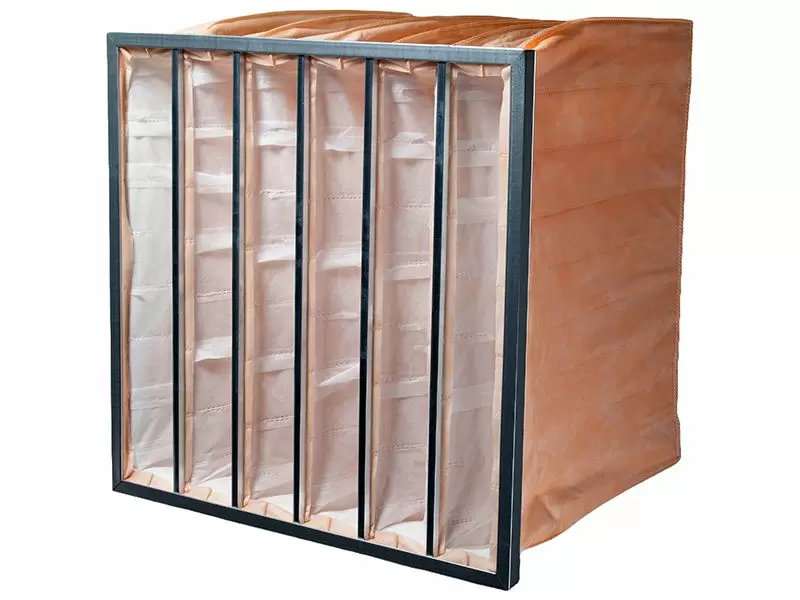
What is an F8 pocket filters ?
An F8 filter is a fine secondary filter designed to capture microscopic particles. According to the EN 779 standard, an F8 filter has an average efficiency of 90-95% for 0.4 μm particles. Under the newer ISO 16890 standard, it is rated as ePM1 70%, meaning it stops 70% of particles smaller than 1 micron—the size of many bacteria, smoke particles, and viruses.
Bag Filter vs. Pocket Filter: Is There a Difference?
While the terms are often used interchangeably, there is a subtle structural distinction:
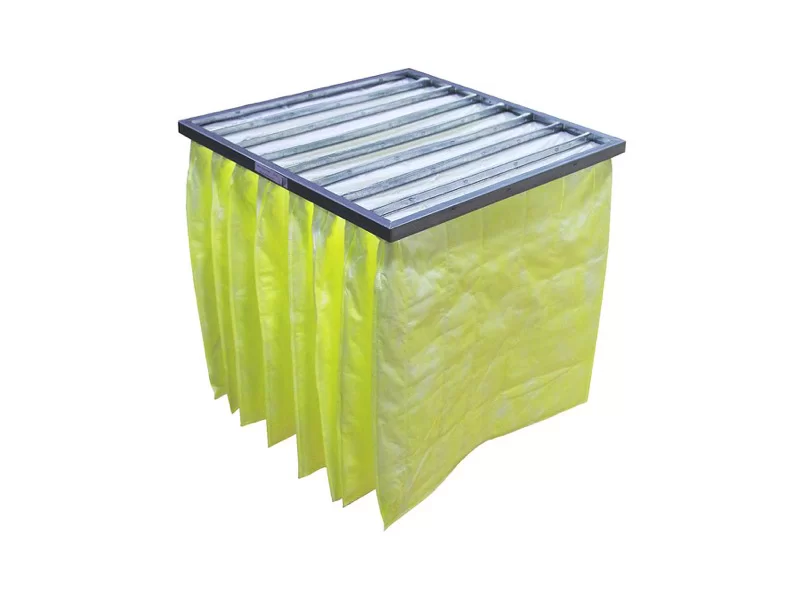
- Bag Filters: Typically feature soft, flexible pockets that inflate with airflow. They are cost-effective and ideal for standard commercial ventilation.
- Pocket Filters (Rigid): Utilize a more rigid synthetic media and often a plastic frame. These stay open even when the fan is off or under turbulent airflow, preventing dust from “shedding” back into the system.
Key Benefits of F8 Filtration
1. High Surface Area, Low Energy Cost
The “pockets” of an F8 Pocket Filters create a massive surface area compared to a flat filter. This allows for:
- Lower Initial Resistance: Air passes through more easily, reducing the load on your HVAC fan motor.
- High Dust Holding Capacity (DHC): F8 filters can hold a large volume of pollutants before requiring a change, extending the maintenance interval.
2. Protection of Sensitive Equipment
By capturing fine dust before it reaches the cooling coils or heat exchangers, F8 Pocket Filters prevent “fouling.” Dirty coils can reduce heat transfer efficiency by up to 25%, leading to massive spikes in energy consumption.
3. Health and Safety
The F8 grade is specifically designed to trap PM1 particles. These are small enough to bypass the human body’s natural filters and enter the lungs and bloodstream. This makes F8 Pocket Filters essential for:
- Hospitals and Healthcare
- Food and Beverage Production
- Pharmaceutical Labs
- High-End Office Spaces
Technical Specifications Table
| Metric | Specification (F8 Grade) |
| Efficiency (EN 779) | F8 (90% – 95% at 0.4μm) |
| ISO 16890 Class | ePM1 70% |
| Frame Material | Galvanized Steel / Plastic / Aluminum |
| Media Type | Synthetic Fiber or Glass Fiber |
| Recommended Change | 450 Pa (Final Pressure Drop) |
Maintenance Tips: When to Replace Your F8 Filter?
To maintain optimal HVAC performance, F8 pocket filters should be monitored via pressure gauges (Manometers).
- Visual Check: Look for “blinding” (complete surface coverage) or sagging pockets.
- Pressure Drop: Once the filter reaches its recommended final resistance (usually between 250–450 Pa depending on system design), it must be replaced to prevent energy waste and potential bypass of unfiltered air.
Conclusion
Choosing the right F8 pocket filter is an investment in both human health and mechanical longevity. Whether you are upgrading an office AHU or maintaining a medical facility, the ePM1 70% efficiency of the F8 ensures that the air you breathe is free from the most harmful microscopic pollutants.
Looking for high-performance F8 filters for your facility? Contact our technical team today for a customized filtration audit.