Skip to content

A baghouse rarely fails because its dust collector is fundamentally wrong for the process. More often, performance declines because the installed baghouse filters do not match the actual dust, temperature profile, cleaning system, or operating cycle. The result can be elevated differential pressure, premature bag failure, dust carryover, lost production time, and unnecessary maintenance cost.
For plant operators and engineering teams, filter bag selection is therefore an operating decision, not simply a replacement-parts purchase. The right filter media and construction help maintain airflow, capture particulate efficiently, protect downstream equipment, and support consistent environmental performance under real process conditions.
What Baghouse Filters Do in an Industrial Dust Collector
Baghouse filters are fabric filter elements installed in dust collection systems to separate particulate from process air or gas. Dirty air enters the collector, passes through the filter media, and leaves dust on the surface or within the structure of the fabric. The cleaned air then exits the system while collected material is discharged through hoppers, rotary valves, screws, or other handling equipment.
In pulse-jet collectors, compressed-air pulses periodically dislodge accumulated dust from the bags. Reverse-air and shaker collectors use different cleaning methods and may require different bag configurations and media characteristics. In every case, the filter must tolerate repeated cleaning cycles while preserving dimensional stability and filtration performance.
A baghouse filter is part of a larger system that includes cages, venturis, tube sheets, pulse valves, fans, ductwork, discharge equipment, and controls. A well-specified filter cannot compensate for inadequate pulse pressure, damaged cages, air leakage, poor hopper evacuation, or an improperly sized collector. It can, however, provide the stable filtration foundation the system needs to operate as designed.
Filter Media Selection Starts With the Process
The first question is not which fabric is most commonly stocked. It is what the gas stream and particulate will do to the filter over time. Process temperature, moisture, chemical exposure, particle shape, dust loading, and required emissions performance all influence the selection.
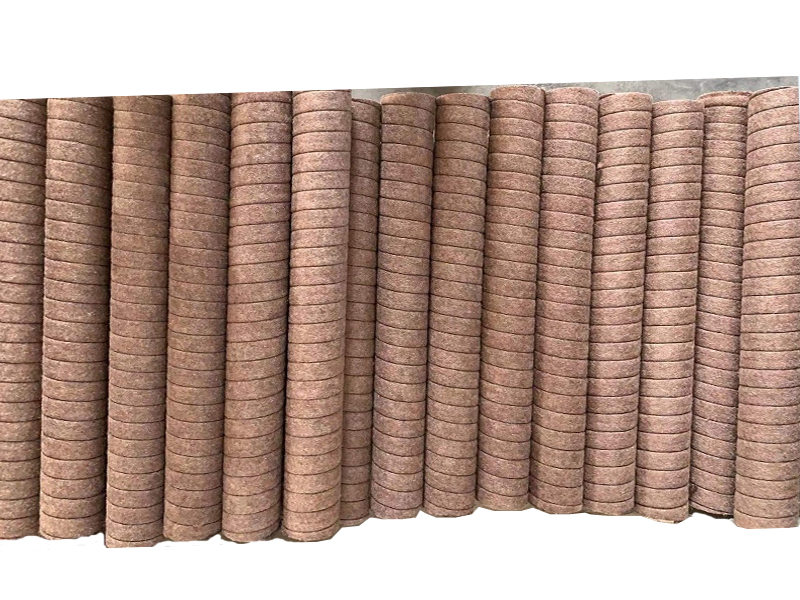
Polyester felt is widely used for dry industrial dust collection because it offers a practical balance of filtration efficiency, availability, and cost. It is common in applications such as general manufacturing, wood processing, mineral handling, and some food and agricultural operations. Its limits must be respected, particularly where elevated temperature, hydrolysis risk, or aggressive chemical exposure is present.
Polypropylene can be a suitable choice where chemical resistance is the primary concern and operating temperatures remain relatively low. Acrylic media may be selected for certain moisture-related conditions. Aramid, PPS, P84, PTFE, fiberglass, and blended media are used where temperature resistance, acid resistance, alkali resistance, fine-particle capture, or demanding process chemistry require a more specialized solution.
The correct choice depends on the full operating envelope, including startup, shutdown, upset conditions, and cleaning cycles. A collector that normally runs at an acceptable temperature can still damage bags during short excursions caused by burner imbalance, process interruption, or hot gas bypass. Engineering teams should specify maximum continuous temperature and potential peak temperature separately.
Surface Filtration Versus Depth Filtration
Needlefelt bags traditionally capture some particulate within the media structure, particularly before a stable dust cake develops. For many dusts, this is effective and economical. However, fine, sticky, or difficult-to-release particulate may progressively blind the media and increase differential pressure.
Membrane-laminated media, including PTFE membrane options, promote surface filtration. Dust is captured closer to the surface, which can improve release during pulse cleaning and reduce residual dust embedded in the felt. This may support lower operating pressure drop, more stable airflow, and longer service life in suitable applications.
The trade-off is that membrane media generally carries a higher initial cost and still requires correct cleaning energy and air-to-cloth ratio. It should be justified by the dust characteristics and lifecycle requirements, not selected solely because it is a premium construction.
Bag Construction Matters as Much as Fiber Type
Two filter bags made from the same base polymer can perform very differently. Fabric weight, fiber fineness, permeability, finish, seam construction, and attachment design all influence operating results.
Common treatment options include singeing, calendaring, glazing, water and oil repellency, antistatic finishes, acid resistance, and PTFE-based treatments. These finishes can improve dust release, reduce moisture-related blinding, or address static-charge concerns. In combustible-dust service, conductive or antistatic media may be part of the overall risk-control strategy, but it does not replace proper dust hazard analysis, grounding, explosion venting, isolation, or suppression measures.
Seams deserve particular attention in high-temperature and chemically aggressive service. Thread material must withstand the same process conditions as the base fabric. A bag can appear intact across most of its surface while failing at a seam or cuff because the thread selection was inadequate.
Attachment details also need to match the collector. Snap-band tops, corded cuffs, raw-edge tubes, disc bottoms, hemmed bottoms, and custom configurations are not interchangeable. Accurate measurements of bag diameter, length, top style, bottom finish, cage dimensions, and tube-sheet opening are essential when ordering replacements.
Differential Pressure Is a Useful Diagnostic Signal
Differential pressure indicates the resistance to airflow across the collector. It should be evaluated as a trend, not as an isolated number. A gradual rise can indicate normal dust-cake development, but persistent high pressure may point to blinded bags, insufficient cleaning air, failed pulse valves, wet dust, excessive airflow, or an unsuitable media finish.
Very low differential pressure is not automatically good news. It may indicate torn bags, leaking seals, damaged tube-sheet gaskets, or incomplete dust-cake formation. Visible stack emissions, dust accumulation downstream, and changes in fan amperage should be considered alongside pressure readings.
When troubleshooting, maintenance teams should inspect representative bags and cages rather than replacing an entire set based only on differential pressure. Look for abrasion marks, broken fibers, powdery residues, compacted dust, chemical attack, bag collapse, and wear at contact points. A pattern of failures can reveal whether the root cause is mechanical, thermal, chemical, or related to cleaning performance.
Specify Baghouse Filters Around Operating Conditions
A sound procurement specification should give suppliers enough information to recommend an appropriate construction and verify compatibility. At minimum, it should address:
- Collector type, cleaning method, bag quantity, and exact dimensions
- Process material, particle size, dust loading, abrasiveness, and moisture behavior
- Normal and peak gas temperature, gas composition, and chemical contaminants
- Airflow, air-to-cloth ratio, cleaning pressure, and typical differential-pressure range
- Required emissions performance, safety requirements, and planned maintenance interval
This information prevents an all-too-common mismatch: selecting a replacement bag only by diameter and length. Physical fit is necessary, but it does not establish process suitability.
For EPC contractors, OEMs, and multi-site operators, standardization can simplify inventory and maintenance planning. Yet standardization should not force one media onto unrelated applications. A cement transfer point, a metalworking operation, a boiler, and a chemical process may use similar collector geometry while requiring very different filter constructions.
Installation and Maintenance Affect Filter Life
Even correctly specified filters can be damaged during installation. Bags should be handled cleanly, kept dry, and installed without forcing or twisting the snap band. Cages must be checked for corrosion, bent wires, sharp welds, and broken verticals before new bags are fitted. A damaged cage can wear through a new bag in a short period of service.
After installation, confirm that bags seat correctly in the tube sheet and that pulse pipes align with venturis where applicable. Compressed air should be clean and dry enough to avoid adding oil or moisture to the cleaning system. Hopper discharge equipment must also remain operational. If collected dust backs up into the hopper, it can re-entrain into the collector or physically damage the lower bag sections.
Bag changeout intervals should be based on condition and performance history rather than calendar assumptions alone. Tracking differential pressure, emissions observations, cleaning frequency, fan load, and failure modes creates a useful record for refining future specifications.
Engineering for Reliable Dust Collection
The most cost-effective baghouse filters are not always the lowest-priced bags or the most exotic media. They are the filters that maintain predictable performance for the required service interval while protecting the collector, supporting compliance, and minimizing unplanned shutdowns.
K Filter Global supports industrial filtration requirements with replacement filter bags and engineered media options matched to demanding dust-collection conditions. For critical applications, provide the process data, collector details, and current failure history before selecting a replacement. That conversation often identifies the operating condition that a bag change alone will not solve.