Skip to content

A filter changeout that takes minutes instead of hours can protect production capacity. But choosing between cartridge filters vs bag filters is not simply a matter of selecting the lowest micron rating or the least expensive consumable. The right choice depends on contaminant type, solids loading, required flow, target cleanliness, housing configuration, operator exposure, and the cost of downtime.
Both formats are proven liquid-filtration technologies. Bag filters are often selected for high-flow, high-solids prefiltration and general process duties. Cartridge filters are commonly specified where finer retention, lower particle release, repeatable performance, or compact multi-element housing arrangements are required. Understanding where each format performs best helps plant teams protect equipment and maintain process consistency without over-specifying the system.
Cartridge Filters vs Bag Filters: The Core Difference
The basic distinction is filter surface area and construction. A filter bag is a single sewn, welded, or molded media element installed in a basket-supported housing. Fluid flows from the inside of the bag to the outside, while contaminants collect within and on the media. Bags are available in felt, mesh, monofilament, multifilament, and high-efficiency constructions, with common sizes designed for standard industrial housings.
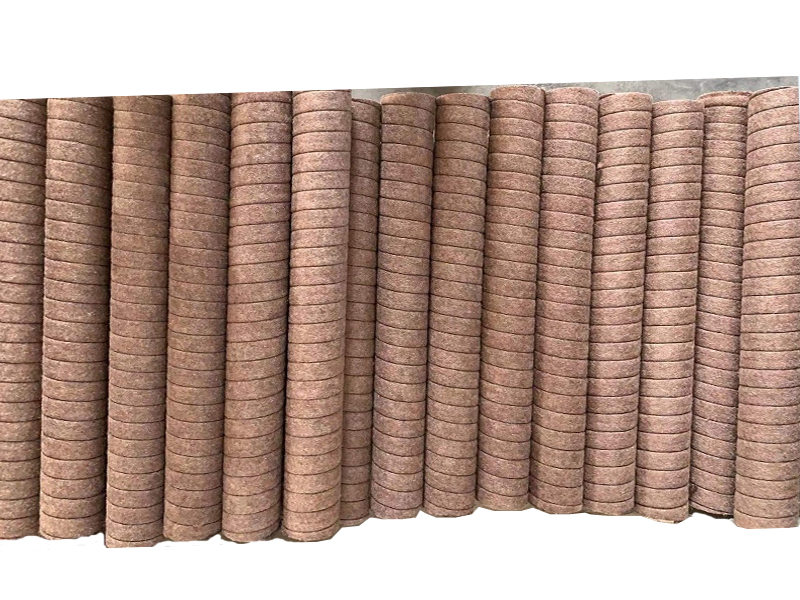
A cartridge is a cylindrical element with a central core. It may use pleated, depth-media, melt-blown, string-wound, membrane, or sintered construction. Most industrial cartridge housings use several elements in parallel, creating high total filtration area within a relatively compact vessel. Fluid normally moves from the outside of the cartridge toward the center core, although flow direction can vary by design.
That difference shapes performance. A bag has a larger open structure and can capture substantial contaminant mass before changeout, particularly when using depth felt media. A pleated cartridge provides considerably more media area per element, which supports fine particle retention and longer service intervals when contaminant loading is moderate.
Where Bag Filters Provide the Best Value
Bag filters are a practical choice when a process stream carries visible solids, scale, rust, fibers, sludge, or other relatively high contaminant loads. Their simple configuration, high flow capability, and fast element replacement make them useful in many industrial utility and process applications.
High solids loading and coarse removal
For applications such as raw water intake, cooling water, paint and coating processes, chemical transfer, metalworking fluids, wastewater pretreatment, and general process protection, a bag filter can remove contaminants economically before they reach pumps, heat exchangers, spray nozzles, membranes, or finer downstream filters.
Felt bags are generally used for nominal particle removal and higher dirt-holding capacity. Mesh bags are more appropriate when the objective is repeatable straining of larger particles and when the filtered material has value or must be recovered. For example, a stainless steel mesh bag may be cleaned and reused in selected applications, provided cleaning validates the required retention performance.
High flow with straightforward maintenance
A single-size 2 bag can manage substantial flow in a properly selected housing, while multi-bag housings serve much higher flow rates. Because one bag handles a large stream, maintenance teams can often complete changeouts quickly. This is especially useful where a duplex housing is installed so one side remains in service while the other is opened and serviced.
Bag systems also offer a lower initial equipment cost in many coarse-filtration duties. The housing design is uncomplicated, and replacement bags are widely available in material options such as polypropylene, polyester, nylon, and PTFE for chemical compatibility and temperature requirements.
Limits to consider
Standard bags are not automatically the right answer for fine critical filtration. Nominal-rated felt bags may allow some particles near the stated micron rating to pass, particularly as differential pressure and contaminant conditions change. High-efficiency or absolute-rated bag options improve retention, but teams should verify beta ratio, material compatibility, weld construction, bypass risk, and the actual cleanliness requirement before specifying them.
Bag changeout can also expose operators to retained process material. For hazardous chemicals, sticky products, or contaminated liquids, housing design, venting, drainage, lifting provisions, and personal protective equipment need as much attention as the bag media itself.
Where Cartridge Filters Have an Advantage
Cartridge filtration is often selected when a process needs tighter control of particle size, a more consistent retention profile, or staged filtration ahead of a sensitive operation. It is common in water treatment, desalination pretreatment, food and beverage, pharmaceutical support systems, electronics manufacturing, chemical processing, oil and gas fluids, and high-purity industrial services.
Fine filtration and defined retention
Cartridge media can be engineered for nominal or absolute removal ratings across a wide range, from coarse protection to submicron duty. Pleated cartridges provide large surface area and low initial pressure drop at a given flow rate. Depth cartridges offer graded pore structures that retain contaminants through the media thickness, often making them a cost-effective option for fluids with fine dispersed solids.
For critical equipment protection, the filtration rating must be matched to the component being protected. A cartridge installed upstream of a reverse osmosis membrane, precision spray nozzle, analytical instrument, or final process point may need documented retention efficiency rather than a broad nominal micron claim. This is where beta ratings, particle challenge data, extractables, and validation requirements become part of the specification.
Compact capacity in multi-cartridge housings
A multi-cartridge vessel can accommodate a large total media area without the footprint of a comparable bank of individual filters. This makes cartridge systems useful where floor space is limited or where flow must be maintained at a low clean differential pressure.
Housing selection matters. The number of cartridges, element length, end-cap style, pressure rating, seal material, and connection size must all align with operating conditions. A technically compatible cartridge in the wrong housing arrangement can create high velocity, premature plugging, seal bypass, or maintenance difficulties.
Limits to consider
Fine cartridges can plug quickly when installed directly on a stream with heavy solids. This creates frequent replacement intervals and raises consumable cost. In those cases, a coarse strainer or bag filter upstream often reduces the burden on the cartridge stage.
Cartridge changeout may also involve more individual elements than a single bag changeout. Although the elements are lighter and cleaner to handle in many applications, labor requirements should be evaluated at the full housing level, not per cartridge alone.
Selecting by Filtration Duty, Not Filter Format
The best specification starts with the stream and the operational objective. Ask whether the filter must protect equipment, improve finished-product quality, recover material, reduce fouling, meet a hygiene requirement, or prepare fluid for a final polishing stage. These objectives lead to different media and housing decisions.
For high contaminant loading at a moderate micron requirement, bag filtration is often the more economical first stage. For fine, controlled removal at lower solids loading, cartridges are usually the stronger fit. For difficult streams, the effective answer is frequently a staged system: a strainer removes large debris, a bag captures bulk solids, and a cartridge provides final polishing.
This sequence can improve lifecycle cost because no single filter is forced to perform outside its efficient operating range. It also protects downstream equipment and reduces unplanned shutdowns caused by rapid differential-pressure rise.
Key engineering inputs
A reliable selection should account for more than flow rate and micron rating. Process teams should establish the maximum and normal flow, fluid viscosity, temperature, operating pressure, allowable pressure drop, particle characteristics, contamination concentration, chemical compatibility, and expected service interval. They should also define whether a nominal or absolute rating is required.
The particle itself matters. Hard, angular scale behaves differently from soft gelatinous material. Fibers can bridge filter pores. Oil-rich contaminants may blind certain media. A liquid with fluctuating solids concentration may require oversized area, parallel housings, or automated monitoring to avoid short service cycles.
Differential pressure is an operating signal
Differential pressure indicates the resistance created by the filter and accumulated contaminant. A low initial pressure drop is desirable, but it should not be viewed separately from retention efficiency. A very open media may offer low resistance while allowing harmful particles downstream.
Establish a changeout differential pressure based on housing limits, pump capability, product quality, and process stability. Waiting until a filter is fully blocked can interrupt flow, stress pumps, collapse media, or force contaminant bypass. Differential-pressure gauges or transmitters should be installed where operators can use the data during routine rounds.
Lifecycle Cost Includes More Than Element Price
Comparing bag and cartridge costs only by purchase price can produce the wrong decision. Evaluate consumable use, labor, disposal, downtime risk, energy consumption from pressure drop, and the cost of failures the filter is intended to prevent.
A lower-cost bag may be the best choice for a dirty utility stream that is changed frequently. A higher-performance cartridge may be justified where a small amount of fine contamination can foul a membrane, damage a pump seal, affect a coating finish, or compromise product quality. In regulated or controlled environments, documentation and lot traceability may also carry value beyond the physical element cost.
K Filter Global supports industrial buyers with filter bags, cartridges, housings, strainers, and application-specific filtration configurations for demanding liquid processes. The most effective system is the one engineered around the actual fluid, contaminant profile, and operating duty rather than a catalog description alone.
Before finalizing a specification, review representative fluid conditions and involve operations personnel who perform the changeouts. A filter that meets the particle-removal target but cannot be safely serviced or kept in stock is not a dependable production solution.