Skip to content
A filter changeout that occurs weeks ahead of schedule is rarely just a maintenance issue. It can point to incorrect media selection, unstable contaminant loading, or a filtration stage asked to remove particles it was never designed to hold. The cartridge versus depth filtration decision affects differential pressure, service intervals, product quality, and the cost of every replacement element installed in the process.
The first distinction matters: a cartridge is a physical filter format, while depth filtration describes a particle-capture mechanism. Many cartridge filters use depth media. Others use pleated surface media, membrane media, or layered combinations of surface and depth structures. For industrial buyers, the useful comparison is therefore between pleated or surface-loading cartridge elements and true depth-loading media in cartridge, lenticular, pad, or module configurations.
Cartridge Versus Depth Filtration: The Core Difference
A surface filter captures contaminants primarily at or near the upstream face of the media. Pleated cartridges increase available surface area by folding the media into a compact cylindrical element. As particles accumulate, they form a filter cake. This approach is effective when the objective is defined particulate control, low initial pressure drop, and repeatable retention at a specified micron rating.
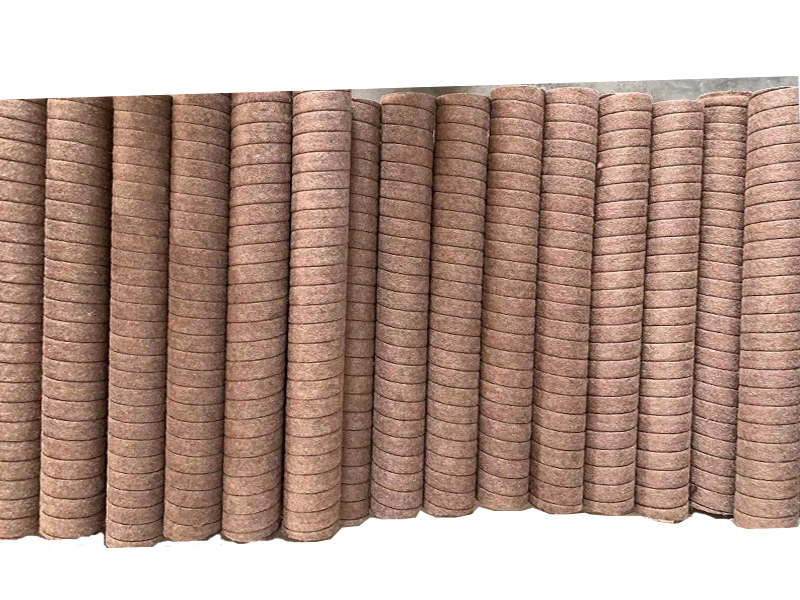
Depth media captures particles throughout the thickness of a porous matrix. Fibers, pores, and flow paths are structured to retain progressively smaller contaminants as fluid travels through the media. Larger particles are captured near the inlet side, while finer particles penetrate farther before being retained. This distributed loading gives depth filters high dirt-holding capacity when fluid contains variable or heavy solids loads.
The practical result is straightforward. A pleated cartridge generally offers high flow per element and controlled particulate removal where the feed is reasonably clean. A depth filter is often more tolerant of broad particle-size distributions, gelatinous material, deformable solids, colloids, and intermittent contamination events.
Neither design is automatically better. A 1-micron pleated polypropylene cartridge may be the right final-polishing element downstream of a separator, while a 5-micron melt-blown depth cartridge may be the more economical first stage for a tank with inconsistent particulate carryover.
How Particle Retention Changes in Service
Filter ratings alone do not tell the full story. Maintenance teams should distinguish between nominal and absolute ratings, then examine the test method behind the number. A nominal 10-micron depth filter may remove a substantial percentage of particles around that size, but its exact performance depends on media structure, fluid viscosity, flow rate, and contaminant shape. An absolute-rated cartridge is commonly specified where a defined retention performance is required, often supported by beta ratio testing.
For example, a beta ratio of 200 at a given particle size corresponds to 99.5% removal efficiency at that size under the stated test conditions. This type of data is valuable in hydraulic fluid, lubricating oil, fine chemical, and critical process applications where component protection depends on consistent cleanliness levels.
Depth media can also provide graded retention. A density gradient or multilayer design prevents large particles from blocking the fine downstream layer immediately. This is one reason spun-bond, melt-blown, resin-bonded, and string-wound elements are widely used as prefilters for water, fuels, oils, and process liquids with changing solids loads.
Pleated media does not necessarily mean surface-only capture. Pleated cellulose, glass fiber, polypropylene, and composite media can offer meaningful depth loading. Still, compared with a purpose-built depth element, the pleated configuration usually relies more heavily on exposed area and cake formation. That difference becomes significant when contamination is sticky, compressible, or unusually high in concentration.
Pressure Drop and Flow Capacity
Initial differential pressure is often where pleated cartridges perform well. Their increased surface area reduces flux through the media, allowing higher flow at a lower clean pressure drop than a non-pleated depth element of similar outside dimensions. This can be decisive in high-flow process skids, recirculation loops, and applications where pump margin is limited.
As loading progresses, the pressure-drop curve matters more than the clean pressure-drop number. Surface filters may retain particles efficiently but blind rapidly if the incoming fluid contains a high concentration of fine solids or large amounts of soft debris. Depth filters usually accept more contaminant mass before reaching terminal differential pressure because the media volume participates in retention.
That benefit has a limit. Fine depth media can create a higher initial pressure drop, particularly with viscous oils, syrups, concentrated process liquids, or low-temperature service. If viscosity rises during operation, a nominally suitable depth filter can reach changeout pressure sooner than expected. Confirm flow at the maximum operating viscosity, not only at room-temperature water conditions.
Product Recovery and Disposal
For valuable fluids, retained volume can influence selection. Pleated cartridges often have lower hold-up volume and can support more complete product recovery during housing drain-down. Depth elements may retain more liquid within the media matrix, especially in high-porosity, thick constructions.
Disposal requirements also vary. A disposable depth cartridge loaded with hazardous solids may be simple to change but costly to manage after removal. A cleanable metal or polymer pleated element can reduce consumable waste in some applications, provided the contaminant can be removed effectively and cleaning validation is practical. Reusing an element without proving restored flow and retention performance can introduce more risk than savings.
Matching Media to Fluid and Contaminant
Media compatibility is not a secondary specification. Polypropylene offers broad chemical resistance and is common in water, acids, alkalis, and many process fluids. Cellulose can provide economical particulate retention in compatible petroleum, solvent, and industrial fluid service, but it is not appropriate for every chemical environment. Glass fiber can provide fine retention and strong loading characteristics, while PTFE, PVDF, nylon, and specialty membranes address more demanding chemical, temperature, and purity requirements.
Depth filters are frequently selected for bulk contaminant removal before a higher-efficiency final stage. In a water treatment line, a coarse graded-density depth cartridge may protect a final pleated cartridge or membrane from sediment. In fuel and lube systems, staged filtration can remove larger wear debris first, then control fine particles at the final cleanliness target. In food and beverage service, the selected materials must also support required hygiene, extractables, sanitation, and process-temperature conditions.
A filter designed for solids does not automatically remove water from fuel, coalesced oil from compressed air, dissolved contaminants, or vapor-phase odors. Those duties require the appropriate separation mechanism, such as coalescing, adsorption, phase separation, or membrane treatment. Trying to solve every contamination problem with a finer particulate cartridge usually produces short element life and poor results.
When a Cartridge Filter Is the Better Choice
A pleated cartridge is typically the stronger option when a process needs high flow in a compact housing, low clean differential pressure, controlled final filtration, or predictable particle retention. It is commonly used as a polishing stage after upstream settling, centrifugation, bag filtration, or depth prefiltration has reduced the bulk solids load.
Cartridge systems also support a broad range of housing sizes, end-cap styles, gasket materials, and connection options. This makes them practical for OEM replacement programs and facility standardization. Correct fitment remains critical. An element that is close in length or diameter but does not seal correctly can permit bypass, causing downstream contamination even when the installed media rating appears adequate.
When Depth Filtration Is the Better Choice
Depth filtration is often the more cost-effective choice where contamination is heavy, inconsistent, or composed of mixed particle sizes. Typical examples include incoming water with sediment, coolant loops with fines, bulk chemical transfer, tank cleanup, wastewater pretreatment, and process streams containing rust, scale, fibers, gels, or soft particulate.
It is also valuable as protection for more expensive downstream elements. Replacing a high-efficiency final cartridge too frequently is a sign that the filtration train may need a sacrificial depth prefilter, a bag filter, or a separator ahead of it. The lowest-cost element is not always the lowest-cost filtration system.
Specify the Filter Train, Not Just the Micron Rating
The best selection starts with actual operating data: fluid chemistry, temperature range, viscosity, normal and peak flow, contaminant type, inlet concentration, target cleanliness, allowable differential pressure, and required service interval. Housing condition, seal material, and element fitment must be reviewed at the same time.
For procurement teams, request more than a micron rating. Compare effective filtration area, recommended flow, initial and terminal differential pressure, efficiency data, materials of construction, collapse strength, compatibility, and the expected number of elements per changeout. A low unit price can be misleading if the element plugs early, drives unplanned labor, or exposes critical equipment to bypass risk.
Where operating data is incomplete, begin conservatively with staged filtration and monitor differential pressure, downstream cleanliness, and replacement frequency. Those measurements quickly show whether the system needs more depth-loading capacity, finer final retention, or better upstream contamination control.
The right answer is often not cartridge or depth filtration alone. It is a properly sequenced filtration train that assigns bulk solids removal, fine particulate control, coalescing, and final polishing to the elements designed for each duty. K Filter Global can help match compatible replacement elements, housings, and media configurations to the conditions your equipment actually sees. Get a quote with your current element part number, fluid details, flow rate, and required micron performance.