Skip to content
A reverse osmosis membrane rarely fails without warning. Rising differential pressure across the pretreatment train, declining permeate flow, shortened cleaning intervals, and increased salt passage usually point to solids, oxidants, or organic fouling reaching the membrane surface. The reverse osmosis prefilter cartridge is the first replaceable barrier in that protection strategy. Selecting it correctly is not a minor consumables decision – it directly affects membrane life, operating stability, labor requirements, and the cost of purified water.
For commercial and industrial RO systems, cartridge selection must begin with feedwater quality and system configuration rather than a default micron rating. A cartridge that performs well on municipal water may blind quickly on well water, recycled process water, tanker-fed supplies, or surface water with variable turbidity. The right configuration balances particle retention, dirt-holding capacity, pressure loss, chemical compatibility, and housing fit.
What a Reverse Osmosis Prefilter Cartridge Must Control
An RO membrane is a high-efficiency separation element, not a bulk solids filter. Fine silt, pipe scale, iron oxide, colloidal matter, carbon fines, and biological debris can accumulate on the membrane feed spacer. This creates localized pressure drop, encourages fouling, reduces crossflow performance, and can make cleaning less effective over time.
A prefilter cartridge removes suspended contaminants before they enter the membrane vessel. In a typical industrial arrangement, the cartridge stage is installed after upstream treatment such as multimedia filtration, softening, oxidation, carbon adsorption, chemical dosing, or clarification. Its job is to polish the feedwater and capture breakthrough solids that upstream equipment does not retain.
The prefilter stage may also serve as a verification point. A sudden reduction in cartridge service life can reveal a failed upstream filter, exhausted media bed, corrosion in a storage tank, disturbed distribution piping, or seasonal changes in source water. For maintenance teams, the cartridge is both a protective component and a practical operating indicator.
Selecting a Reverse Osmosis Prefilter Cartridge
The first specification is nominal versus absolute retention. Nominal-rated depth cartridges provide economical bulk solids removal and are common where upstream pretreatment is established and feedwater quality is reasonably stable. Absolute-rated cartridges, often pleated membrane or high-efficiency pleated depth designs, offer more defined particle retention where membrane protection is critical or where fine particulate breakthrough is expected.
A 5-micron nominal cartridge remains a common starting point for conventional RO pretreatment, but it is not a universal answer. A system receiving clean municipal water after carbon treatment may operate reliably at this rating. Feedwater with colloidal silt, corrosion products, or high turbidity may require staged pretreatment and a finer final cartridge. Moving immediately to a 1-micron cartridge can improve particle control, but it may also cause premature loading and unnecessary changeouts if upstream solids are not addressed.
Micron rating must be considered alongside cartridge construction. A high-surface-area pleated cartridge at 5 microns can often maintain lower initial pressure drop and hold more particulate than a standard string-wound or melt-blown element of the same nominal rating. Conversely, a graded-density melt-blown polypropylene cartridge may offer better depth loading when solids distribution is broad and upstream filtration is limited.
Common Media and Construction Options
Melt-blown polypropylene cartridges are widely used for RO pretreatment because they provide broad chemical resistance, low extractables, and a graded-density structure that captures larger particles near the exterior and finer material deeper in the media. They are a practical choice for potable water, process water, desalination pretreatment, and general industrial applications.
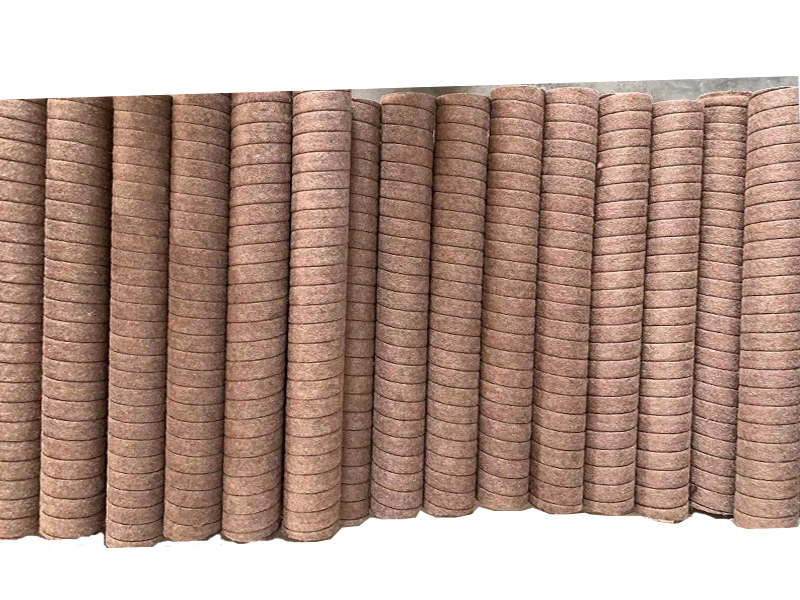
String-wound cartridges use yarn wound around a core, commonly polypropylene, cotton, or glass fiber depending on the fluid and temperature. Their open structure and high contaminant capacity can suit coarse sediment, rust, and scale removal. Performance depends heavily on winding pattern, yarn material, and the consistency of the source water.
Pleated polypropylene cartridges provide increased surface area in a compact format. They are often selected when pressure drop must be minimized, flow rates are high, or cartridge access is difficult and longer run time is valuable. For critical final filtration, pleated microglass or membrane cartridges may be specified, provided the application does not introduce incompatible fluids or excessive solids loading.
Activated carbon block cartridges may be used where chlorine reduction is required ahead of thin-film composite RO membranes. However, carbon is not a substitute for proper sediment filtration. Carbon fines can damage downstream equipment and should be controlled with a suitable post-carbon particulate cartridge. When large chlorine loads or continuous commercial flow are involved, granular activated carbon vessels are generally more practical than cartridge-only treatment.
Housing Fit and Flow Rate Are Part of the Specification
A correct micron rating in the wrong cartridge format still produces poor system performance. Standard 2.5-inch diameter cartridges are suitable for low-flow point-of-use and light commercial systems, while 4.5-inch large-diameter formats provide more media area and better dirt holding for commercial skid packages. High-flow cartridges, commonly using outside-in flow and large pleated media packs, are preferred where multiple standard housings would create excessive footprint, labor, or pressure loss.
Confirm the cartridge length, outside diameter, end-cap style, gasket or O-ring material, core design, and direction of flow. DOE and 222/flat end configurations are not interchangeable. A cartridge that appears dimensionally similar may bypass at the seal, fail to seat correctly, or restrict flow if the adapter geometry is wrong.
Flow rate should be evaluated at the expected end-of-life differential pressure, not only when the cartridge is clean. A filter housing may accommodate the required process flow initially, then become a restriction as the cartridge loads. For RO skids, this can reduce available pressure at the high-pressure pump inlet and destabilize production. Design capacity should include a reasonable allowance for fouling, seasonal water variation, and peak demand.
Match the Cartridge to Feedwater Risk
Different feedwater sources create different loading patterns. Municipal supplies commonly introduce fine sediment, pipe corrosion debris, and carbon fines from upstream dechlorination. Well water may contain sand, iron precipitate, manganese solids, and biological material. Surface water can carry silt and organic colloids that require clarification or multimedia filtration before the cartridge stage. Reclaimed water and process reuse streams may need a more complete pretreatment train, including coagulation, ultrafiltration, activated carbon, or specialty media, before RO is technically and economically viable.
Free chlorine requires particular attention. Most thin-film composite membranes are chlorine-sensitive. A sediment prefilter will not remove dissolved chlorine, and relying on it to protect the membrane will lead to irreversible oxidation damage. Carbon treatment or chemical dechlorination should be verified upstream, while the cartridge filter controls residual particulate and any carbon fines.
Likewise, a cartridge cannot solve dissolved hardness, silica, iron, or oil contamination by itself. Softening, antiscalant dosing, pH correction, de-oiling, or coalescing may be required based on the feedwater analysis. Treating a dissolved contaminant problem with a finer cartridge usually raises operating cost without protecting the membrane.
Establish a Changeout Standard
Cartridges should not be changed only because a calendar interval has expired. A differential-pressure limit, combined with documented flow and product-water performance, provides a more reliable basis. Many systems use a cartridge changeout threshold established by the skid manufacturer or site operating procedure. The actual setpoint depends on housing design, pump capacity, feed pressure, and downstream process requirements.
Track the installation date, feedwater source, initial differential pressure, final differential pressure, cartridge type, and observed solids. A brown or red cartridge may indicate iron oxide or corrosion. Gel-like deposits can suggest organic or biological loading. Black fines may indicate carbon carryover. These observations help maintenance teams correct upstream issues rather than repeatedly replacing cartridges at shorter intervals.
For critical operations, keep matched replacement stock identified by part number, micron rating, length, end configuration, media, and seal material. Procurement should avoid substituting based on length and diameter alone. An aftermarket-compatible replacement can be a sound option when its retention rating, construction, materials, and fit are verified against the installed cartridge.
Specify the Full Pretreatment Train
The best cartridge is one that fits a coordinated pretreatment system. A sediment cartridge operating behind effective multimedia filtration, carbon treatment, softening, and chemical control will protect membranes with predictable pressure drop and manageable replacement frequency. The same cartridge placed directly on unstable raw water can become the plant’s most frequently changed component while still allowing membrane fouling.
K Filter Global can support replacement and project requirements across melt-blown, string-wound, pleated, high-flow, carbon block, and specialty water-treatment cartridge formats, including compatible alternatives for established housing systems. Provide the cartridge dimensions, end-cap configuration, micron rating, flow rate, feedwater description, and current operating issue when requesting a quotation.
A well-specified prefilter cartridge does more than keep visible sediment out of an RO skid. It gives operators a controllable final barrier, clearer diagnostic data, and more consistent membrane protection when the feedwater conditions change.