Skip to content
Temporary conical strainer – When a new industrial pipeline is constructed, it looks clean from the outside. The inside is often a different story. During welding, assembly, and installation, debris like welding slag, rust, scale, sand, and even leftover tools can find a home inside the pipes.
If you start up a new system without cleaning it out first, that stray construction debris will travel straight into your brand-new pumps, valves, meters, and delicate downstream components.
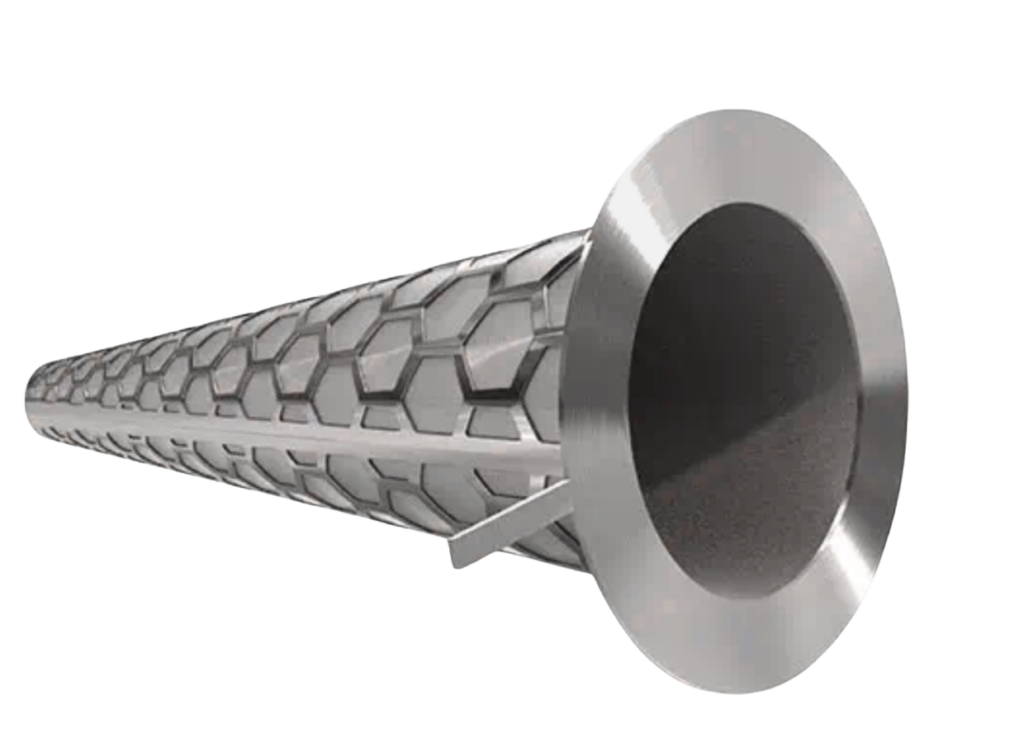
That is where a temporary conical strainer comes in. Often called a witch’s hat strainer due to its distinct shape, it serves as an affordable defense system during the critical commissioning phase of a pipeline.

What is a Temporary Conical Strainer?
A temporary conical strainer is a simple, effective device shaped like a cone. It is manufactured from perforated metal sheets or woven wire mesh.
Unlike permanent basket or duplex strainers that feature large, cast iron or stainless-steel outer housings, a temporary strainer does not require its own dedicated pressure vessel. Instead, it is designed to fit directly between two existing pipe flanges.
The outer ring of the cone, or the flange ring, is sandwiched between the pipe gaskets and bolted tightly into place. Most designs include a long metal handle tab that extends past the outside of the pipe. This tab serves a simple purpose: it acts as a visual marker for engineers and maintenance crews, showing them exactly where a temporary strainer is currently installed in the line.
How Does a temporary conical strainer Work?
The operation depends entirely on the flow direction of the fluid. You can install a temporary conical strainer in two distinct configurations, each with its own pros and cons.

Cone Pointing Downstream vs. Upstream. Source: The Piping Engineering World

1. Cone Pointing Downstream (Flow Entering the Inside)
In this layout, the fluid flows directly into the wide, open end of the cone.
- The Benefit: Debris accumulates inside the tip of the cone. When you remove the strainer for cleaning, the trapped material stays inside the cone structure, preventing it from falling backward into the pipe.
- The Trade-off: The basket fills up relatively quickly from the tip backward, which can cause a faster drop in pressure if large amounts of construction debris are present
2. Cone Pointing Upstream (Flow Hitting the Outside)
In this layout, the fluid hits the pointed tip of the cone first and flows outward through the sides.
- The Benefit: Debris naturally collects around the outer base of the cone ring. This configuration offers a higher dirt-holding capacity and causes less initial resistance to the fluid flow.
- The Trade-off: When you unbolt the flanges to clean the system, the trapped debris can easily slide backward into the upstream pipeline
Key Considerations for Choosing a Temporary Strainer
Selecting the right Strainer requires analyzing a few key operational variables to ensure it handles the fluid velocity without failing.
Open Area Ratio
The open area ratio compares the total surface area of all the holes in the mesh to the internal cross-sectional area of the pipe. A standard temporary strainer should provide an open area of at least 100% to 150% of the pipe area. For high-velocity systems or pipelines carrying heavy solids, you may need a longer cone that offers a 200% or 300% open area ratio to prevent severe pressure drops.
Material Selection
Because these strainers are exposed to high pressure and abrasive debris, they are typically constructed from robust materials like 304 or 316 stainless steel. Carbon steel variations are sometimes used for oil or non-corrosive gas pipelines, but stainless steel remains the standard due to its corrosion resistance and structural integrity.
Perforation vs. Mesh Lining
A heavy-duty perforated cone provides structural support. If your pipeline requires fine filtration to protect precision instruments, you can add a fine wire mesh liner inside or outside the perforated core to catch smaller particles.
Why Use a Temporary Strainer Over a Permanent One?
Temporary strainers are not intended to remain in a system permanently. They are engineered to do a specific job during a specific window of time.
- Lower Upfront Cost: They cost a fraction of the price of a permanent basket or Y-strainer because they require no cast housing or complex valve setups.
- Compact Footprint: They take up zero additional space in the plant footprint since they sit entirely inside the existing pipeline layout.
- Ease of Installation: A technician can install or remove one simply by loosening a single flange joint.
Once the pipeline has been flushed, commissioned, and run for a few weeks, the temporary strainer is typically removed. It can then be cleaned, stored, and reused on the next pipeline project.
Summary of Technical Specifications
| Feature | Conical / Witch’s Hat Design |
|---|---|
| Primary Use | Pipeline commissioning, startup flushing, and temporary protection |
| Installation | Sandwiched directly between standard pipe flanges |
| Materials | Stainless Steel 304, Stainless Steel 316, Carbon Steel |
| Common Sizes | 1 inch up to 48 inches or larger |
| Filtration Range | Coarse perforations down to fine mesh linings |
Conclusion
A temporary conical strainer is a critical component for ensuring a smooth, damage-free pipeline startup. It captures construction debris before it can compromise expensive industrial equipment.
If you are preparing to commission a new piping system or water treatment facility, using the correct temporary filtration setup will protect your capital investments from day one. Contact our technical team today to find the exact size and open area specifications for your upcoming project.