Skip to content
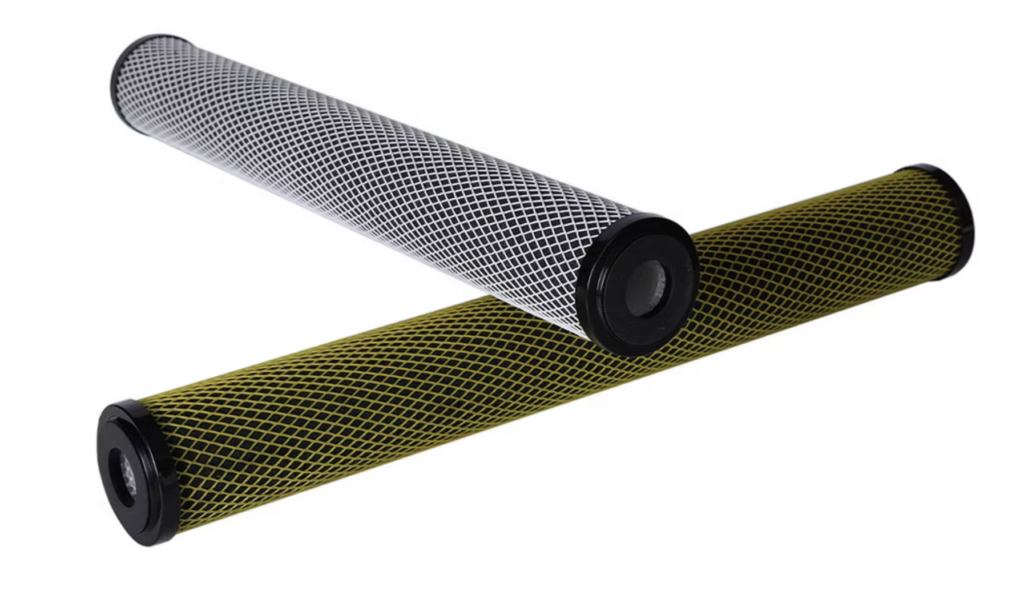
The activated carbon filter working principle is one of the most elegant chemical engineering concepts utilized in industrial fluid purification. Unlike standard mechanical strainers that catch objects like a net, activated carbon filters operate via a molecular attraction process called adsorption. By heating carbon-rich organic materials like coconut shells or coal to extreme temperatures with steam, a massive, highly intricate network of microscopic pores is developed. Just one gram of high-quality carbon can possess a surface area exceeding 1,000 square meters.
As a contaminated fluid or gas passes through this matrix, dissolved impurities are pulled to the carbon’s surface by van der Waals forces and electrostatic attraction, locking the contaminants away and leaving a pure, clean effluent
Yet, in industrial environments, this chemical miracle faces a fatal physical flaw: pore blinding. To prevent raw mechanical solids from destroying expensive carbon beds, operators must implement precision pre-filtration. Here is how the K Filter stands as the definitive operational shield to optimize the lifecycle and working efficiency of your carbon purification loops.
The Molecular Vulnerability: Why Carbon Beds Blind Early
According to industrial process studies, an activated carbon filter’s efficiency relies on three core variables: pore size distribution, total active surface area, and contact time.
However, raw process streams rarely carry just dissolved chemicals. They are laden with sub-micron iron sulfides, pipe scales, catalyst fines, and suspended solids. When these solids enter a carbon bed, they do not undergo chemical adsorption. Instead, they physically coat the outer layers of the carbon granules.
This leads to immediate operational failure:
- Pore Blinding: Fine grit fills the microscopic entrances of the carbon, locking out the target VOCs and chlorine from ever reaching the internal surface area.
- Channeling: Blocked pathways force the fluid to cut high-velocity “channels” through the loose media bed. This cuts down contact time to a fraction of its design spec, allowing contaminated fluid to slip past off-spec.
- Excessive Delta Pressure (ΔP): As granules get packed tightly with mechanical mud, the system’s differential pressure spikes, overloading pumps and choking plant throughput.
How the K Filter Enhenses the Working Principle of Activated carbon filter
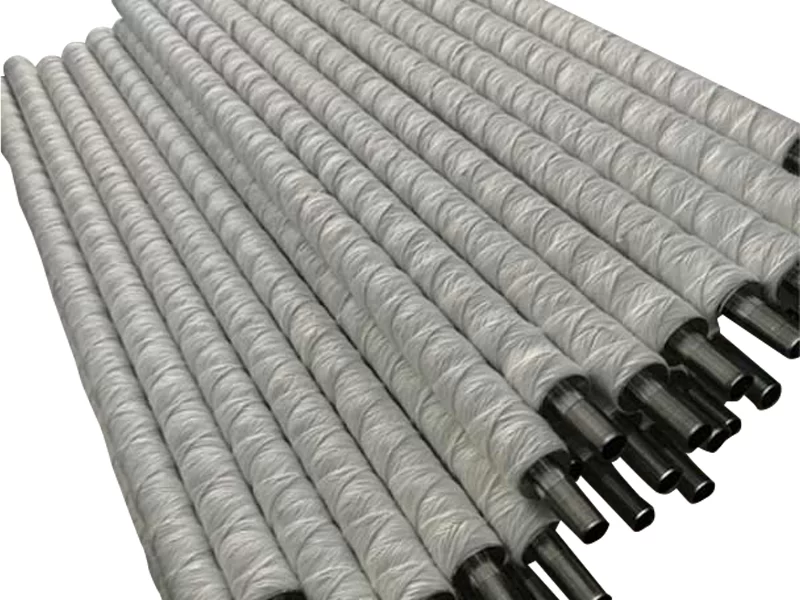
The K Filter is engineered precisely to isolate physical particle management from molecular adsorption. By functioning as a dedicated, heavy-duty mechanical pre-filter, it guarantees that your carbon beds are used solely for their designed chemical purpose.
1. High-Loading Particulate Interception
The K Filter utilizes advanced depth-filtration geometry to intercept sub-micron and micron-sized particles before they contact the carbon. By trapping solid impurities within its own highly porous, durable elements, the K Filter ensures that the liquid or gas entering the carbon bed is completely free of suspended solids.
2. Maximizing Available Contact Time
By eliminating physical mud and solid cake formation in the carbon tank, the K Filter maintains an open, evenly distributed flow path. This prevents short-circuiting and channeling, giving the fluid maximum contact time with the carbon to achieve complete, high-efficiency molecular removal.
3. Slashing Carbon Media Replacement Rates
When a carbon bed fouls mechanically, operators try to fix it by backwashing. However, aggressive backwashing causes friction that breaks down brittle carbon granules into useless dust, destroying the bed’s structure. The K Filter absorbs 100% of the mechanical stress, pushing your carbon beds to their absolute saturation limits. This extends the media’s operational lifespan by up to 3x.
FAQ Section: Industrial Carbon Filtration & Pre-Treatment
Q1: What is the primary difference between absorption and adsorption in a carbon filter working principle?
A: Absorption occurs when a substance is taken entirely into the volume of a liquid or solid (like a sponge soaking up water). Adsorption—the mechanism behind activated carbon—is a strictly surface-based phenomenon where molecules bind to the external and internal pore surfaces of the carbon matrix via chemical or physical attraction.
Q2: Why can’t I use an activated carbon filter to remove suspended solids?
A: While carbon filters can physically trap large sediment, doing so is highly inefficient. Solid particulates pack the spaces between carbon granules, causing rapid pressure drops and blinding the carbon’s surface pores. This ruins the carbon’s ability to remove dissolved chemicals long before its adsorption capacity is actually chemically spent.
Q3: How does the K Filter prevent “channeling” inside industrial carbon tanks?
A: Channeling happens when accumulated solids clog certain parts of the carbon bed, forcing the fluid to flow through a few open, high-velocity paths. The K Filter removes these solids upstream, ensuring the fluid moves uniformly through the entire carbon matrix for maximum contact time and optimal purification.
Q4: What industries benefit most from a K Filter + Activated Carbon configuration?
A: This combination is vital for petrochemical and refining loops (such as amine and glycol sweetening), industrial wastewater reclamation, pharmaceutical API purification, and biogas processing plants looking to remove volatile organic compounds without constant media replacement.
Conclusion: Safeguard Your Purification Assets
Understanding the activated carbon filter working principle reveals that chemical adsorption is highly vulnerable to physical interference. To run an efficient, cost-effective plant, you must keep mechanical trash away from your chemical beds.
The K Filter delivers the heavy-duty, reliable particulate separation necessary to allow your activated carbon to perform at its maximum thermodynamic limit.
Contact our application engineers today to custom-size a K Filter system for your purification process, minimize your operating costs, and maximize your uptime.