 Skip to content
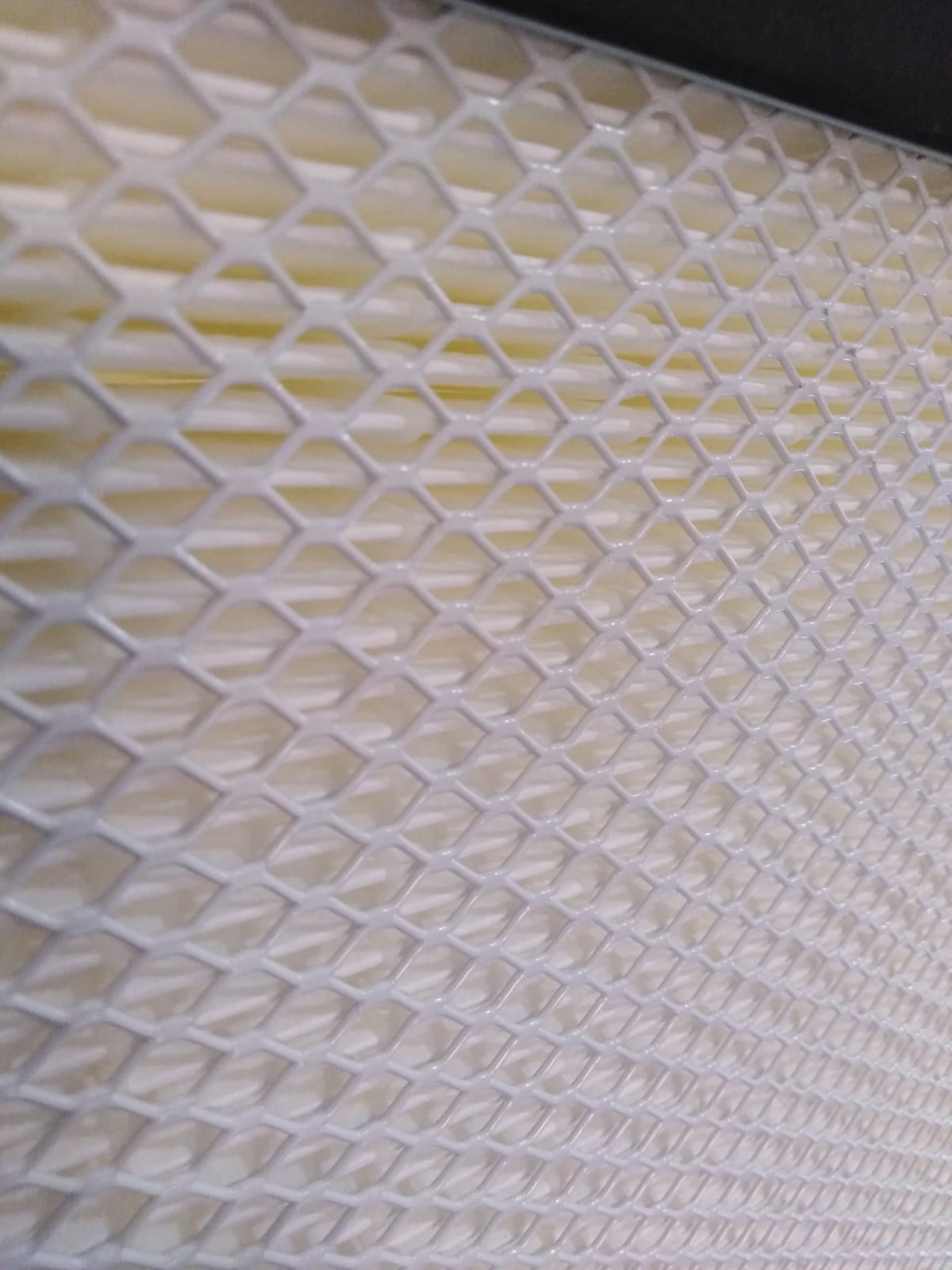
Deep Pleated HEPA Filter
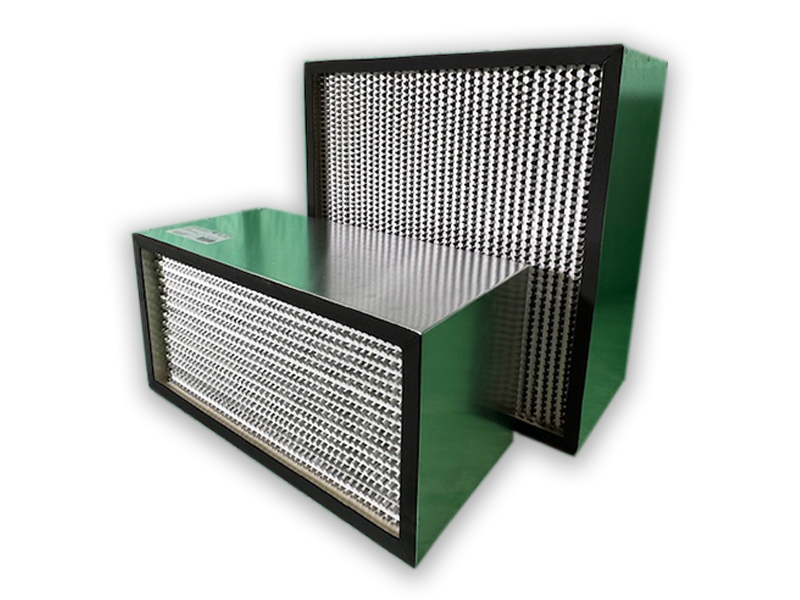
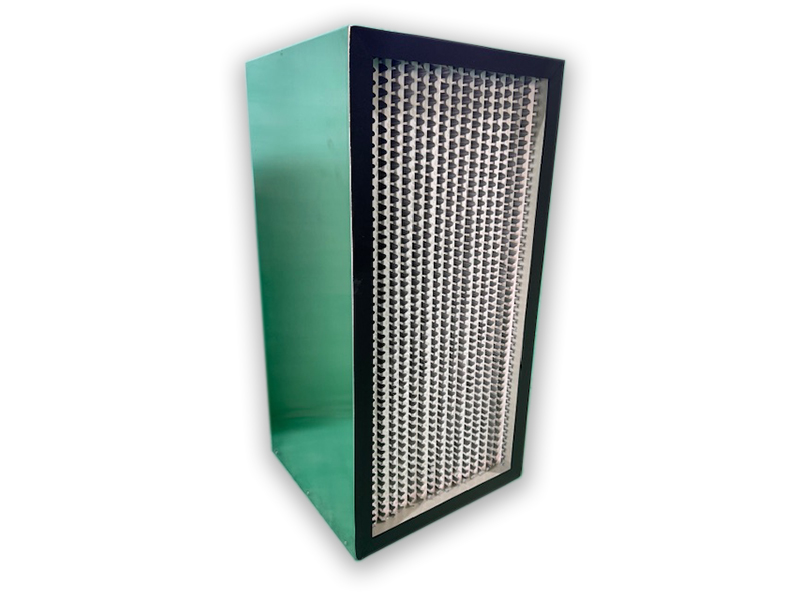
Brain Series AS Deep-Pleated Aluminum Separator HEPA Filters
High-Efficiency Air Filtration
In critical environments where air purity is non-negotiable, the Brain Series AS HEPA Filter stands as the ultimate line of defense. Engineered for heavy-duty performance, these deep-pleated filters utilize precision-engineered aluminum separators to ensure maximum airflow and structural integrity under the most demanding conditions.
Whether you are managing medical ventilation, industrial ecology systems, or high-tech manufacturing, the Brain Series AS provides a custom-tailored solution for your final stage of filtration.
Why Choose Aluminum Separator (AS) Technology?
“Deep-Pleat” design isn’t just about surface area; it’s about stability and endurance. Unlike standard filters, the Brain Series AS uses corrugated aluminum separators to maintain precise spacing between pleats.
- Optimal Airflow: Prevents pleat bunching, ensuring uniform air distribution across the entire media pack.
- High Temperature Resistance: Designed to thrive in environments where synthetic or cardboard separators would fail.
- Structural Rigidity: Capable of withstanding high-pressure loads in heavy-duty ventilation systems.
The Brain series AS HEPA filter’s wet-laid process ultra-fine micro glass fiber filter technology is capable of relying on a pure physical barrier to intercept particles such as dust, toxic gases, and aerosols and is stable to filtration efficiency, corrosion resistance, and chemical stability with waterproof. Connect Now! | Contact Us
Key Performance Specifications
K filters are built using a wet-laid ultra-fine micro glass fiber process. This creates a dense, multi-layered physical barrier that does not rely on temporary electrostatic charges, ensuring your filtration efficiency remains constant over time.
| Feature | Benefit |
| Micro Glass Fiber Media | Pure physical interception of dust, toxic gases, and aerosols. |
| Antimicrobial Design | Inhibits microbial growth, essential for sterile environments. |
| Low Pressure Drop | Reduces energy consumption and strain on HVAC motors. |
| High Dirt-Holding Capacity | Extends the service life of the filter, reducing maintenance costs. |
| Chemical Stability | Resistant to corrosion and degradation from harsh airborne chemicals. |
Our Key Features
- Water proof glass fibre
- Corrosion resistance
- Large surface area
- Deep pleated
- Low pressure drops
- Microbial growth
- Customs size
- Virus inactivation
- Carcinogenic gas removal
- High flow rate
Application
- AHU
- FAHU
- Ecology unites
- Odor control unit
Critical Applications
The Brain Series AS HEPA filter is specifically designed for the final stage of filtration in complex ecology and ventilation systems. Its robust construction makes it the go-to choice for
- Hospital Operating Rooms: Where antimicrobial protection and HEPA efficiency are life-critical.
- Pharmaceutical Labs: Requiring chemical stability and high-efficiency particulate removal
- Ecology & Scrubber Systems: Managing toxic aerosols and heavy particulate loads.
- High-Heat Manufacturing: Where temperature resistance is required without compromising the physical barrier.
Engineered for Excellence
Brain Series Advantage: By combining a high-surface-area deep-pleat design with the durability of aluminum, we offer a filter that delivers maximum efficiency with minimal resistance. When your air quality requirements are at their most stringent, trust the Brain Series AS to provide a stable, corrosion-resistant, and high-capacity solution. Customize your HEPA filtration today to meet the specific dimensions and temperature requirements of your facility
______________________________________________________________________________________________________________________________________________
Which are the filter class available AS HEPA Filters?
The Brain Series AS HEPA filters (Aluminum Separator) are available in a range of high-efficiency classes to meet different industry standards. Because they are designed for “critical heavy-duty” applications, they primarily fall under the HEPA (H11-H14) and ULPA (U15) classifications.
According to global standards EN 1822 and ISO 29463, the available filter classes for these deep-pleated aluminum separator models are:
1. HEPA Classes (High-Efficiency Particulate Air)
These are the most common for pharmaceutical, hospital, and high-end industrial ecology systems.
H11 (ISO 15 E / ISO 20 E): Captures ≥ 95% of particles at the Most Penetrating Particle Size (MPPS). Best for heavy-duty ventilation with high airflow requirements.
H13 (ISO 35 H): Captures ≥ 99.95% at MPPS. Often called “Medical Grade,” this is the standard for sterile environments and sensitive manufacturing.
H14 (ISO 45 H): Captures ≥ 99.995% at MPPS. Used for the most critical final-stage filtration where near-zero particulate bypass is required.
2. ULPA Classes (Ultra-Low Penetration Air)
For specialized Brain Series AS units used in semiconductor or advanced research labs:U15 (ISO 55 U): Captures ≥ 99.9995% at MPPS. These filters provide the highest level of physical barrier protection for toxic aerosols and sub-micron dust.
Why “AS” (Aluminum Separator) Matters for These Classes
Higher filter classes (like H14) require the media to be extremely dense. The aluminum separators in the Brain Series ensure that even at these high efficiencies:
Uniform Airflow: The pleats don’t collapse, maintaining the rated efficiency class.
High Temp Performance: The efficiency remains stable even if the system reaches higher operating temperatures (often up to 250°C in specialized AS models)
Pressure Stability: High-efficiency media usually has higher resistance; the aluminum separators provide the structural “backbone” to prevent the filter from bowing or leaking under pressure.
Comparison Table: Brain Series AS Efficiency Ratings
| Filter Class (EN 1822) | Efficiency (MPPS) | Typical Use Case |
| H11 | 95.0% | Industrial Ecology Systems, Heavy-duty HVAC |
| H13 | 99.95% | Operating Rooms, Pharma Labs, Food Processing |
| H14 | 99.995% | Cleanroom Terminal Modules, Toxic Gas Sealing |
| U15 | 99.9995% | Micro-electronics, Nuclear, Bio-safety Labs |
______________________________________________________________________________________________________________________________________________
1. What makes the “AS” (Aluminum Separator) design better than standard HEPA filters?
The aluminum separators are corrugated spacers placed between the pleats of the filter media. Unlike standard “minipleat” filters, the AS design provides superior structural rigidity. This allows the filter to handle higher air volumes, survive higher temperatures, and maintain uniform spacing to prevent “pleat bunching,” which can cause premature filter failure.
2. What filter classes are available for the Brain Series AS?
We offer a full range of high-efficiency classes to suit your specific cleanroom or ventilation requirements:
H11 to H14 (HEPA): Efficiency ranging from 95% to 99.995% at MPPS.
U15 (ULPA): For ultra-critical applications requiring 99.9995% efficiency.
3. Can these filters handle high-temperature environments?
Yes. Because the Brain Series AS utilizes aluminum separators and specialized high-temp sealants (rather than plastic or hot-melt glue), these filters are ideal for high-heat applications. Depending on the specific gasket and frame material chosen, they can typically operate in environments up to 250°C (482°F).
4. How does the “Antimicrobial Design” work?
The Brain Series AS incorporates an antimicrobial treatment within the wet-laid micro glass fiber media. This inhibits the growth of bacteria, mold, and fungi on the filter surface. This is a critical requirement for hospital ventilation, food processing, and pharmaceutical manufacturing where moisture might otherwise lead to microbial colonization.
5. What is the typical lifespan of a Brain Series AS filter?
Lifespan depends heavily on the dust concentration in your environment and the efficiency of your pre-filtration. However, due to the deep-pleated design, our filters offer a significantly higher dirt-holding capacity than standard filters, often resulting in a service life of 12 to 24 months in well-maintained systems.
6. Are these filters resistant to chemicals and corrosion?
Absolutely. The ultra-fine micro glass fiber media is naturally resistant to many corrosive gases and chemicals. Combined with the stable physical barrier of the aluminum separators, these filters maintain their integrity in “ecology systems” where they may be exposed to harsh industrial aerosols.
7. What is the “Pressure Drop,” and why is it low in these filters?
Pressure drop is the resistance the filter puts against your airflow. Despite their high efficiency, Brain Series AS filters are engineered with an optimized pleat geometry. This maximizes the surface area, allowing air to pass through more easily, which lowers energy costs and reduces wear on your fan motors.
8. Is it suitable for ecology systems in middle east region?
Yes, the Brain Series AS HEPA Filter is exceptionally well-suited for ecology systems in the Middle East region. In fact, the specific “AS” (Aluminum Separator) design addresses the three biggest environmental challenges found in Gulf countries (UAE, KSA, Qatar, etc.): extreme heat, high humidity, and heavy dust loading.
Here is why this specific filter is a top-tier choice for Middle Eastern ecology units:
1. Superior Heat Resistance (Desert Climates)
In the Middle East, outdoor ambient temperatures can exceed 50°C, and air inside ecology units (especially those near kitchen exhausts or industrial machinery) can climb much higher.
The AS Advantage: Standard filters use hot-melt glue or plastic separators that can soften or off-gas in high heat. The aluminum separators and deep-pleated design are physically stable and can often be customized to withstand temperatures up to 250°C.
2. Humidity & Corrosion Protection
Coastal regions like Dubai, Doha, and Jeddah face extreme humidity, which can cause standard paper-based separators to sog or collapse.
The AS Advantage: Aluminum is naturally resistant to moisture. Combined with the wet-laid micro glass fiber (which is inherently waterproof), the filter maintains its “physical barrier” and structural shape even in 100% relative humidity without the risk of pleat bunching.
3. Dust & Sandstorm Durability
The Middle East is prone to fine desert sand (silica dust) which can quickly clog shallow filters.
Antimicrobial Protection for Ecology Systems
Ecology units often handle organic grease, moisture, and odors—the perfect breeding ground for bacteria in a warm climate.
The AS HEPA Advantage: The antimicrobial design of the Brain Series prevents mold and bacterial colonies from growing on the filter media. This is essential for maintaining air hygiene and preventing “sour smells” from developing within the ventilation system.
Aluminium separator AS HEPA filter can wash and reuse?
No. You cannot wash or reuse a Brain Series AS HEPA filter (or any high-quality micro glass fiber HEPA filter).
Attempting to wash a HEPA filter will permanently damage it and compromise the safety of your ventilation or ecology system. Here is why:
1. Damage to the Micro-Glass Media
The filter media is made of wet-laid ultra-fine micro glass fibers. These fibers are arranged in a delicate, complex web to create a physical barrier.
- What happens when washed: Water (especially pressurized water) breaks the bond between these microscopic fibers, creating “pinholes” or large gaps.
- The Result: The filter may look clean, but it will no longer stop sub-micron particles, toxic gases, or aerosols. It effectively becomes a “sieve” instead of a filter.
2. Loss of “Physical Barrier” Efficiency
HEPA filters rely on four principles: Impaction, Interception, Diffusion, and Sieving.
- Washing causes the fibers to “clump” together. This drastically increases the pressure drop (resistance) because the air can no longer pass through the tiny pores. This puts extreme strain on your fan motors and can lead to system failure.
3. Corrosion and Mold Risks
Even though the aluminum separators are corrosion-resistant, trapping moisture deep within the pleats of a HEPA filter is dangerous.
- Bacterial Growth: While the Brain Series has an antimicrobial design, soaking the filter in water and organic dust creates a “sludge” that is impossible to dry completely. This can lead to mold growth and foul odors being blown back into the building.
- Separator Damage: While aluminum doesn’t rust like steel, constant exposure to tap water (which contains chlorine and minerals) can cause white oxidation on the separators over time.
______________________________________________________________________________________________________________________________________________
