Skip to content

Separating Unstable Emulsions in Oil & Gas and Petrochemical Processing
When you are dealing with liquid-liquid separation in demanding industrial environments, standard gravity settlers often fall short. If your process stream contains fine, dispersed droplets that refuse to settle, you need an engineered solution to accelerate phase separation.
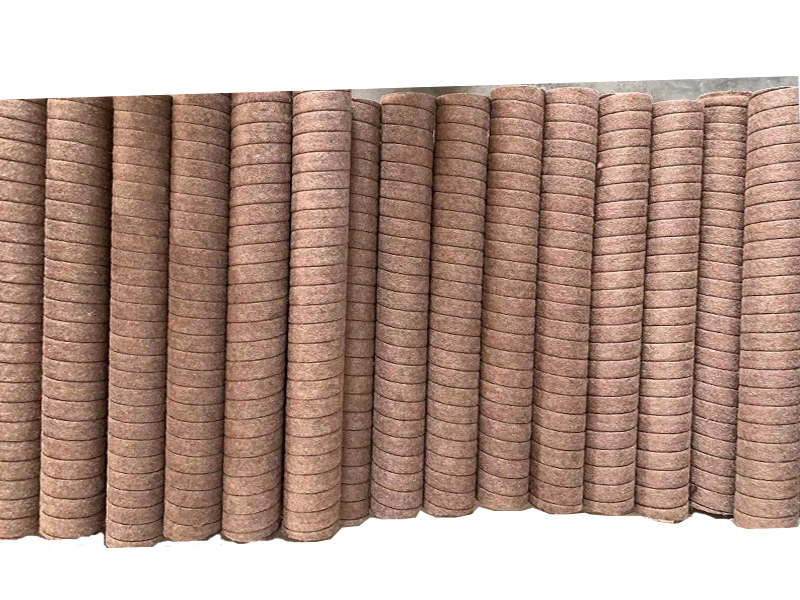
As a premier manufacturer and supplier of Hy-WeaveX™ Knitted Wire Mesh Liquid-Liquid Coalescer across Saudi Arabia, the UAE, and Qatar, we design high-efficiency internal components specifically to solve these emulsion challenges.

How Hy-WeaveX™ Knitted Wire Mesh Coalescers Work
The core problem in liquid-liquid separation is droplet size. Tiny, micron-sized droplets of a dispersed phase (like water in oil, or hydrocarbon in water) travel too slowly to separate by gravity alone.
Hy-WeaveX™ changes the physics of the stream through a straightforward process:
Interception: As the emulsion flows through the multi-layered knitted wire mesh structure, the tiny droplets are forced to travel along a tortuous path.
Coalescence: The droplets impinge on the high-surface-area wires. Because the mesh material is selected to match the wetting characteristics of the dispersed phase, the droplets hold to the wire, crowd together, and merge into larger droplets.
Rapid Settling: Once the droplets grow large enough, the drag force of the flowing liquid detaches them. These enlarged droplets now separate quickly due to the stark difference in density between the two phases.

Material Configurations for Gulf Operations
Industrial processes in the GCC region require materials that can withstand high temperatures, hydrogen sulfide (H2S), and aggressive chemical environments. We manufacture Hy-WeaveX™ coalescers in a wide variety of metallurgies and co-knitted designs to fit your specific process chemistry.
| Material Class | Common Options | Typical Applications |
|---|---|---|
| Standard Alloys | 304L, 316L Stainless Steel | General hydrocarbon water separation, mild corrosive service |
| High Alloys | Monel 400, Inconel 625, Hastelloy C276 | Sour gas processing, high chloride environments, acid removal |
| Co-Knitted Dual Media | Metal mesh structured with PTFE or Polypropylene | Highly unstable emulsions where a hybrid hydrophobic/hydrophilic surface is required |
Common Industrial Applications
Our technical teams supply custom-fit coalescers for several critical process units throughout the Middle East:
1. Amine and Glycol Protection
Carryover of liquid hydrocarbons into amine treaters or glycol dehydration units causes massive foaming issues, fouled solvents, and reduced plant throughput. Installing a knitted wire mesh coalescer upstream protects these chemical loops from contamination.
2. Condensate and Crude Oil Dehydration
Meeting export pipeline or refinery specifications requires reducing water content down to parts-per-million levels. Hy-WeaveX™ internals help vessels meet these tight targets without requiring massive, oversized settler footprints.
3. Wastewater Treatment and Hydrocarbon Recovery
Before sour water or process wastewater can be routed to treatment facilities, valuable hydrocarbons should be recovered, and environmental discharge limits must be met. Coalescers provide a reliable, low-maintenance mechanical solution for this step.
Why Regional Operators Partner With Us
Choosing the right coalescer supplier isn’t just about ordering a part number. It requires understanding the specific flow rates, densities, viscosities, and interfacial tensions of your process fluids.
- Custom Engineering: We do not believe in one-size-fits-all solutions. Every Hy-WeaveX™ element is engineered with the exact wire diameter, crimp depth, and packing density your process requires.
- Turnaround Support: We understand the high cost of plant downtime. Our manufacturing and supply network ensures that replacement mesh pads and custom vessel internals arrive on-site on schedule for your planned turnarounds or emergency shutdowns.Local Expertise: Serving major industrial hubs from Abu Dhabi and Ruwais to Jubail, Yanbu, and Mesaieed, we understand the specific international standards and corporate engineering specifications required by major regional operators

Frequently Asked Questions: Navigating the Saudi Aramco Supplier Process
Q1: What is the difference between an Aramco Vendor ID and a 9COM Approval?
An Aramco Vendor ID (Vendor Code) is your general registration number on the SAP Ariba platform, identifying you as an approved entity to do business with Aramco.
A 9COM Approval is a specific, highly technical classification for commodities and manufactured goods (such as separation internals, mist eliminators, or coalescers). Getting a Vendor ID allows you to talk to procurement, but you cannot supply specialized engineered equipment to Aramco projects unless your specific product lines have passed technical qualification under the relevant 9COM commodity code.
Q2: Can an international supplier register directly, or do we need a local Saudi entity?
Aramco categorizes suppliers based on geography
- In-Kingdom Suppliers: Must hold a valid Commercial Registration (CR) from the Ministry of Commerce and an investment license from the Ministry of Investment (MISA).
- Out-of-Kingdom (International) Suppliers: If you do not have a Saudi office, you must apply through Aramco’s regional affiliate offices (e.g., Aramco Europe in Amsterdam or Aramco Asia in Singapore). The international office evaluates your product to see if there is a specific, active business need before starting the vetting process.
Q4: How does the iktva program affect equipment manufacturers?
The iktva (In-Kingdom Total Value Add) program is Aramco’s localized content initiative. It measures how much value your business returns to the Saudi economy through local hiring, local material sourcing, and regional investment.
While you can achieve initial registration with a basic iktva self-assessment, having a higher, audited iktva score gives you a distinct competitive advantage during commercial evaluations for major EPC (Engineering, Procurement, and Construction) projects.
Q5: What does the technical qualification process look like for separation vessel internals?
For engineered items like coalescers and mesh pads, Aramco’s consulting services department conducts a rigorous engineering review. This usually involves:
- Design Standards Review: Ensuring your equipment matches relevant Aramco Engineering Standards (SAES) and Materials System Specifications (SAMSS).
- Quality Management Audit: Verification of ISO 9001 standards and proof of strict raw material traceability.
- Track Record Submission: Proof of successful operation in similar, high-pressure, or sour environments (H2S service) via extensive end-user reference lists.
- Physical Plant Inspection: An on-site quality audit of your manufacturing facility by Aramco inspectors.
Q1: What makes the Hy-WeaveX™ structure different from standard mesh demisters?
While gas-liquid demister pads focus on catching droplets moving in an upward vapor stream, a liquid-liquid coalescer works on a different physical principle.
The Hy-WeaveX™ structure features a denser, more complex, and multi-layered stitch pattern. It is explicitly engineered with a higher surface-area-to-volume ratio to optimize physical contact (impingement) between the tiny, suspended droplets of the dispersed liquid phase and the mesh surface. Additionally, the fiber weave is tailored to specific wetting properties—meaning it is either hydrophobic (repels water) or hydrophilic (attracts water)—depending on the target liquid phase you need to isolate.
Q2: How do you choose between standard metal mesh and co-knitted dual media?
The material selection depends directly on the stability of your emulsion and the droplet sizes in your process stream:
Monolithic Metal Mesh (e.g., 316L SS, Monel, Hastelloy): Ideal for standard emulsions with droplet sizes greater than 30 microns. This choice provides excellent mechanical strength and high-temperature resistance.
Co-Knitted Dual Media (Metal structured with PTFE or Polypropylene fibers): Best for highly stable or “tight” emulsions where droplet sizes fall between 10 to 30 microns. The intimate pairing of a high-surface energy material (metal) and a low-surface energy material (polymer) creates localized localized shear forces that force these ultra-fine droplets to merge much faster than metal alone can achieve.
Q3: What are the primary operating limits regarding viscosity and density differences?
Liquid-liquid coalescers rely on the density difference between the two phases to settle out the enlarged droplets.
Density Difference: The system operates most efficiently when the density difference between the continuous phase and the dispersed phase is greater than 0.05 g/cm³. If the densities are too close, gravity settling becomes incredibly slow, even after coalescence.
Viscosity: The continuous phase viscosity should ideally be less than 50 cP at operating temperature. High-viscosity liquids exert significant drag forces on the droplets, making it harder for them to travel to the mesh surface and settle out cleanly.
Q4: How do I know if my vessel requires a horizontal or vertical configuration?
The choice of vessel layout is driven by the fluid volumes and ratios in your application:
Horizontal Separators: This is the standard choice for most liquid-liquid separation systems because it provides a much larger settling zone interface area. It is ideal for high-volume streams or applications where both liquid phases are present in substantial ratios.
Vertical Separators: These are typically reserved for applications with space or plot-plan constraints, or streams where the dispersed phase is present in very small, trace amounts (e.g., stripping minor water out of a massive hydrocarbon export stream).
Q5: How do you protect the coalescer mesh from fouling and solid contaminants?
Knitted wire mesh is an excellent coalescing medium, but its tight structure means it can act as a physical filter if particulate matter enters the vessel. Solid particles like iron sulfide, rust, or scale will plug the mesh, leading to a high pressure drop and premature process failure.
If your process stream carries high solid loads, we highly recommend installing a robust mechanical inlet distribution device or a dedicated particulate filter upstream of the coalescer to capture solids before they reach the delicate mesh matrix.
Q6: What data is needed to size a replacement or custom upgrade pad?
To ensure your replacement pad or new installation is properly sized and won’t suffer from flooding or bypassed bypass streams, our engineering team requires the following process values:
Total volumetric flow rate of both liquid phases.
Operating temperatures and pressures.
Density and viscosity of both liquids at operating conditions.
Interfacial tension (IFT) between the two liquid phases.
The target output purity requirements (e.g., reducing water content from 2,000 ppm down to less than 15 ppm).
Get Technical Support for Your Separation Challenges
If you are experiencing liquid carryover, downstream catalyst poisoning, or fouling in your separation vessels, our engineering team can help review your operating data and size a replacement or upgrade pad.
Contact our regional offices today to discuss your project requirements for Saudi Arabia, the UAE, or Qatar.