 Skip to content
Hy-WeaveX™ Knitted Wire Mesh
Liquid-Liquid Coalescer | Bulk Phase Separation
If you are trying to separate two immiscible liquids at a high flow rate, relying solely on standard filter cartridges can create a massive maintenance bottleneck. Fine-pore cartridges are excellent for precision polishing, but they struggle when faced with bulk fluids or sudden, heavy liquid slugs.
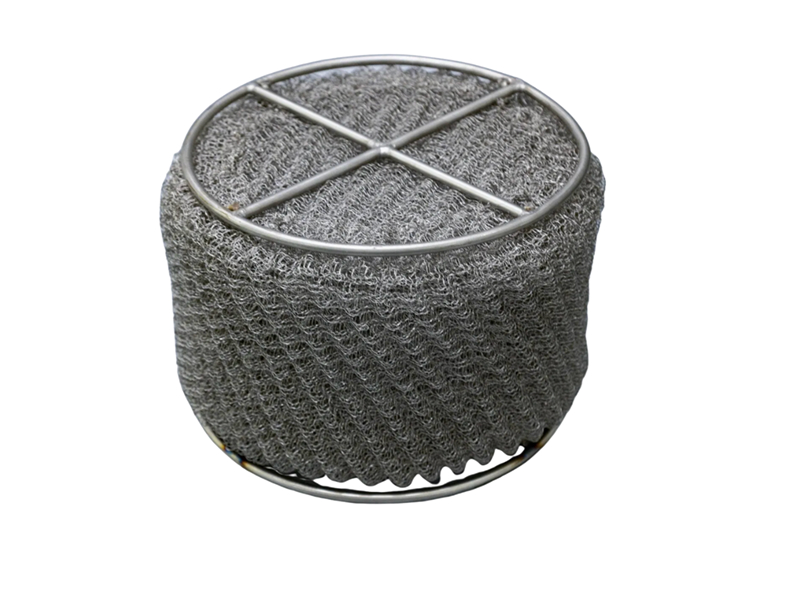
The Hy-WeaveX knitted wire mesh liquid-liquid coalescer is engineered specifically for these high-volume, bulk separation challenges. By combining a multi-layered woven wire matrix with gravitational settling, this system delivers continuous phase separation without the high pressure drop or frequent element replacement associated with traditional cartridge housings.
How the Knitted Matrix Works
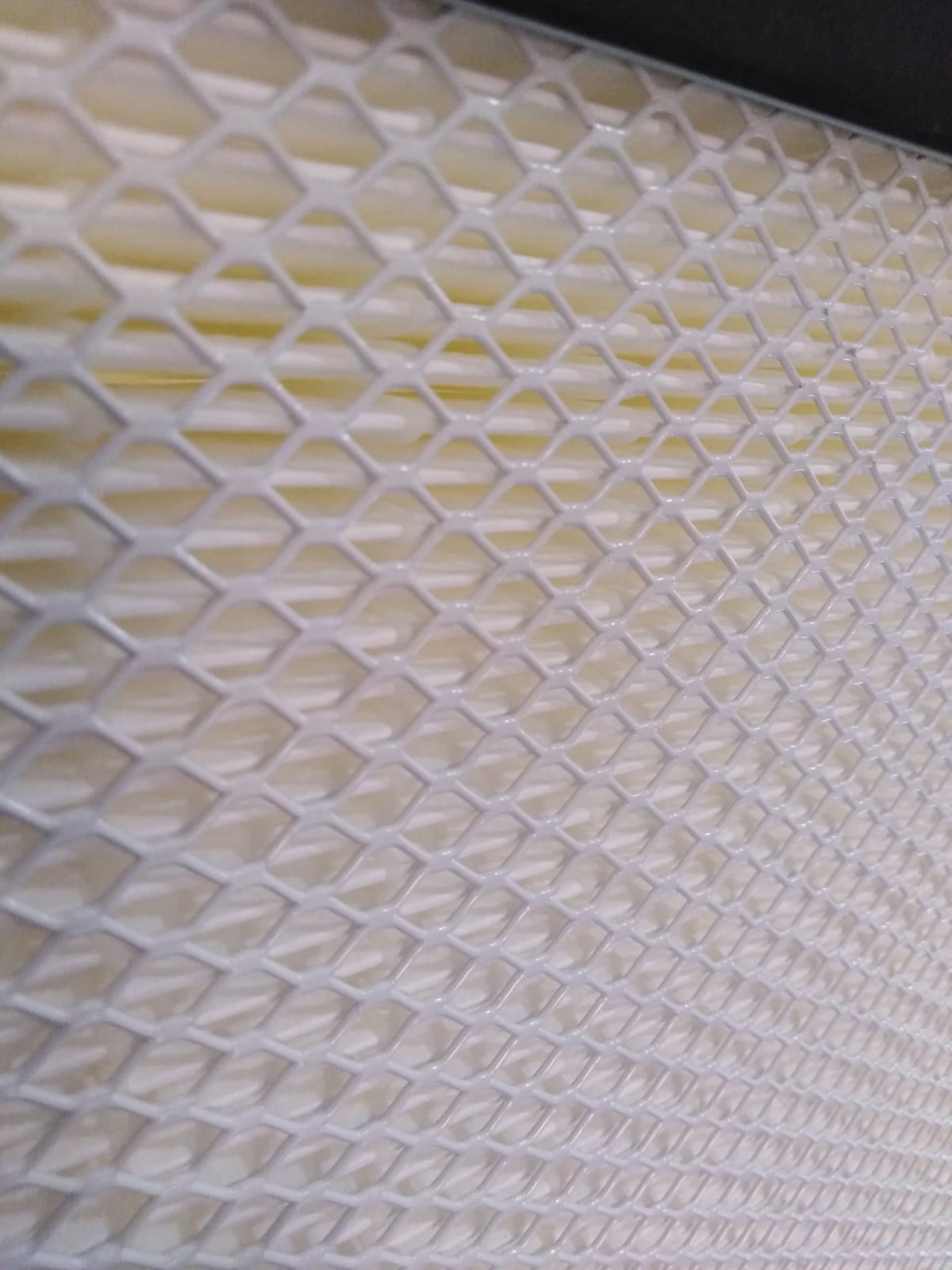
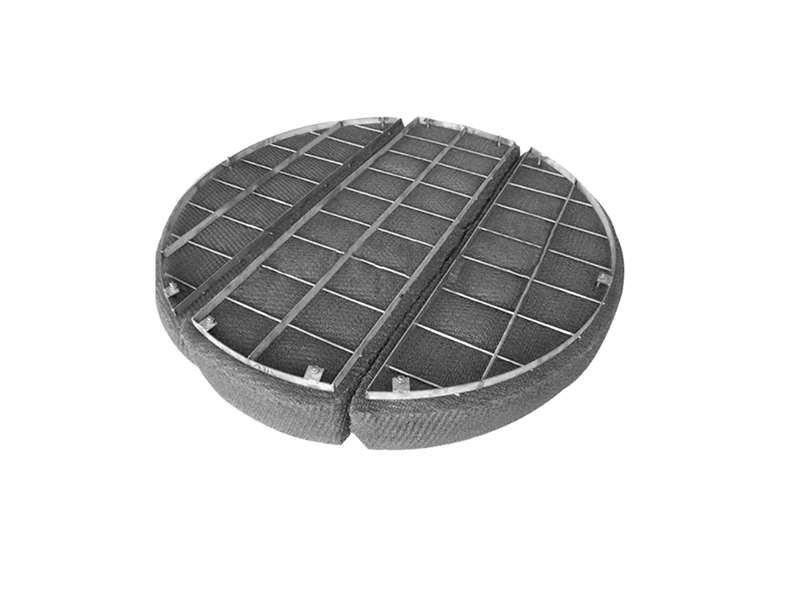
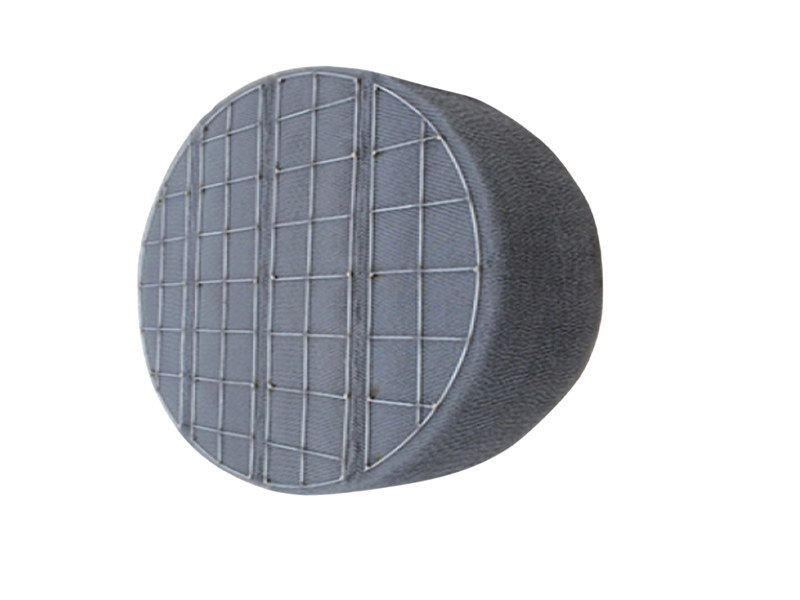
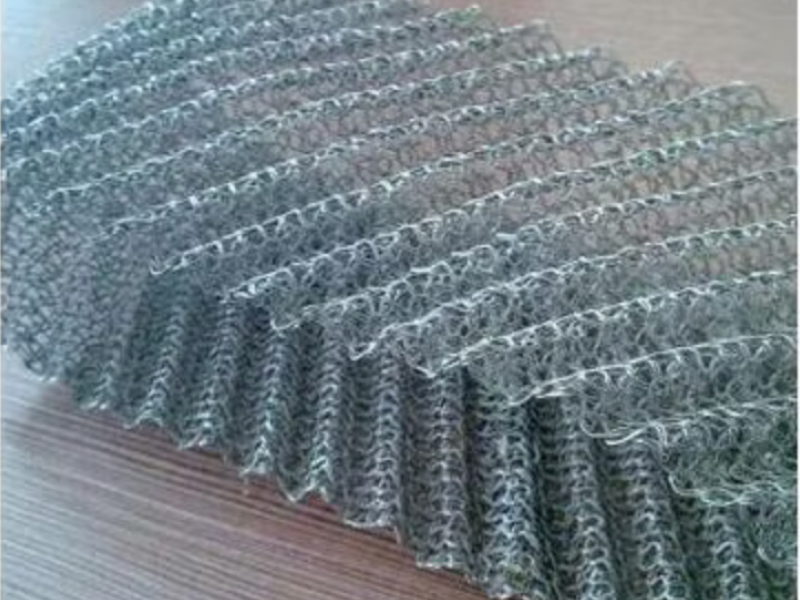
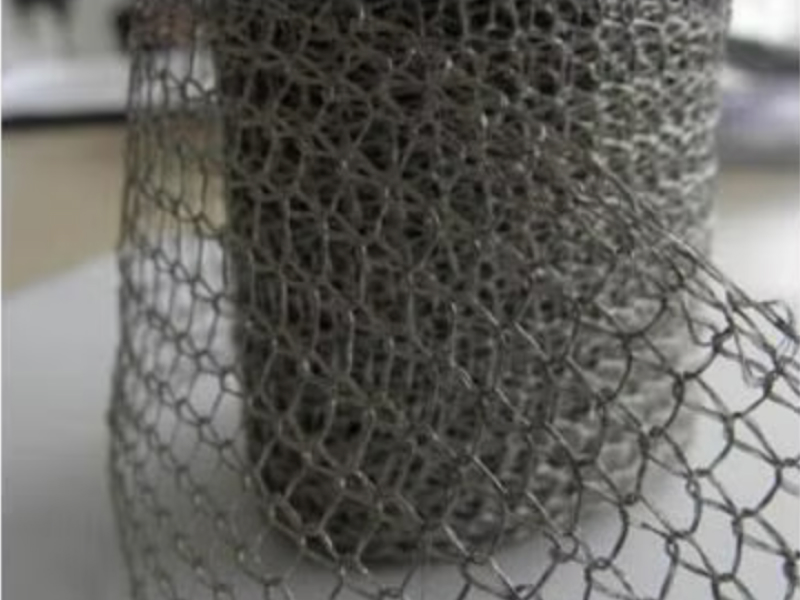
The core of the system relies on a precision-engineered media pack. As your process emulsion enters the vessel, it passes through a series of dense, crimped layers of knitted wire mesh.
- Impingement: Tiny, dispersed droplets suspended in the continuous phase hit the micro-filaments of the mesh pad.
- Growth: As more fluid flows through, these trapped droplets slide along the wire filaments, collide with each other, and merge into larger droplets.
- Release & Settle: Once the droplets grow large enough that the drag of the fluid can no longer hold them, they release from the matrix.
From there, gravity takes over. The heavy phase drops down while the light phase floats upward, giving you a clean, predictable separation zone.
Material Configurations Tailored to Your Chemistry
No two chemical processing streams are identical, which is why we customize the weave density and material selection for every application. The wire filaments are available in a broad range of metallurgy to prevent corrosion, including:
- 300 Series Stainless Steel
- Monel 400
- Nickel 200
- Hastelloy C276
- Inconel 600
For challenging streams where surface energy is critical, we can co-knit or inter-wind the metal wires with high-performance polymer fibers like Teflon, Kynar, polypropylene, nylon, or polyester. Blending these materials optimizes the wetting properties of the media, forcing the dispersed droplets to coalesce even more efficiently.
Applications
This high-capacity, single-stage design is a reliable workhorse across refineries, petrochemical facilities, and natural gas processing plants. It is highly effective for:
- Separating bulk water or amine from natural gas liquids (NGL).
- Pulling water or caustic carryover out of kerosene, gasoline, and diesel streams.
- Removing oil fractions from industrial wastewater or anhydrous ammonia.
- Any liquid-liquid application where the two phases have distinct densities.
System Layout and Settling Chambers
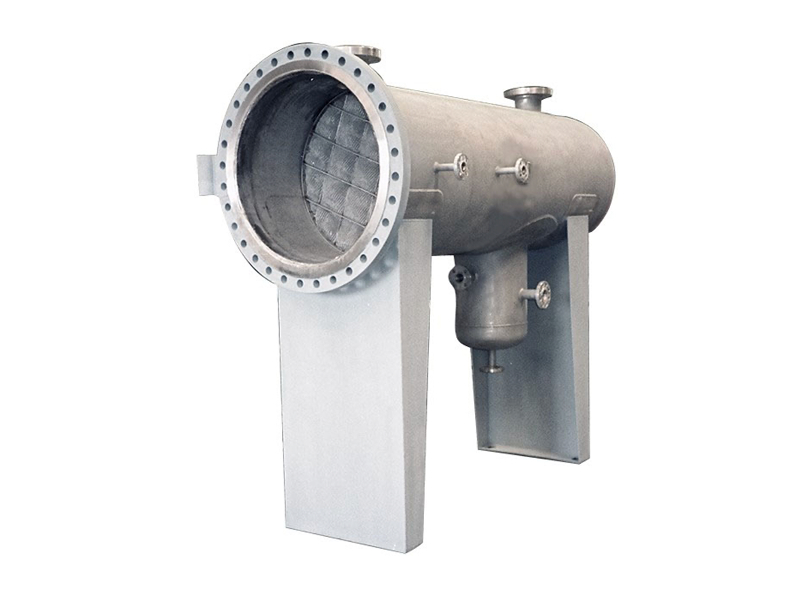
Because the final stage of separation relies entirely on gravity, vessel layout is key. The orientation of the collection chamber, or boot, depends strictly on which liquid you need to isolate.
- Heavier Dispersed Phase: If you are pulling trace water out of a light hydrocarbon, the water will settle downward into a collection boot positioned at the absolute bottom of the vessel.
- Lighter Dispersed Phase: If you are separating light oil or organic droplets out of a heavy water stream, the oil will rise. In this case, the collection chamber is built onto the top of the vessel.
Protecting the System from Solids
Knitted mesh pads offer a very high open area, which keeps your operational pressure drop minimal. However, they are not designed to act as trash filters. If your process stream contains particulate solids like iron sulfide, rust, or pipe scale, those particles will eventually lodge inside the mesh matrix and foul the system.
To ensure maximum runtime and prevent plugging, we always recommend installing a dedicated solid particulate filter housing directly upstream of the coalescer. This keeps the mesh clean so it can focus entirely on separating the liquids.
The most common questions
1. What is the main difference between a mesh pad coalescer and a cartridge coalescer?
The primary difference comes down to volume capacity versus precision polishing.
- Mesh pad coalescers (like Hy-WeaveX) use a highly porous, open woven matrix. They are built to handle massive fluid volumes, high flow rates, and heavy liquid slugs with practically zero pressure drop. They rely heavily on gravity settling once the droplets grow larger.
- Cartridge coalescers (like Hy-WeaveX / Hy-SepraX elements) use dense, tightly packed pleated polymer or fiberglass media. They are designed for precision polishing to remove sub-micron droplets from streams with ultra-low interfacial tensions, but they cannot handle large volumes of bulk liquid or high solids without blinding.
2. How low of a water concentration can the Hy-WeaveX system achieve?
A properly sized mesh pad system can typically reduce free water or oil concentrations down to 50–15 ppmv, depending on the specific gravity difference between the two liquids and the interfacial tension of the mixture. If your process requires absolute bone-dry fluid (down to single-digit ppmv) under tough chemical conditions, we often recommend a two-stage system or positioning a polymer cartridge coalescer downstream as a final polishing step.
3. Why do you co-knit metal wire with polymer fibers?
Co-knitting (or inter-winding) is all about manipulating surface energy. For an emulsion to separate, the dispersed droplets need to attract to, spread out along, and release from the media filaments. By blending an industrial metal (which is hydrophilic, or water-attracting) with a polymer fiber like Teflon or polypropylene (which is hydrophobic, or oil-attracting), we create a high-surface-area “dual-wetting” environment. This drastic difference in surface chemistry forces the droplets to merge and grow much faster than they would on a plain metal grid.
4. Can a mesh pad coalescer handle solid contaminants?
No, and it shouldn’t. While the high open-area design makes the mesh more forgiving than a tight filter cartridge, it is not a trash filter. Solid particles like iron sulfide, pipeline scale, or fine rust will eventually lodge deep inside the crimped wire layers. Over time, this solids buildup will foul the media, cause localized velocity spikes, and disrupt the coalescing process. Dedicated particulate pre-filtration upstream is highly recommended to protect your investment.
5 How do you determine if a vessel should be horizontal or vertical?
- Horizontal vessels are the industry standard for bulk liquid-liquid separation. They give the fluids a long, calm residence time to pass through the vertical mesh pad and split into distinct layers. Gravity has a shorter vertical distance to pull the heavy phase down into the bottom boot.
- Vertical vessels are typically reserved for applications where floor space or footprint is severely limited, or where the volume of the dispersed phase is incredibly small.
6 What parameters are critical for sizing a Hy-WeaveX system?
To properly size a knitted mesh matrix, we look at four main physical properties:
- Specific Gravity Differential: The difference in density between your light and heavy phases. The larger the gap, the faster they separate. If the densities are too close, gravity settling becomes difficult.
- Viscosity of the Continuous Phase: Thicker, highly viscous liquids slow down the rate at which droplets can travel and settle out.
- Interfacial Tension (IFT): A measure of how tight the emulsion is. Low IFT streams require denser, co-knitted matrices to break the emulsion.
- Total Flow Volume: This dictates the physical diameter of the vessel to ensure the fluid velocity stays below the limit where droplets would re-atomize or bypass the mesh.
7 Is it possible to clean and reuse a Hy-WeaveX mesh pad?
Yes, in many cases. Because the media pack is constructed from heavy-duty metallurgy (like 300-series stainless steel, Monel, or Hastelloy), it can often be back-flushed, chemically cleaned, or steam-cleaned if it becomes fouled by organic waxes or light gums. However, if the pad becomes severely impacted with hard particulate solids due to poor upstream filtration, replacement is usually necessary to restore original performance.
