Skip to content
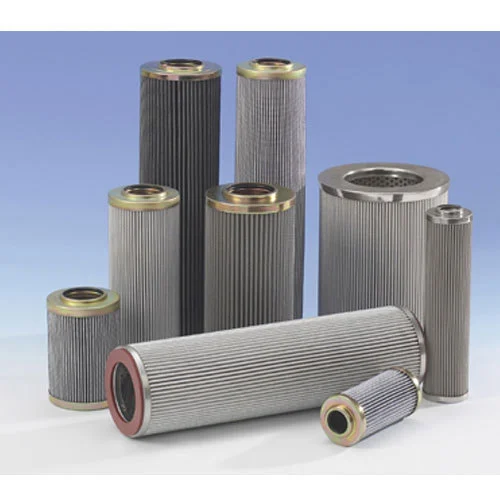
In hydraulic elements, “cleanliness is next to godliness.” Even microscopic particles—invisible to the naked eye—can cause catastrophic component failure, lead to valve sticking, and accelerate pump wear.
When selecting a hydraulic elements, the most discussed technical spec is the Micron Rating. But what does it actually mean for your system’s performance?
What is a Micron?
A micron (micrometer) is one-millionth of a meter. To put this in perspective:
- A human hair is roughly 70 microns.
- The lower limit of human visibility is about 40 microns.
- Most harmful hydraulic contaminants are between 2 and 15 microns.
If your filter isn’t rated to catch particles in that 2–15 range, your system is effectively “Oil Polishing ” the metal components with sandpaper.
Nominal vs. Absolute Micron Ratings
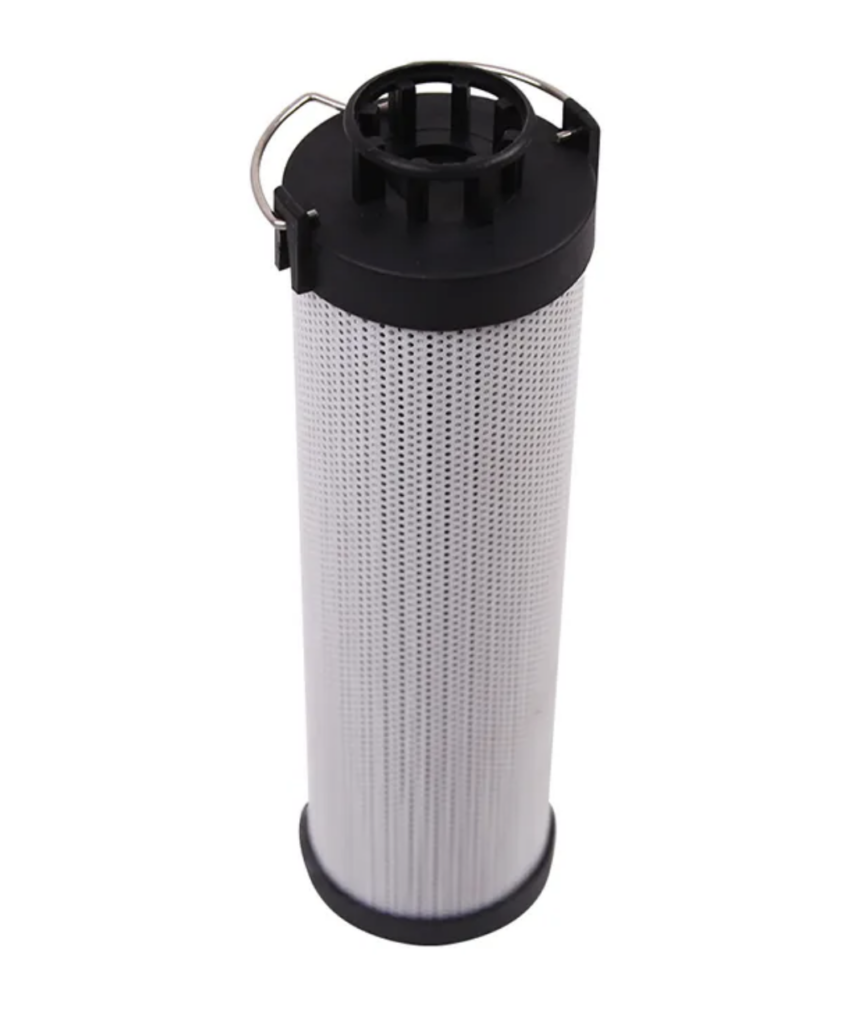
Not all ratings are created equal. When browsing for filters, you will encounter two primary types:
1. Nominal Rating (Efficiency ~50% to 90%)
A nominal rating indicates the filter’s ability to retain the majority of particles of a certain size. It is an “average” estimate. If a filter is nominally rated at 10 microns, it might only catch 60% of 10-micron particles, allowing the rest to pass through.
2. Absolute Rating (Efficiency ≥99.9%)
The absolute rating is determined through a “Multipass Test.” An absolute 10-micron filter (often expressed as Beta 1000) means it captures 99.9% of particles that size. For critical components like servo valves and high-pressure pumps, absolute filtration is mandatory.
The Beta Ratio (β): The True Measure of Efficiency
Modern hydraulic standards rely on the Beta Ratio rather than just a micron number.
- βx=2 (50% Efficiency)
- βx=75 (98.7% Efficiency)
- βx=1000 (99.9% Efficiency)
If you are looking for a high-performance filter, always look for the Beta Ratio on the datasheet. A “10-micron filter” with a Beta of 2 is significantly weaker than a “10-micron filter” with a Beta of 1000.
Why Your System Needs “K-Filter” Quality
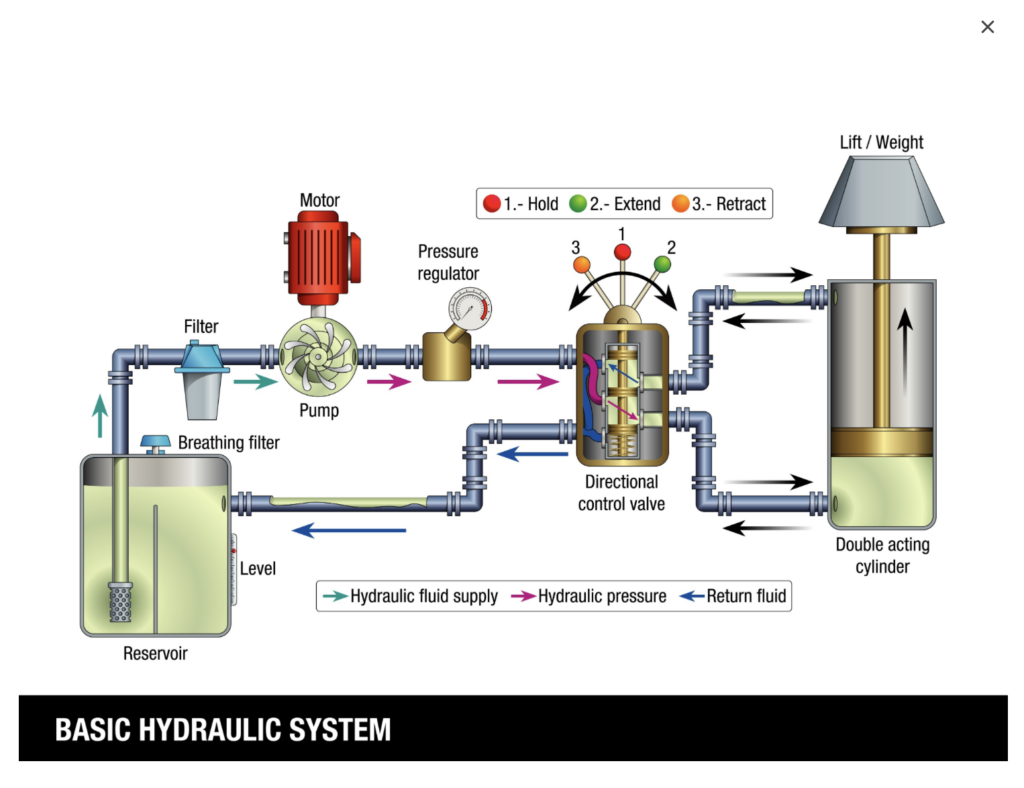
High-quality hydraulic elements (like those provided by specialists such as K Filter use multi-layered synthetic media. Unlike cheap paper filters, these “K-type” or high-performance elements offer:
- Lower Pressure Drop: They don’t starve the pump of oil.
- Higher Dirt Holding Capacity: They last longer before the bypass valve opens.
- Structural Integrity: They won’t “collapse” or “shed” fibers into the oil stream during cold starts.
Which Rating Do You Need?
| Component to Protect | Recommended Micron Rating | Rating Type |
| Standard Gear Pumps | 20 – 25 Microns | Nominal |
| Vane Pumps / Directional Valves | 10 – 15 Microns | Absolute ( β≥75) |
| Piston Pumps / Proportional Valves | 5 – 10 Microns | Absolute (β≥200) |
| High-Precision Servo Valves | 1 – 3 Microns | Absolute (β≥1000) |
Conclusion
Choosing a filter solely based on the cheapest price often leads to the most expensive repairs. By understanding the difference between nominal and absolute ratings, you can ensure your hydraulic system remains efficient and downtime-free.
Need help calculating your system’s Beta Ratio? Contact our technical team today for a comprehensive filtration audit.