 Skip to content
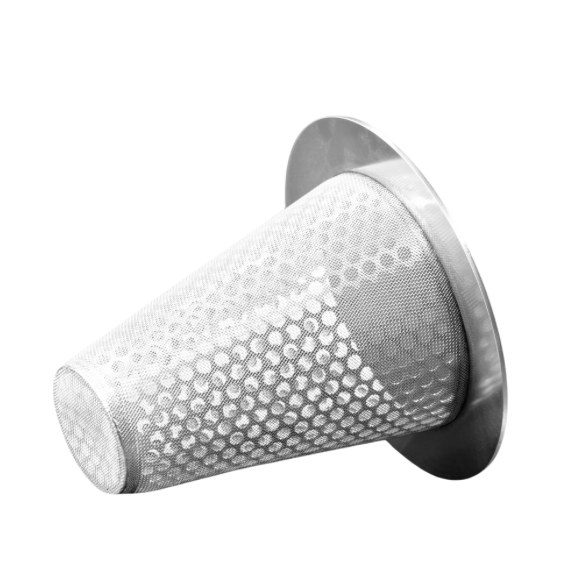
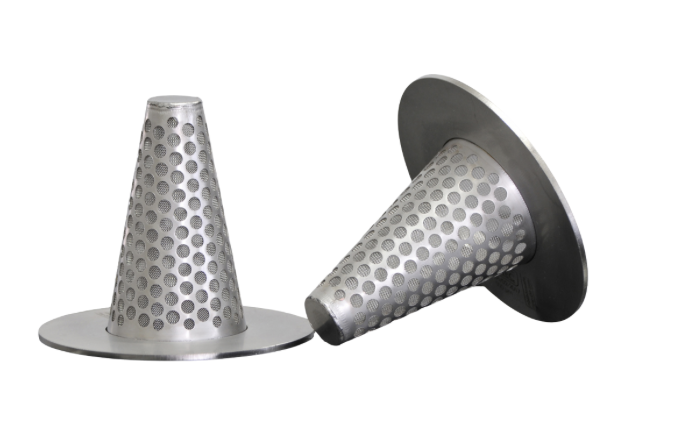
ApexFlow™ Conical Strainers
Built for High-Volume Protection
When you are commissioning a new pipeline or safeguarding a permanent industrial process, managing fluid pressure and structural stability is always a priority. If your pipeline catches heavy debris or handles high fluid velocities, a standard flat filter element can quickly warp, clog, or fail.
To give engineers a more durable, high-capacity option for line cleaning and particle separation, we have launched our new range of custom-engineered industrial conical strainers, ApexFlow™ Conical Strainers.
Designed to sit securely between standard pipeline flanges, these cone-shaped filters provide exceptional structural integrity and massive dirt-holding capacities. Whether you need a temporary filter for a system startup or a reinforced element for permanent line protection, our new selection offers the exact engineering balance your pipeline requires.
______________________________________________________________________________________________________________________________________________
High-Strength Engineering and Flexible Mesh Sizing
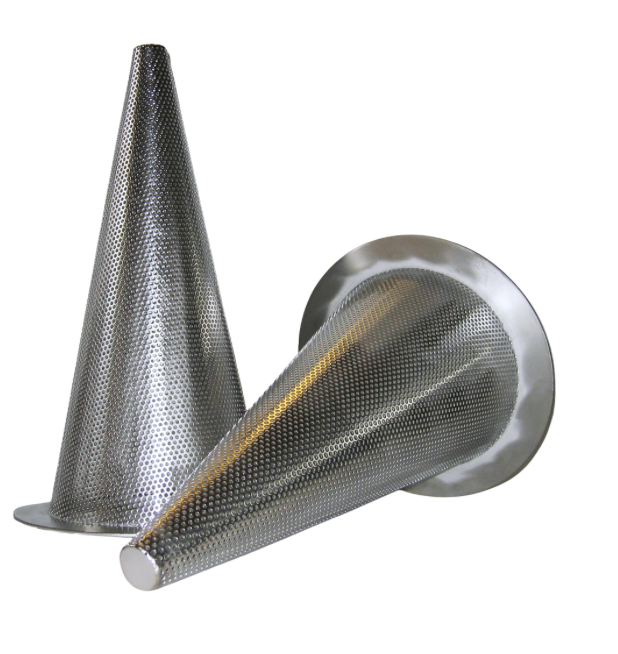
The primary advantage of a conical strainer frequently called a witch’s hat strainer is its geometric strength. The natural taper of a cone distributes the physical force of a flowing fluid much more evenly than a flat plate, allowing the metal structure to withstand significant pressure differentials without buckling.
To ensure your downstream components receive the exact level of safety they need, we customize the filtration layer based on the critical particle size of your system.
Whether you are protecting a high-end control valve, a multi-stage pump, or a sensitive flow meter, we match the strainer’s liner to your specific target micron rating. We keep a deep inventory of diverse wire meshes in stock, allowing us to build, refine, and ship your customized strainer sizes without long production delays.
Maximizing Length for Ultra Low-Pressure Drops
In pipeline design, a restricted flow path means a drop in system pressure, which forces your pumps to work harder and consumes more energy. If your physical installation length is not strictly limited, our new product range (ApexFlow™ Conical Strainers) allows you to maximize the length of the strainer cone.
By extending the cone deeper into the pipeline, we expand the filtration surface area significantly.
- Up to 300% Open Area: Our elongated conical models (ApexFlow™ Conical Strainers) can achieve an open area ratio of up to 3.0, meaning the free filter area is three times the internal cross- sectional area of the pipe itself.
- Minimal Resistance: This massive surface area ensures that fluid passes through the mesh with almost zero resistance, resulting in an exceptionally low initial differential pressure.
Advanced Planning and Burst Pressure Calculations
To take the guesswork out of your system planning, our engineering team offers proactive pressure drop calculations during your design phase. We calculate the exact expected differential pressure for two critical scenarios:
- The clean case (when the strainer is brand new or freshly washed).
- The 50% clogged case (simulating real-world debris accumulation).
These precise calculations ensure you can accurately determine your system’s maximum allowable differential pressure, also known as the burst pressure rating, keeping your operations well within safe mechanical limits.
Flexible Installation and Multi-Layer Reinforcement
Our new range (ApexFlow™ Conical Strainers) is engineered to accommodate diverse piping layouts and long operational lifecycles through smart structural variations.
Reversible Flow Configurations
While standard conical strainers typically handle flow from the inside of the cone to the outside, our new range (ApexFlow™ Conical Strainers) supports reversed installation positions. If your process requires it, we can configure the strainer to handle flow from the outside to the inside, trapping debris along the exterior walls of the cone for specific maintenance setups.
Multi-Layer Protection Against “Mesh Fluttering”
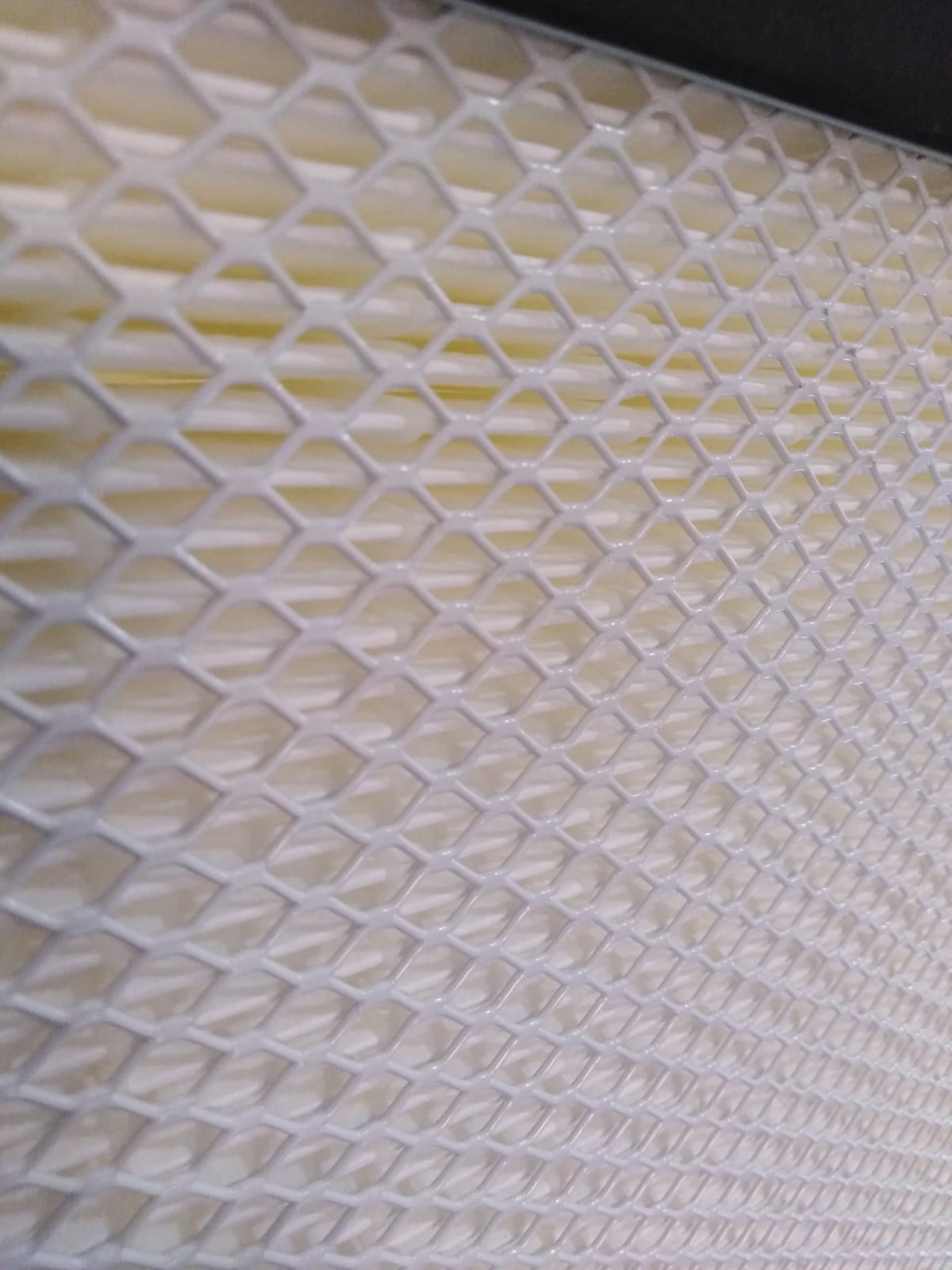
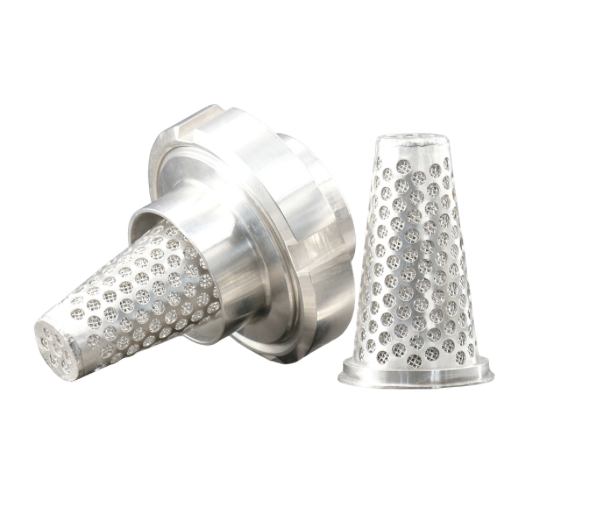
When a pipeline utilizes a very fine mesh liner to catch tiny particulates, the high-velocity fluid stream can cause the thin wires to vibrate rapidly, a phenomenon known as mesh fluttering. Over time, this constant vibration causes metal fatigue and tears the filter. To prevent this damage, our fine-mesh conical strainers feature a rugged, multi-layer design. The delicate inner wire mesh is sandwiched between a heavy-duty perforated metal core and coarse, thick-wire protective safety screens. This reinforcement shields the fine mesh from larger, high-impact particles and dampens structural vibrations, making these units highly reliable for long-term, permanent operation.
Technical Specifications Summary
| Feature | ApexFlow™ Conical Strainers Standard Range |
|---|---|
| Structural Design | High-strength tapered cone profile with optimized flow dynamics |
| Max Open Area Ratio | Up to 3.0× the internal free pipe area (300%) |
| Flow Orientation | Standard (inside-to-outside) or Reversible (outside-to-inside) |
| Reinforcement | Multi-layer protective grid options to prevent mesh fluttering |
| Engineering Support | Proactive clean and 50% clogged differential pressure modeling |
Invest in Heavy-Duty Pipeline Security
A pipeline filter is only as good as its structural engineering. By combining high-grade materials, precision multi-layer reinforcement, and tailored open-area calculations, our new conical strainer range (ApexFlow™ Conical Strainers) delivers the reliability your industrial plant demands. Contact our technical sales team today to discuss your flow rates, line dimensions, and target particle sizes, and let us build the perfect high-strength filtration solution for your facility.
Frequently Asked Questions (FAQ)
1.What is “mesh fluttering,” and how do your strainers prevent it?
Mesh fluttering occurs when high-velocity fluids pass through a very fine, thin-wire mesh screen. The intense flow causes the delicate wires to vibrate rapidly. Over time, this constant mechanical stress causes metal fatigue, leading to micro-tears or total mesh failure. Our strainers (ApexFlow™ Conical Strainers) prevent this by using a multi-layer design: the fine filter mesh is sandwiched between a heavy-duty perforated metal backing core and a coarse protective outer grid, dampening vibrations and shielding the fine filter from high-velocity impact.
2.When should I design a system for a 300% (3.0) open area ratio?
You should opt for a 300% open area ratio if your installation space allows for an elongated cone length and your process fluid carries a high concentration of solids or operates at high velocities. Expanding the filter area to three times the internal pipe cross-section ensures that even when the strainer captures a massive amount of construction debris or operational scale, it leaves plenty of clear path for the fluid, maintaining an ultra-low pressure drop across the system.
3.Why is it beneficial to calculate pressure drops for a “50% clogged” scenario?
Calculating the pressure drop for a 50% clogged strainer mimics real-world operating conditions. A clean strainer calculation only tells you how the system performs on day one. By modeling the 50% clogged case during your design phase, we help you determine the real operational threshold where pressure begins to drop significantly. This allows you to accurately specify your system’s maximum allowable differential pressure and set precise trigger points for maintenance alerts before the strainer reaches its structural burst pressure limit.
4.What are the advantages of installing a conical strainer in a reversed position?
In a standard installation, fluid flows from the inside of the cone to the outside, trapping debris neatly inside the cone tip for easy removal. However, a reversed position (outside-to-inside flow) is sometimes preferred in specific piping geometries or permanent operations where a heavy-duty outer shell is needed to protect a delicate inner core from collapsing inward. This allows external solids to settle at the base of the flange junction, which can be beneficial depending on your specific flush and drain layout.
5.How do I know if my system has enough installation length for an elongated conical strainer?
A standard conical strainer (ApexFlow™ Conical Strainers) requires a straight, horizontal section of pipeline that is longer than the pipe’s nominal diameter to accommodate its tapered depth. If your pipeline layout includes immediate obstructions such as a sharp 90 0 elbow, a valve, or a pump intake right after the flange you will not have the space for an elongated cone. In those tight footprints, you should look into a double cone strainer or a T-strainer instead, both of which pack high filtration surface areas into much shorter spatial profiles.
