 Skip to content
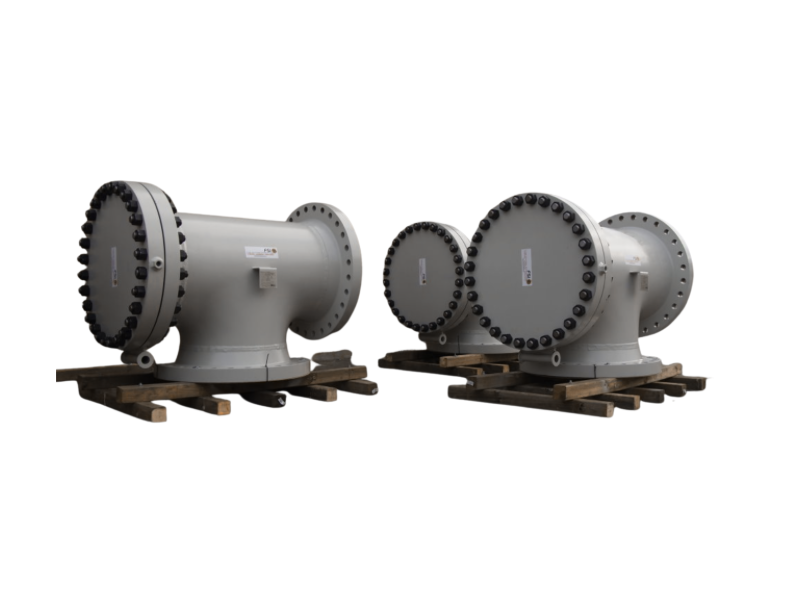
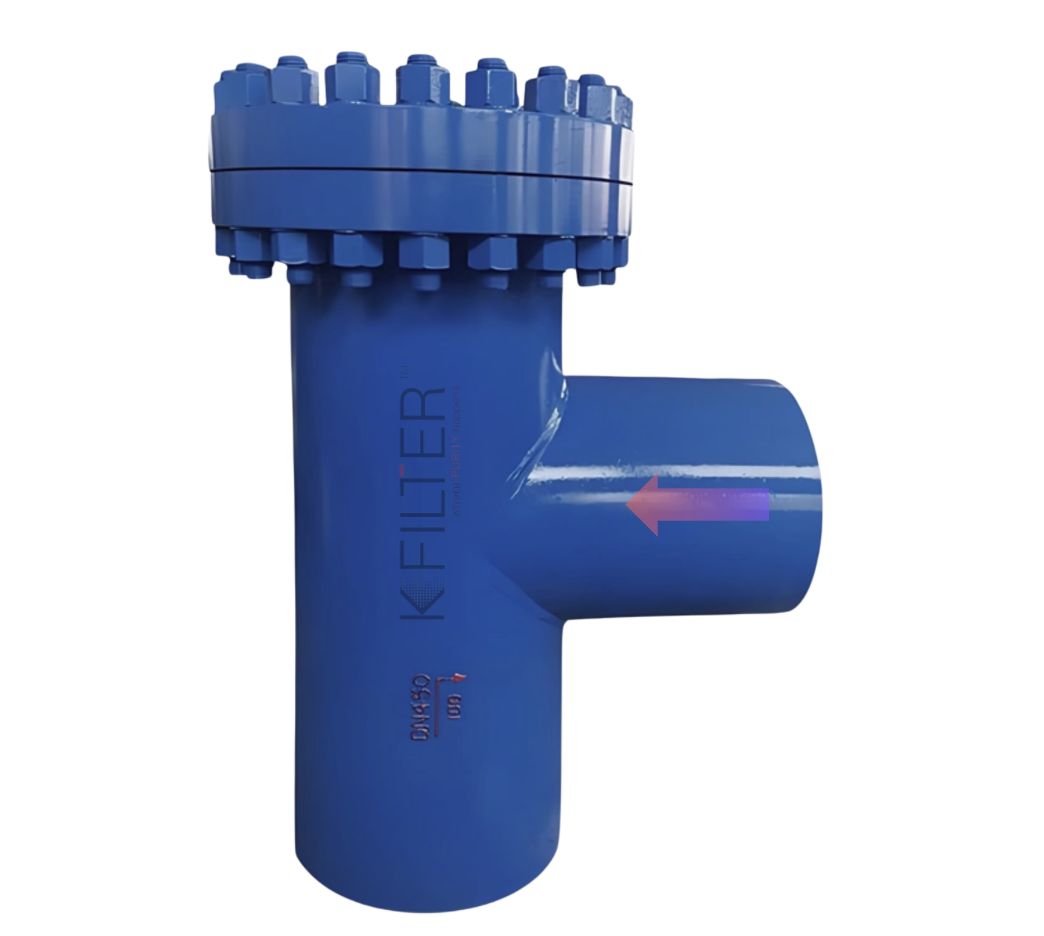
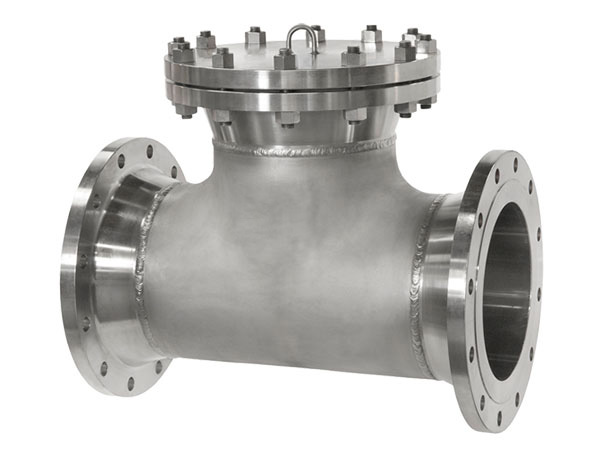
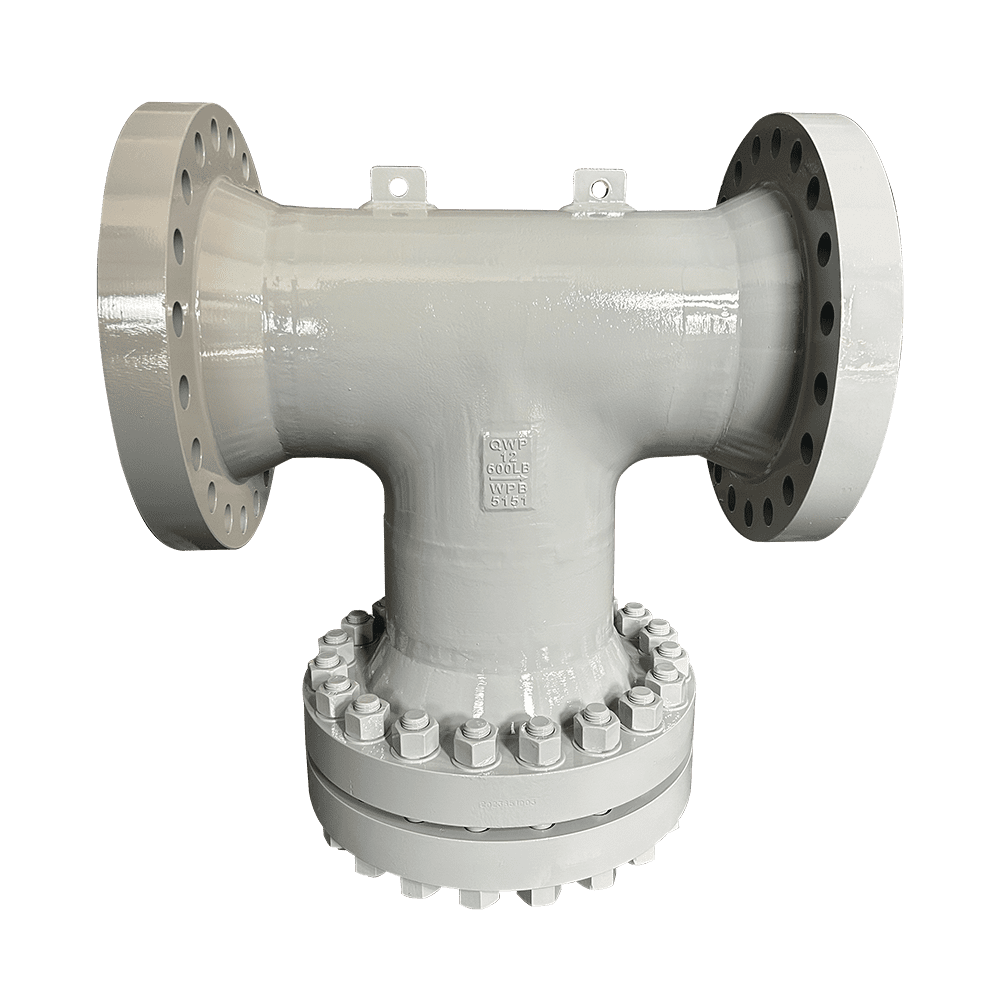
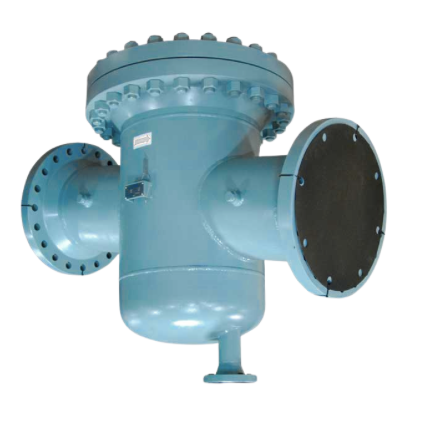
Advanced Range of Fabricated T-Axis™ Filtration
Fabricated T Strainer High-Flow Engineering
When commissioning a new pipeline or upgrading an active industrial process, protecting your capital investments is a non-negotiable priority. Foreign particles, stray welding beads, construction scale, and debris can cause immediate, catastrophic damage to downstream pumps, multi-stage compressors, turbines, and precision measuring systems.
To bridge the gap between compact inline design and high-volume dirt holding capacity, we have expanded our filtration catalog with a new range of custom-engineered T-Axis™ Filtration T-strainers.
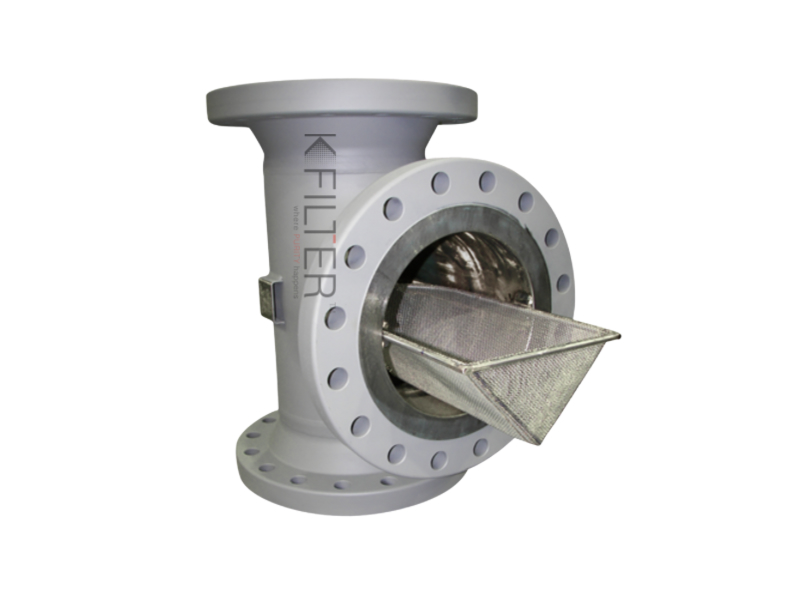
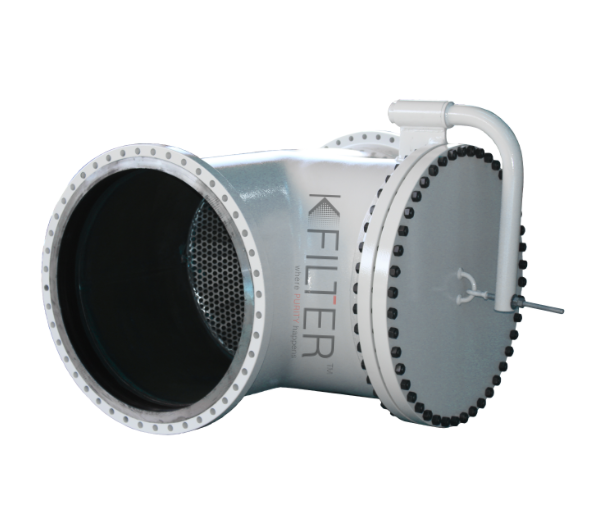
Designed for straight-through horizontal or vertical pipelines, these robust units mimic a standard pipe tee layout. This configuration allows you to drop high-performance protection directly into your existing straight run of pipe without complex manifold rerouting or taking up valuable plant floor space.
______________________________________________________________________________________________________________________________________________
Precision Startup Protection: The Internal Mesh Engineering
The true performance of a T-strainer rests entirely on the design of its internal filtering element. For our new product range, we have refined the internal screen geometries to deliver an optimal balance of structural strength and minimal flow resistance.
The Geometry of the Conical Insert
Our internal startup screens are designed as specialized hat type strainers, using a tapered cone geometry. The cone shape represents an ideal structural adaptation to the natural velocity profile inside a pipeline.
Fluid velocity is always highest at the exact center of a pipe. By engineering the tip of the internal cone with a fully permeable, flow-through bottom, we tap right into that high-velocity zone. This prevents the fluid from hitting a flat metal wall, which would otherwise trigger intense turbulence and heavy pressure spikes.
Maximizing Free Filter Area in Short Section Lengths
A common engineering challenge with temporary inline strainers is achieving a high surface area without making the component too long to fit inside standard pipe runs.
Our new T-Axis™ Filtration T-Strainers line resolves this by precisely coordinating the cone angles and bottom diameters. This specialized geometry packs a large filter surface area into the shortest possible horizontal length, allowing the units to be clamped directly into flanged weld fittings following standard DIN EN and ASME installation lengths.
- The Minimum Standard: Every T-Axis™ Filtration T-Strainers in this range are guaranteed to provide a minimum free filter area of 1.5 times the internal cross-sectional area of the pipe (150% open area ratio).
- The Flow Path: Fluid flows systematically from the inside of the cone to the outside. This specific direction utilizes the full structural hoop strength of the metal mesh, providing maximum resistance against pressure surges while trapping all construction debris safely inside the basket core for clean removal.
Flange Integration and Material Identification
Our T-Axis™ Filtration T-strainers are engineered to integrate cleanly into demanding heavy industrial environments. The internal filtering rings are securely clamped between a pair of pipeline flanges utilizing two high-performance sealing gaskets. T-Axis™ Filtration T-Strainers are fully compatible with standard international pipeline specs:
European Standards: DIN EN 1092-1 flange configurations.
American Standards: ASME B16.5 and B16.47 pressure classes.
Technical Performance Breakdown
| Operational Variable | T-Axis™ Filtration T-Strainer Specification Standard |
|---|---|
| Structural Geometry | Optimized cone with flow-through bottom for uniform velocity |
| Minimum Filter Area | ≥1.5× the internal free pipe cross-section (150%) |
| Flange Compatibility | DIN EN 1092-1 and ASME B16.5 / B16.47 |
| Material Availability | High-grade 304SS, 316SS, 316L, and specialized alloys |
Maintenance and Long-Term Operations
While the internal hat-type conical geometry is ideal for initial line flushing and startup commissioning, T-Axis™ Filtration T-strainer housings are built to transition smoothly into permanent plant operations.
Servicing the T-Axis™ Filtration T-Strainers is clean and efficient. When differential pressure gauges indicate that the internal screen is full, technicians simply isolate that line section, open the top cover of the perpendicular tee branch, and lift the element straight out.
Because the service chamber sits entirely outside the main straight-line axis of the pipeline, your primary pipe network remains completely undisturbed during routine cleanings. For long-term continuous processing after the initial startup phase, the temporary commissioning cone can easily be swapped out for a heavy-duty, multi-layer industrial basket filter.
Frequently Asked Questions (FAQ)
1.Why do your hat-type strainers utilize a conical shape instead of a flat basket?
The cone geometry matches the natural flow profile inside a pipe. Fluid velocities are always highest at the center of the line. By tapering the strainer into a cone with a permeable, flow-through bottom, the fluid transitions smoothly through the mesh rather than slamming into a flat barrier. This reduces turbulence, minimizes initial pressure drops, and lowers the structural stress placed on the mesh.
2.What does an “EN 10204 – 3.1 or 3.2 certificate” mean for my project?
These are international European standards for material traceability and quality control. A 3.1 certificate is issued by the manufacturer’s independent quality department, confirming that the actual strainer delivered matches the raw material test reports (MTRs) and specific heat batches used in production. A 3.2 certificate takes this a step further by requiring an independent, third-party inspection agency (like TÜV or Lloyd’s Register) to visually witness and verify the tests, ensuring full compliance for highly regulated or hazardous environments.
3.Why is the minimum free filter area set to 1.5 times the pipe cross-section?
Setting a minimum requirement of 1.5× the internal pipe area (a 150% open area ratio) provides a safety buffer. As the pipeline is flushed during startup, it collects substantial amounts of welding slag, sand, and scale. If the filter area were only 100% of the pipe size, a small number of debris would immediately choke the flow, spike the pressure, and potentially starve downstream pumps or compressors. The extra surface area keeps your system running smoothly for longer periods during commissioning.
4.Can the identification tab be removed after installation?
No, the identification tab should never be cut off or removed. It is a critical safety and tracking feature. Because it extends past the outer edge of the pipeline flanges, it provides engineers and maintenance crews with immediate visual proof that a strainer is sitting inside the line. Furthermore, because it holds the stamped pressure ratings, material batches, and TAG numbers, it ensures your plant operators always know exactly what is installed in that section of the piping network.
5.Can I convert these T-strainers from temporary startup use to permanent filtration?
Yes. The outer T-Axis™ Filtration T-Strainers housing is permanently welded or flanged into your piping system. The internal hat-type cone filter is typically used for temporary startup and line flushing. Once the initial commissioning phase is complete and the pipeline is clean, you can easily open the branch cover and swap out the temporary cone for a heavy-duty, permanent cylindrical basket filter designed for long-term operational cycles.
