 Skip to content

Turbo Fine V Series: High-Efficiency V-Bank Filtration for Turbomachinery
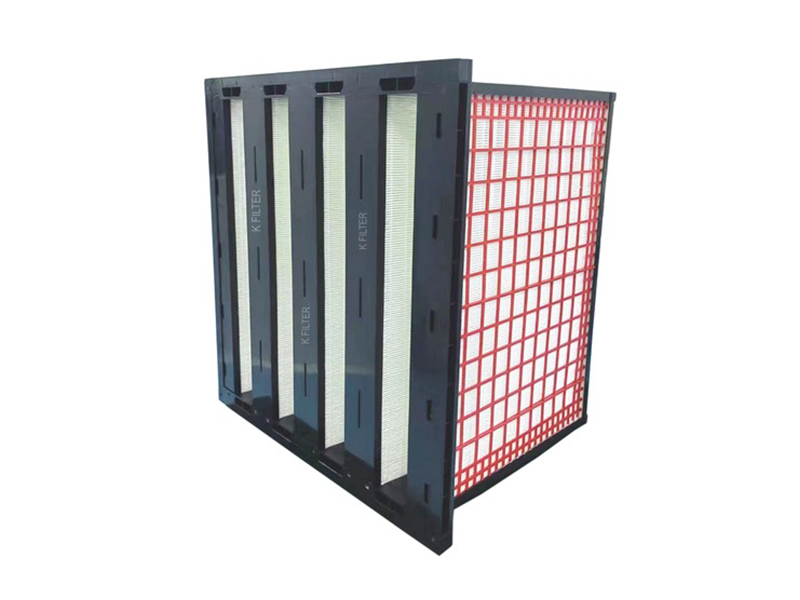
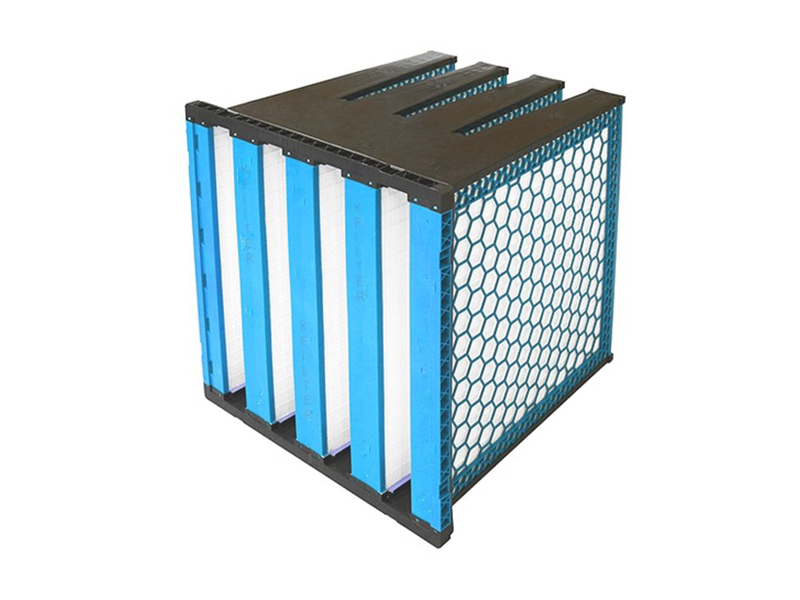
In high-velocity air intake systems, moisture and sub-micron particulates are the primary catalysts for compressor fouling and hot-section corrosion. The Turbo Fine V Series is a range of high-efficiency V-Bank compact filters specifically engineered for Gas Turbines, Steam Turbines, and Centrifugal Compressors. Designed with a focus on high burst strength and moisture resistance, these static filters provide a fortified barrier in high-humidity and salt-laden environments, ensuring your turbomachinery maintains peak thermal efficiency.
The V-Bank Advantage: Engineering for High-Flux Environments
V-Bank Advantage is simple math. By folding the media into a V-shape, we pack 300% more filtration surface into the same square foot of intake space. This slows down the air as it passes through the media, allowing our hydrophobic fibers more time to catch salt and water before they ever hit the compressor blades.”
Structural Integrity in High-Velocity Intakes: The V-Bank Burst-Proof Advantage
The Turbo Fine V Series utilizes a multi-bank architecture to maximize surface area and minimize resistance:
Hydrophobic Depth-Loading Media: Our specially engineered, mini-pleated media is inherently water-repellent. It prevents “moisture-wicking,” ensuring that salt and dissolved minerals stay on the filter surface and do not reach the turbine blades.
Corrosion-Free Construction: Built with 100% corrosion-proof materials, the Turbo Fine V Series is immune to the oxidation and rust issues that plague traditional metal-frame filters in maritime and coastal zones.
High Burst Strength: Turbomachinery intakes experience massive pressure surges. Our V-Bank architecture is structurally reinforced to withstand extreme differential pressures (ΔP) without media rupture or bypass.
Extended Life Cycle (2–4x): By utilizing high-density mini-pleat technology, we provide significantly more media surface area than standard filters. This reduces the air-to-cloth ratio, extending the service life by up to 400% and drastically reducing the frequency of water washes.
Technical Specifications: Turbo Fine V Series
| Feature | Turbo Fine V-Series (V-Bank) |
|---|---|
| Efficiency Class | ISO 16890 ePM1 / ePM2.5 (F7 to H13) |
| Configuration | 2-V, 3-V, or 4-V Bank (Compact Header) |
| Media Type | Mini-Pleated Hydrophobic Micro-Glass or Synthetic |
| Frame Material | High-Impact ABS / Polypropylene (Corrosion-Free) |
| Burst Strength | Exceeds 625 Pa (25″ w.g.) |
| Applications | Coastal GTs, Steam Turbines, Air Compressors |
Our Key Features
- Low initial pressure drops
- High quality
- Water and oil repellent filter media
- High mechanical strength
- F9 filter class
- Improve fuel economy
- Preventing fine and corrosive particles entering compressor blades
- Comprehensive warranty
- Capability of customization.
FAQ: High-Efficiency V-Bank Air Intake Filters
1. Why is a V-Bank filter preferred for high-humidity areas?
Standard flat or bag filters often “collapse” or become heavy when wet. The Turbo Fine V Series uses a rigid V-shape and hydrophobic media. This allows water to bead and roll off the surface rather than soaking in, keeping the pressure drop low and preventing salt-water bypass into the compressor.
2. How does this filter reduce “Water Washing” frequency?
Compressor fouling occurs when fine dust and moisture combine to form “mud” on the blades. By capturing sub-micron particles with ISO ePM1 efficiency, the Turbo Fine V Series ensures that the air reaching the axial compressor is ultra-pure, allowing you to run for thousands of additional hours between offshore water-wash cycles.
3. Can the Turbo Fine V Series handle high-velocity airflows?
Yes. The mini-pleat technology inside each “V” creates a massive amount of surface area in a very small footprint. This lowers the face velocity of the air, allowing the filter to handle the high-volume suction of large gas turbines (like GE Frame 9 or Siemens SGT series) without stress.
4. Is the frame resistant to chemical and salt-air corrosion?
Absolutely. We use high-impact, medical-grade polymers for the frames. Unlike galvanized steel frames that can rust and shed debris into the turbine (FOD risk), our Turbo Fine V Series is 100% corrosion-free, making it the safest choice for offshore rigs and coastal refineries.
5. What is the typical lifespan of a Turbo Fine V filter?
Due to our depth-loaded media and high-surface area pleating, these filters typically last 2 to 4 timeslonger than standard compact filters. In a well-managed system with proper pre-filtration, you can expect 18–24 months of continuous operation.
6. What is the depth of Turbo fine V filter
This dimension is critical because it allows the Turbo Fine V Series to fit into standard universal holding frames used by OEMs like GE, Siemens, and Donaldson without any modification to the filter house.
The Standard Dimensions (Global Interchange)
Depth: 11.5 inches (292 mm) — This includes the header/flange.
Face Size (Height x Width): 24 x 24 inches (592 x 592 mm)
Header/Flange Thickness: 0.8 inches (20 mm) or 1 inch (25 mm)
Why “11.5 Inches” is the Strategic Depth
When presenting to a Plant Engineer, explain the “Surface Area to Depth” ratio:
Compact Power: At a depth of only 11.5 inches, the Turbo Fine V utilizes mini-pleat technology to pack up to 200–300 square feet (18–28 m2) of filter media into a small footprint.
Low Velocity: Because the depth allows for deep “V” pockets, the air slows down as it passes through the media. This low face velocity is what makes the hydrophobic (water-repellent) treatment so effective—it gives the water droplets time to bead and roll off instead of being “pushed” through by high-pressure suction.
Burst Strength: The 292 mm depth provides the structural geometry needed to achieve a burst pressure exceeding 625 Pa. Shorter filters often lack the structural “spine” to handle the massive suction of a Gas Turbine.
This table covers the three most critical factors for Gas Turbine and Industrial operators: Protection, Performance, and Logistics.
Comparative Analysis: K Filter Turbo Series vs. Standard OEM Imports
| Feature | K Filter Turbo Series (Nano/Pulse/V) | Standard OEM / Imported Filters | The K Filter Advantage |
|---|---|---|---|
| Media Technology | Nanofiber Laminated / Hydrophobic | Standard Cellulose or Synthetic Blend | 80% ePM1 Efficiency (Stops the smallest particles that cause glazing). |
| Cleaning Mechanism | Surface-Loading (Instant Release) | Depth-Loading (Particle Entrapment) | Pulse-Jet Efficiency: Dust is shed instantly, preventing “Filter Blinding.” |
| Pressure Drop (ΔP) | Ultra-Low & Stable | Rapidly Increasing ΔP | Fuel Savings: Lower resistance means higher turbine output and lower heat rate. |
| Moisture Resistance | Active Hydrophobic Coating | Passive or No Treatment | Coastal Safety: Water beads and rolls off; no “salt-wicking” into the compressor. |
| Burst Strength | Reinforced (>6250 Pa) | Standard (Variable) | Asset Safety: Guaranteed protection against media rupture during high-suction surges. |
| Lead Time | Local (GCC/Qatar) – 2 to 4 Weeks | 12 to 16 Weeks (Imported) | Supply Chain Security: Zero downtime; no waiting for international shipping or customs. |
| Sustainability | Reduced Carbon Footprint (Local) | High Transport Emissions | ESG Compliance: Supports “Made in Qatar” and local ICRA/ICV initiatives. |
