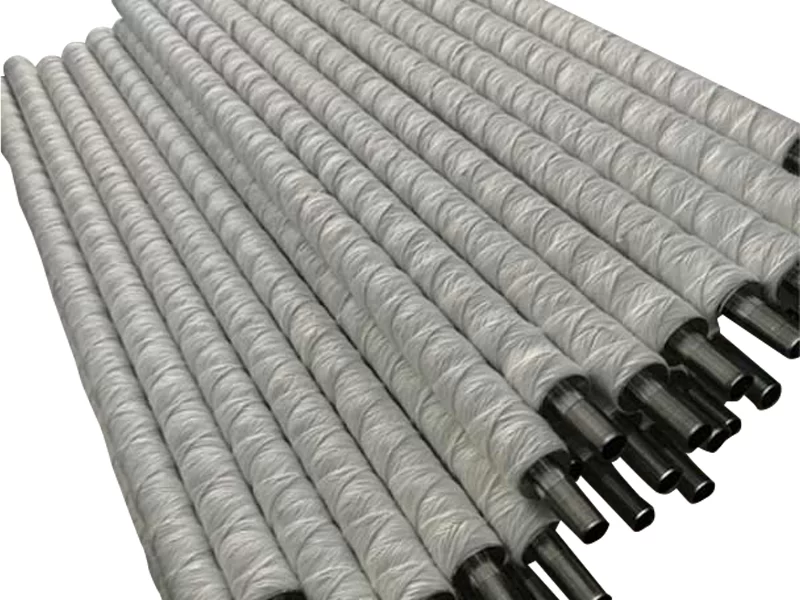
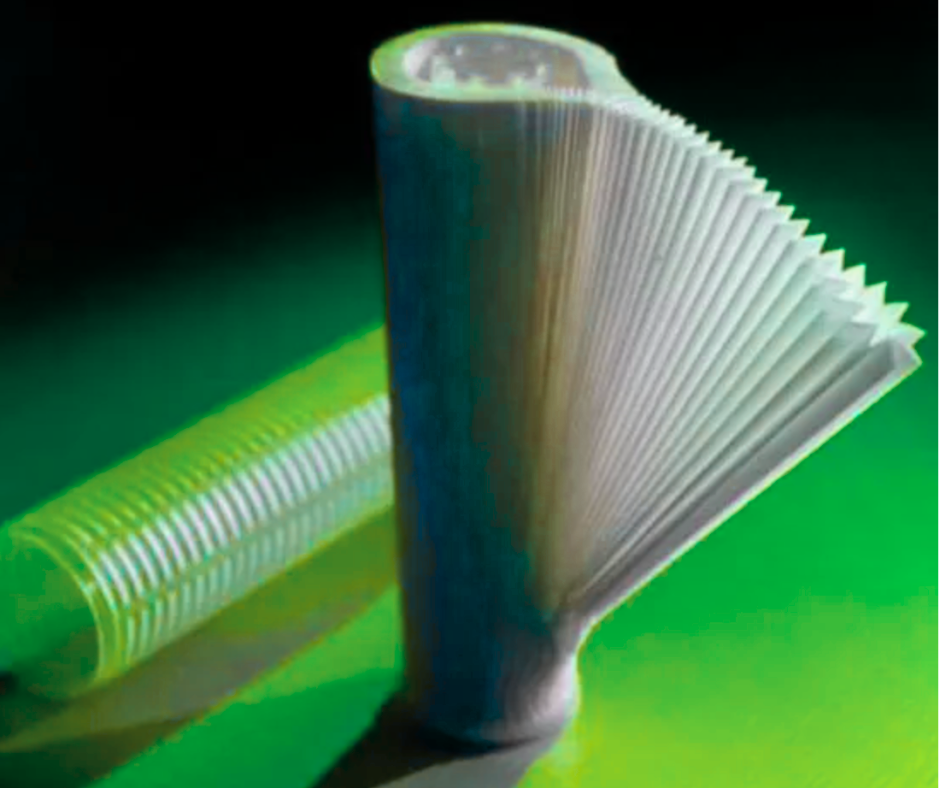
These filters are advanced filtration components used in steam and condensate systems to remove particulates and protect sensitive equipment. Pleated condensate filters offer several advantages over traditional depth filters, especially in industrial applications like power generation and process heating.
| Pleated Condensate Filters | String Wound Filters |
| Larger surface area | Lower surface area |
| Lower pressure drops | Higher DP at similar flow |
| Precise micron rating | Nominal filtration |
| Back washable & reusable | Disposable |
| Longer service life | Shorter service life |
Pleated condensate filters provide a larger surface area in a compact element, which means they can:
- Capture very fine particles
- Remove suspended solids more effectively
- Improve overall condensate quality
This is especially important when protecting high-pressure boilers and turbines.
Pleated filter Selection Criteria
When selecting pleated condensate filters for power plant use, consider:
- Condensate temperature
- Iron oxide and solids load
- Required micron rating
- Flow rate per cartridge
- Housing compatibility (60″ / 70″)
- Backwash capability
Correct sizing ensures stable differential pressure and consistent filtration performance
Regional Use – Middle East Power Plants
Across the Middle East, pleated condensate filters are widely adopted due to:
- High ambient temperatures
- Long operating cycles
- Focus on reducing consumable costs
- Preference for reusable filtration solutions
They are commonly used in gas-fired, combined-cycle, and thermal power plants throughout the region.
Disadvantages of Pleated Condensate Filters
1. Higher Initial Cost
Pleated condensate filters (especially 60″–70″ backwashable types) are more expensive upfront than string-wound or melt-blown cartridges.
Although they save money long-term through reuse, the capital cost can be a concern for some plants.
2) Limited Temperature Capability (Polypropylene Media)
Most pleated condensate filters use pure polypropylene (PP) media.
Typical max continuous temperature: ~80–85 °C
Not suitable for very high-temperature condensate without cooling
If condensate temperature exceeds this, media deformation or reduced life can occur.
Lower Performance with Heavy Slug Loads
During plant start-up or upset conditions:
- Large amounts of iron oxide, scale, or debris may enter the system
- Pleated filters can blind quickly if solids loading is extreme
In such cases, coarse pre-filters or temporary start-up strainers are recommended
Fouling by Oil or Organic Contaminants
If condensate is contaminated with:
- Oil carryover
- Lubricants
- Organic fouling
Pleated PP media may clog irreversibly, making backwashing ineffective.