Skip to content
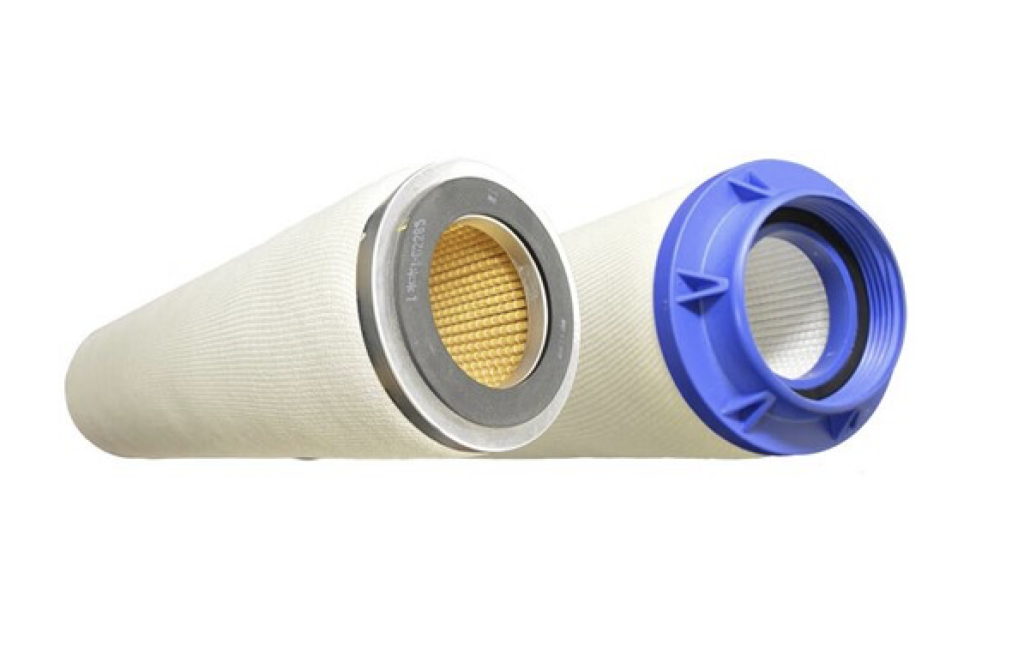
Coalescing Filter Elements – Power plants located in coastal areas face unique environmental and operational challenges. The discharge of heated cooling water leads to thermal pollution, which can disrupt marine ecosystems and alter local biodiversity. Additionally, the large volumes of seawater drawn into cooling systems can harm fish populations through entrainment and impingement. The use of saltwater also accelerates corrosion, requiring intensive maintenance to protect critical infrastructure. Environmental factors such as biofouling, debris accumulation, and sediment ingress further increase the risk of blockages in cooling circuits, reducing heat-transfer efficiency and increasing operational downtime.
In parallel, the reliability of gas turbines, compressors, and auxiliary systems is heavily influenced by the quality of air, gas, and fuel supplied to them. Coalescing filter elements play a critical role by removing fine liquid aerosols—such as oil, water, and condensate—from air, gas, and hydrocarbon streams. Even microscopic droplets, if left untreated, can cause erosion, sticking, fouling, and premature failure of gas turbines, compressors, control valves, and sensitive instrumentation.
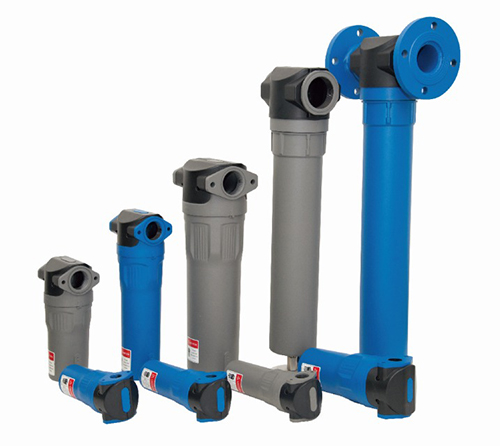
Coalescing filter separators effectively remove water, dust, rust, and fine solid particles from hydrocarbon streams. By eliminating these contaminants, they significantly improve equipment performance, enhance reliability, and extend operational lifespan. Proper coalescing filtration reduces unplanned shutdowns, lowers maintenance costs, and ensures safe, efficient operation in harsh coastal power plant environments
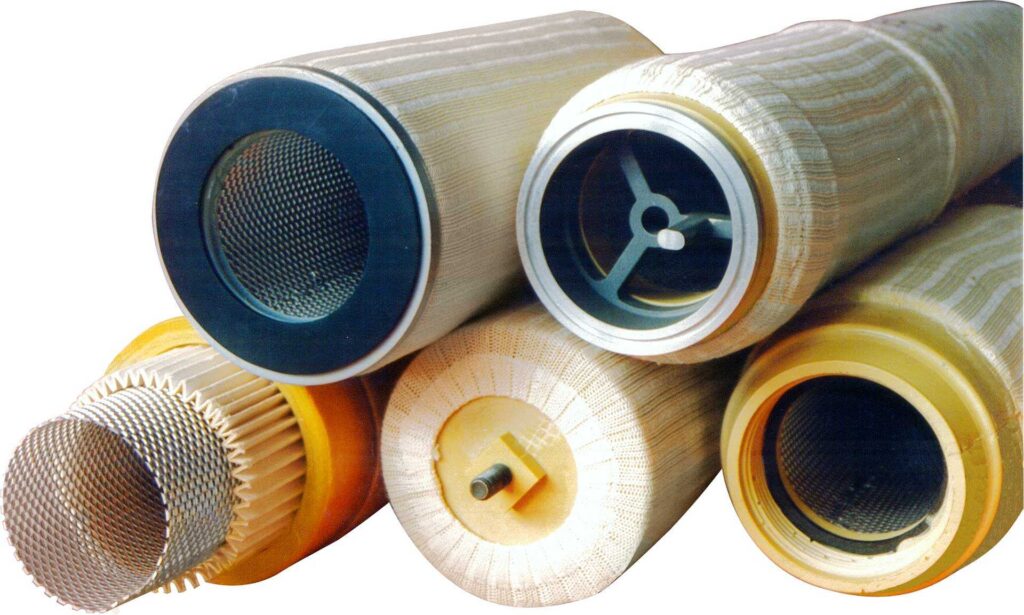
The reason of frailer
- High humidity
- Salt-laden air (chlorides)
- Frequent mist and fog
- Higher risk of corrosion and moisture carryover
Coalescing filter elements are especially effective in addressing these issues.
Improves Turbine & Compressor Efficiency
Moisture and oil carryover reduce aerodynamic efficiency and increase fouling on blades. Coalescing elements capture sub-micron droplets (often down to 0.01 μm), ensuring:
- Stable combustion
- Consistent pressure drop
- Higher thermal efficiency
Where Coalescing Filter Elements Are Commonly Used
Gas turbine inlet air systems
Fuel gas conditioning skids
Instrument and service air systems
Lube oil mist removal
Steam and condensate systems
- Advantages of Coalescing Filter Elements in Coastal Power Plants
Superior Moisture Removal in High Humidity
Coastal air contains high levels of water vapor and fine mist. Coalescing filters:
- Remove fine water aerosols that conventional filters cannot
- Prevent moisture ingress into turbines, compressors, and fuel gas systems
- Reduce condensation in pipelines and equipment
✔ Critical for gas turbines and fuel gas conditioning systems
2. Salt Mist and Chloride Aerosol Removal
Salt particles and chloride aerosols cause rapid corrosion in power plant equipment.
- Coalescing filters:
- Capture salt-laden droplets
- Prevent chloride deposition on turbine blades and heat exchangers
- Reduce pitting and stress corrosion cracking
✔ Essential for long-term reliability in coastal environments
3. Protection of Gas Turbines and Compressors
Liquids and fine contaminants can:
- Erode turbine blades
- Cause compressor fouling
- Reduce aerodynamic efficiency
Coalescing filters ensure:
- Clean, dry fuel gas or intake air
- Stable combustion
- Improved turbine efficiency and availability
4. Corrosion Control in Fuel Gas and Instrument Systems
Moisture + salt = accelerated corrosion.
- Coalescing filter elements:
- Minimize water carryover
- Reduce corrosion in fuel gas lines, valves, and regulators
Extend life of instrumentation and control systems
✔ Lower maintenance costs and fewer forced outages
5. Prevention of Hydrate Formation
In coastal regions, temperature fluctuations and moisture can lead to gas hydrate formation, blocking lines.
Coalescing filters:
- Remove free and entrained water
- Reduce hydrate risk in natural gas fuel systems
6. Improved Reliability During Monsoon and Fog Conditions
During heavy fog, rain, or monsoon seasons:
- Moisture ingress spikes
- Filter systems are stressed
Coalescing filters maintain consistent filtration performance even under variable weather conditions.
7. Lower Pressure Drop Compared to Multiple Filter Stages
Instead of using several filters and knock-out drums:
A coalescing filter provides high-efficiency removal in one stage
Maintains low pressure drop
Reduces auxiliary power consumption
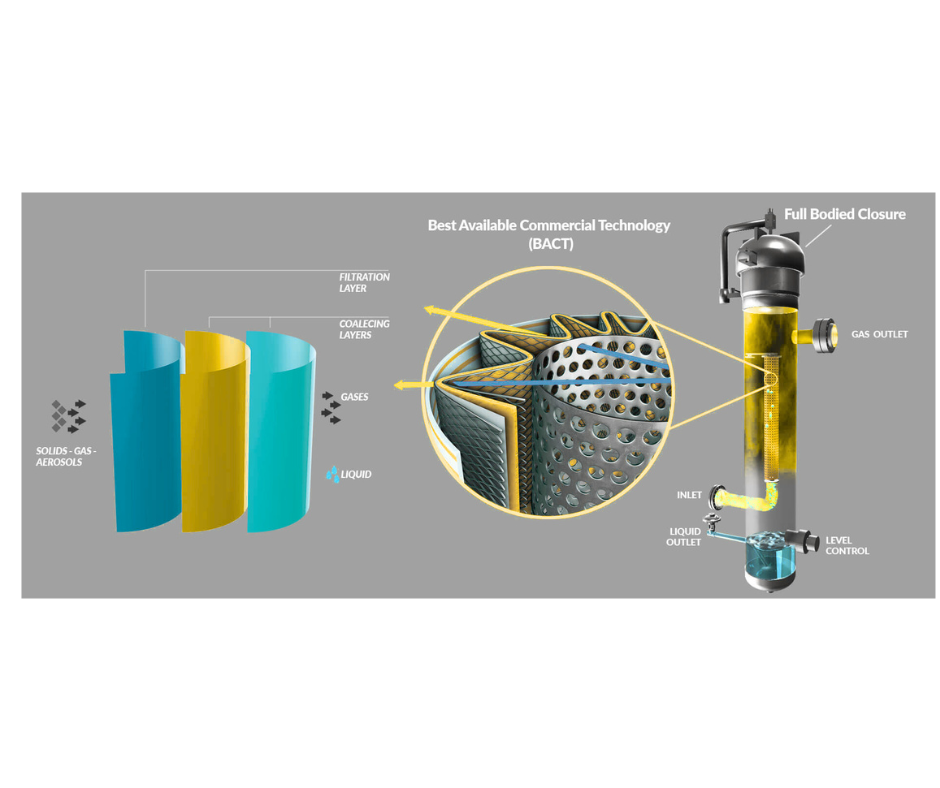
8. Extended Equipment Life and Reduced Downtime
By preventing corrosion, erosion, and fouling:
- Turbines run longer between overhauls
- Fewer emergency shutdowns
- Improved plant availability and capacity factor
9. Compliance with Power Plant OEM Requirements
Gas turbine OEMs specify very low limits for:
- Liquid water
- Oil
- Solid particles
Coalescing filters help meet these strict specifications consistently, even in harsh coastal environments.
10. Overall Cost Savings
Although coalescing filter elements have a higher initial cost:
- Reduced corrosion damage
- Lower maintenance frequency
- Fewer unplanned outages
- Longer turbine life
➡ Result: Lower lifecycle cost for coastal power plants
In coastal area power plants, coalescing filter elements are not optional—they are a critical reliability and asset-protection component, especially for gas turbines, fuel gas systems, and instrument air systems.
| Coastal Challenge | Coalescing Filter Advantage |
| High humidity | Fine moisture aerosol removal |
| Salt mist | Chloride capture, corrosion prevention |
| Fog & rain | Stable filtration performance |
| Corrosion risk | Protects turbines and fuel systems |
| Maintenance cost | Reduced downtime and repairs |